



 Chat with AI
Exam 18: B--Principles of Endocrinology: the Central Endocrine Glands


Compare and contrast the way in which lipophilic and hydrophilic hormones affect their target cells. Include in your answer the type of receptor used, the major events promoted inside the cell after these hormone attach to their specific receptors, and the relative amount of time required to see the effect of hormone binding.

 (77)
 Verified
Lipophilic hormones enter the cell and bind to intracellular receptors, and this leads to increased gene transcription and protein synthesis. Hydrophilic hormones cannot enter the cell but instead bind to membrane-bound receptors. In most cases, this binding initiates a series of reactions inside the cell involving second messengers that, in turn, alter preexisting proteins. The effects of hydrophilic hormones generally are seen quickly, while the effects of lipophilic hormones require more time to occur.
Describe the primary factors involved in growth.
(67) VerifiedGrowth hormone is necessary for growth, but other factors that affect growth include: (1) genes, which determine a person's maximum growth capacity; (2) adequate diet to provide necessary nutrients; (3) lack of chronic disease and stressful environmental conditions; and (4) normal levels of growth-influencing hormones such as insulin-like growth factors (IGFs), TH, insulin, and sex hormones.
Use this figure to answer the corresponding questions.
Name all hormones shown in this figure that are classified as tropic hormones, and place the appropriate numbers by the hormone names.
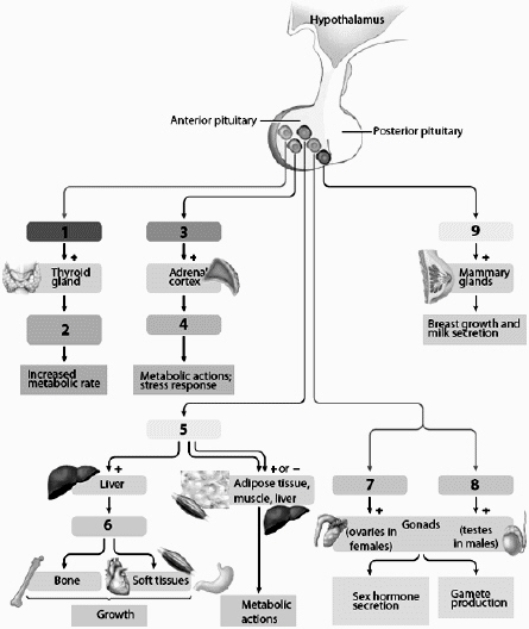
(78) VerifiedTSH-1, ACTH-2, LH-6, FSH-7
Describe circadian rhythms and the roles played by the SCN, clock proteins, melanopsin, and melatonin to control them.
(78) List the factors that could cause abnormal levels of secretion from endocrine glands, and explain why target cells may display abnormal responsiveness to a hormone.
(90) Describe how the hypothalamus and pituitary gland function in the negative feedback control of cortisol secretion when a person is under stress. Mention all relevant hormones involved in the process.
(83) 
Filters
- Essay(0)
- Multiple Choice(0)
- Short Answer(0)
- True False(0)
- Matching(0)