



 Chat with AI
Exam 17: Reactions of Aromatic Compounds

Exam 1: Introduction and Review127 Questions
Exam 2: Structure and Properties of Organic Molecules129 Questions
Exam 3: Structure and Stereochemistry of Alkanes129 Questions
Exam 4: The Study of Chemical Reactions128 Questions
Exam 5: Stereochemistry128 Questions
Exam 6: Alkyl Halides: Nucleophilic Substitution and Elimination132 Questions
Exam 7: Structure and Synthesis of Alkenes128 Questions
Exam 8: Reactions of Alkenes132 Questions
Exam 9: Alkynes124 Questions
Exam 10: Structure and Synthesis of Alcohols132 Questions
Exam 11: Reactions of Alcohols124 Questions
Exam 12: Infrared Spectroscopy and Mass Spectrometry120 Questions
Exam 13: Nuclear Magnetic Resonance Spectroscopy130 Questions
Exam 14: Ethers, Epoxides, and Thioethers127 Questions
Exam 15: Conjugated Systems, Orbital Symmetry, and Ultraviolet Spectroscopy130 Questions
Exam 16: Aromatic Compounds128 Questions
Exam 17: Reactions of Aromatic Compounds129 Questions
Exam 18: Ketones and Aldehydes132 Questions
Exam 19: Amines129 Questions
Exam 20: Carboxylic Acids125 Questions
Exam 21: Carboxylic Acid Derivatives128 Questions
Exam 22: Condensations and Alpha Substitutions of Carboxyl Compounds125 Questions
Exam 23: Carbohydrates and Nucleic Acids125 Questions
Exam 24: Amino Acids, Peptides, and Proteins127 Questions
Exam 25: Lipids127 Questions
Exam 26: Synthetic Polymers128 Questions
Select questions type


Draw the four major resonance structures of the sigma complex intermediate in the reaction of anisole with HNO3/H2SO4 to yield p-nitroanisole.
(Essay)
4.8/5  (83)
(83) 
In electrophilic aromatic substitution reactions, a -NHCOCH3 substituent on the aromatic ring is:
(Multiple Choice)
4.9/5 (80)
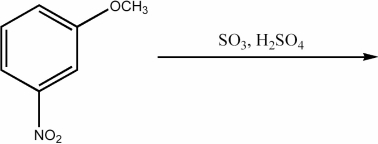
(80) Provide the structure of the major organic product in the following reaction sequence. 
(Essay)
5.0/5 (86)
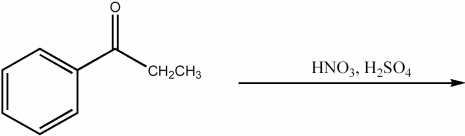
(86) Predict the major organic product resulting from the following sequence of reactions. 
(Essay)
4.8/5 (88)
(88) Which of the following is an incorrect statement about the bromination of benzene by Br2 and FeBr3?
(Multiple Choice)
4.7/5 (84)
(84) Provide the structure of the major organic product in the following reaction. 
(Essay)
4.8/5 (67)
(67) Which of the following compounds will undergo bromination least rapidly when treated with Br2 and FeBr3?
(Multiple Choice)
4.8/5 (86)
(86) Derivatives of the compound shown below are currently being examined for their effectiveness in treating drug addiction and metabolic syndrome (J. Med. Chem. 2006, 872). Which sequence ranks the following aromatic rings of this compound in order of increasing reactivity in an electrophilic aromatic substitution reaction (slowest to fastest reacting)? 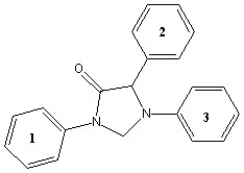
(Multiple Choice)
4.7/5 (77)
(77) Provide a series of synthetic steps by which 3-bromoethylbenzene can be prepared from benzene.
(Essay)
4.9/5 (82)
(82) Under what reaction conditions does the electrophilic chlorination of aromatic compounds usually occur?
(Multiple Choice)
4.9/5 (77)
(77) 
Which of the following compounds would most likely be used in the preparation of isobutylbenzene from benzene?
(Multiple Choice)
4.9/5 (80)
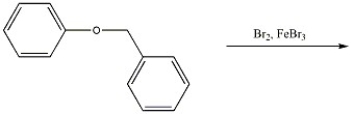
(80) Provide the structure of the major organic product in the following reaction 
(Essay)
4.9/5 (75)
(75) 
Provide the structure of the major monoitration product of the compound below. 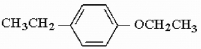
(Essay)
4.8/5 (65)
(65) 
Provide a series of synthetic steps by which p-nitrophenol can be prepared from benzene.
(Essay)
5.0/5 (74)
(74) 
Filters
- Essay(0)
- Multiple Choice(0)
- Short Answer(0)
- True False(0)
- Matching(0)