



 Chat with AI
Exam 18: Ketones and Aldehydes

Exam 1: Introduction and Review127 Questions
Exam 2: Structure and Properties of Organic Molecules129 Questions
Exam 3: Structure and Stereochemistry of Alkanes129 Questions
Exam 4: The Study of Chemical Reactions128 Questions
Exam 5: Stereochemistry128 Questions
Exam 6: Alkyl Halides: Nucleophilic Substitution and Elimination132 Questions
Exam 7: Structure and Synthesis of Alkenes128 Questions
Exam 8: Reactions of Alkenes132 Questions
Exam 9: Alkynes124 Questions
Exam 10: Structure and Synthesis of Alcohols132 Questions
Exam 11: Reactions of Alcohols124 Questions
Exam 12: Infrared Spectroscopy and Mass Spectrometry120 Questions
Exam 13: Nuclear Magnetic Resonance Spectroscopy130 Questions
Exam 14: Ethers, Epoxides, and Thioethers127 Questions
Exam 15: Conjugated Systems, Orbital Symmetry, and Ultraviolet Spectroscopy130 Questions
Exam 16: Aromatic Compounds128 Questions
Exam 17: Reactions of Aromatic Compounds129 Questions
Exam 18: Ketones and Aldehydes132 Questions
Exam 19: Amines129 Questions
Exam 20: Carboxylic Acids125 Questions
Exam 21: Carboxylic Acid Derivatives128 Questions
Exam 22: Condensations and Alpha Substitutions of Carboxyl Compounds125 Questions
Exam 23: Carbohydrates and Nucleic Acids125 Questions
Exam 24: Amino Acids, Peptides, and Proteins127 Questions
Exam 25: Lipids127 Questions
Exam 26: Synthetic Polymers128 Questions
Select questions type


Show how the following reaction may be accomplished by filling in the correct reagents. 
(Essay)
4.7/5  (88)
(88) 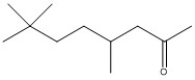
Which of the following reactions will not yield a ketone product?
(Multiple Choice)
4.7/5 (91)
(91) The proton NMR spectrum of an unknown compound contains a triplet at 9.8 ppm. Which of the following could be this unknown?
(Multiple Choice)
4.8/5 (82)
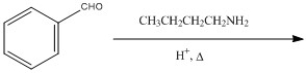
(82) 
How might one distinguish an aldehyde from a ketone using IR data alone?
(Essay)
4.9/5 (75)
(75) 
Provide the structure of the compound which reacts with a ketone to form its hydrazone derivative.
(Short Answer)
5.0/5 (78)
(78) When the carbonyl group of a neutral ketone is protonated,:
(Multiple Choice)
4.9/5 (81)
(81) Complete the following reaction by filling in the necessary reagents. 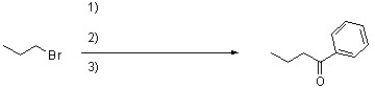
(Essay)
4.8/5 (76)
(76) (S)-Carvone is the main component of spearmint oil. What product would result from treating (S)-carvone with DIBAL-H? 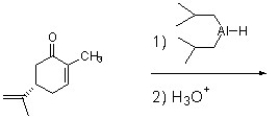
(Multiple Choice)
4.7/5 (82)
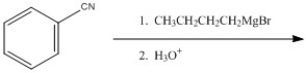
(82) 
Which of the following compounds is most soluble in water?
(Multiple Choice)
4.7/5 (82)
(82) The following compound has been found effective in treating pain and inflammation (J. Med. Chem. 2007, 4222). Which sequence correctly ranks each carbonyl group in order of increasing reactivity toward nucleophilic addition? 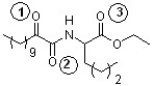
(Multiple Choice)
4.9/5 (72)
(72) Millad NX8000, shown below, is a clarifying additive for polypropylene ( C & En
News, Sept. 2010, 34). Predict the products of the following reaction. 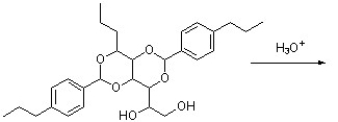
(Essay)
4.8/5 (72)
(72) Draw two major resonance forms of the cation which results when cyclohexanone's carbonyl group is protonated.
(Essay)
4.8/5 (78)
(78) What reagent can be used to convert 2-methylbutan-1-ol into 2-methylbutanal?
(Multiple Choice)
5.0/5 (52)
(52) Name the compound generated when ethylbenzene is treated with CO, HCl, AlCl3, and CuCl.
(Short Answer)
4.9/5 (81)
(81) Which compound will show an intense peak in the mass spectrum at m/z 58?
(Multiple Choice)
4.9/5 (86)
(86) 
Filters
- Essay(0)
- Multiple Choice(0)
- Short Answer(0)
- True False(0)
- Matching(0)