



 Chat with AI
Exam 21: Carboxylic Acid Derivatives

Exam 1: Introduction and Review127 Questions
Exam 2: Structure and Properties of Organic Molecules129 Questions
Exam 3: Structure and Stereochemistry of Alkanes129 Questions
Exam 4: The Study of Chemical Reactions128 Questions
Exam 5: Stereochemistry128 Questions
Exam 6: Alkyl Halides: Nucleophilic Substitution and Elimination132 Questions
Exam 7: Structure and Synthesis of Alkenes128 Questions
Exam 8: Reactions of Alkenes132 Questions
Exam 9: Alkynes124 Questions
Exam 10: Structure and Synthesis of Alcohols132 Questions
Exam 11: Reactions of Alcohols124 Questions
Exam 12: Infrared Spectroscopy and Mass Spectrometry120 Questions
Exam 13: Nuclear Magnetic Resonance Spectroscopy130 Questions
Exam 14: Ethers, Epoxides, and Thioethers127 Questions
Exam 15: Conjugated Systems, Orbital Symmetry, and Ultraviolet Spectroscopy130 Questions
Exam 16: Aromatic Compounds128 Questions
Exam 17: Reactions of Aromatic Compounds129 Questions
Exam 18: Ketones and Aldehydes132 Questions
Exam 19: Amines129 Questions
Exam 20: Carboxylic Acids125 Questions
Exam 21: Carboxylic Acid Derivatives128 Questions
Exam 22: Condensations and Alpha Substitutions of Carboxyl Compounds125 Questions
Exam 23: Carbohydrates and Nucleic Acids125 Questions
Exam 24: Amino Acids, Peptides, and Proteins127 Questions
Exam 25: Lipids127 Questions
Exam 26: Synthetic Polymers128 Questions
Select questions type


Which of the following reactions is favorable, in the direction indicated, under fairly "normal" laboratory conditions?
(Multiple Choice)
4.8/5  (89)
(89) Provide a detailed, stepwise mechanism for the base-mediated transesterification of methyl benzoate with sodium ethoxide.
(Essay)
4.8/5 (100)
(100) Propose a synthesis of 2-phenylethylamine from toluene and any other necessary reagents.
(Essay)
4.9/5 (65)
(65) Provide a detailed, stepwise mechanism for the acid-catalyzed transesterification of ethyl acetate with n-propanol.
(Essay)
5.0/5 (82)
(82) Assuming equal molecular weights, mark all of the following compounds, indicated by their functional group, that would have a higher boiling point than an alcohol. (More than one answer is possible.)
(Multiple Choice)
4.8/5 (81)
(81) 
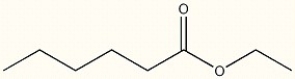
What type of compound results from the reaction of an acid chloride and a 2° amine?
(Multiple Choice)
4.8/5 (86)
(86) Name the compound which results when propyl benzoate is heated in a large excess of ethanol in the presence of catalytic acid.
(Short Answer)
4.9/5 (88)
(88) Which sequence ranks the following carboxylic acid derivatives in order of increasing rate of hydrolysis? 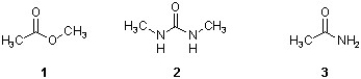
(Multiple Choice)
4.8/5 (73)
(73) Provide the major organic product in the reaction of 3-methylpentanoic acid with CH2N2.
(Essay)
4.8/5 (81)
(81) Provide the major organic product in the reaction of cyclopentanecarbonyl chloride with sodium formate.
(Essay)
4.8/5 (70)
(70) 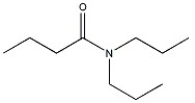
What are the products from the reaction of excess methyl magnesium bromide with ethyl acetate followed by H3O+?
(Short Answer)
4.9/5 (101)
(101) List the following four carboxylic acid derivatives, ester, anhydride, amide, and acid halide, in order of increasing reactivity in nucleophilic acyl substitution reactions. Start with the least reactive derivative.
(Short Answer)
4.9/5 (95)
(95) 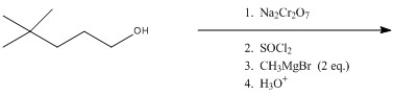
Carbonated beverages typically have pHs below 7.0. What acid is present which lowers the pH? Show the reaction by which it is formed.
(Essay)
5.0/5 (85)
(85) The following compound is a tumor growth inhibitor (J. Med. Chem. 2011, 1789). Circle all carbon centers that are at the same oxidation state as a carboxylic acid. 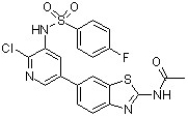
(Essay)
4.8/5 (93)
(93) 
Filters
- Essay(0)
- Multiple Choice(0)
- Short Answer(0)
- True False(0)
- Matching(0)