



 Chat with AI
Exam 25: Lipids

Exam 1: Introduction and Review127 Questions
Exam 2: Structure and Properties of Organic Molecules129 Questions
Exam 3: Structure and Stereochemistry of Alkanes129 Questions
Exam 4: The Study of Chemical Reactions128 Questions
Exam 5: Stereochemistry128 Questions
Exam 6: Alkyl Halides: Nucleophilic Substitution and Elimination132 Questions
Exam 7: Structure and Synthesis of Alkenes128 Questions
Exam 8: Reactions of Alkenes132 Questions
Exam 9: Alkynes124 Questions
Exam 10: Structure and Synthesis of Alcohols132 Questions
Exam 11: Reactions of Alcohols124 Questions
Exam 12: Infrared Spectroscopy and Mass Spectrometry120 Questions
Exam 13: Nuclear Magnetic Resonance Spectroscopy130 Questions
Exam 14: Ethers, Epoxides, and Thioethers127 Questions
Exam 15: Conjugated Systems, Orbital Symmetry, and Ultraviolet Spectroscopy130 Questions
Exam 16: Aromatic Compounds128 Questions
Exam 17: Reactions of Aromatic Compounds129 Questions
Exam 18: Ketones and Aldehydes132 Questions
Exam 19: Amines129 Questions
Exam 20: Carboxylic Acids125 Questions
Exam 21: Carboxylic Acid Derivatives128 Questions
Exam 22: Condensations and Alpha Substitutions of Carboxyl Compounds125 Questions
Exam 23: Carbohydrates and Nucleic Acids125 Questions
Exam 24: Amino Acids, Peptides, and Proteins127 Questions
Exam 25: Lipids127 Questions
Exam 26: Synthetic Polymers128 Questions
Select questions type




Arrange the following fatty acids in order of increasing melting point:
stearic acid, linolenic, linoleic, and oleic.
(Essay)
4.9/5  (98)
(98) Provide the structure of the major organic compound that results when palmitic acid, CH3(CH2)14CO2H, is heated in methanol containing catalytic acid.
(Essay)
5.0/5 (79)
(79) Provide the structure of the major organic compound that results when palmitic acid, CH3(CH2)14CO2H, is heated in ethanol containing catalytic acid.
(Essay)
4.8/5 (80)
(80) Why are fats more efficient sources of long-term energy than carbohydrates?
(Essay)
4.7/5 (82)
(82) How many molecules of fatty acid are needed to make one molecule of a cephalin?
(Multiple Choice)
4.9/5 (78)
(78) In the formation of a triacylglyceride, what two functional groups chemically combine?
(Multiple Choice)
4.8/5 (73)
(73) Which of the following is another name for a phosphatidyl choline?
(Multiple Choice)
4.8/5 (94)
(94) Draw the structure of the product which results when the compound shown below is completely hydrogenated using excess H2. 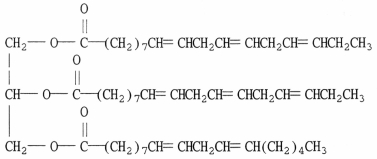
(Essay)
5.0/5 (87)
(87) When a vegetable oil is partially hydrogenated, how is its structure altered and how is its melting point affected?
(Essay)
4.8/5 (64)
(64) 
What organic compounds result when tristearin is heated in aqueous sodium hydroxide?
(Short Answer)
5.0/5 (78)
(78) Circle all of the structural features of sodium glycocholate (bile salt) which are different from cholesterol, its parent compound, and explain why it behaves like a detergent. 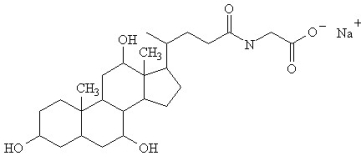
(Essay)
4.9/5 (76)
(76) ________ lipids are those that can be easily hydrolyzed to simpler constituents.
(Short Answer)
4.7/5 (79)
(79) Which of the following terms best describes the compound below? CH3(CH2)26CO2CH2(CH2)32CH3
(Multiple Choice)
4.8/5 (82)
(82) Given a single triglyceride which contains three identical and fully saturated fatty acid residues, which of the following terms accurately describe(s) it?
(Multiple Choice)
4.7/5 (82)
(82) Which of the following terms best describes the compound below? 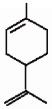
(Multiple Choice)
4.9/5 (74)
(74) Which of the following terms best describes the exterior surface of a soap micelle in water?
(Multiple Choice)
4.7/5 (83)
(83) What does the term polyunsaturated mean when used to describe a triglyceride?
(Essay)
4.9/5 (79)
(79) 
Filters
- Essay(0)
- Multiple Choice(0)
- Short Answer(0)
- True False(0)
- Matching(0)