



 Chat with AI
Exam 17: Carboxylic Acids and Their Derivatives

Exam 1: The Basics158 Questions
Exam 2: Families of Carbon151 Questions
Exam 3: Acids and Bases149 Questions
Exam 4: Nomenclature and Conformations of Alkanes and Cycloalkanes163 Questions
Exam 5: Stereochemistry179 Questions
Exam 6: Nucleophilic Reactions91 Questions
Exam 7: Alkenes and Alkynes I220 Questions
Exam 8: Alkenes and Alkynes II163 Questions
Exam 9: Nuclear Magnetic Resonance and Mass Spectrometry158 Questions
Exam 10: Radical Reactions148 Questions
Exam 11: Alcohols and Ethers256 Questions
Exam 12: Alcohols From Carbonyl Compounds210 Questions
Exam 13: Conjugated Unsaturated Systems201 Questions
Exam 14: Aromatic Compounds186 Questions
Exam 15: Reactions of Aromatic Compounds207 Questions
Exam 16: Aldehydes and Ketones189 Questions
Exam 17: Carboxylic Acids and Their Derivatives213 Questions
Exam 18: Reactions at the Α Carbon of Carbonyl Compounds190 Questions
Exam 19: Condensation and Conjugate Addition Reactions of Carbonyl Compounds182 Questions
Exam 20: Amines207 Questions
Exam 21: Transition Metal Complexes86 Questions
Exam 22: Carbohydrates124 Questions
Exam 23: Lipids127 Questions
Exam 24: Amino Acids and Proteins135 Questions
Exam 25: Nucleic Acids and Protein Synthesis126 Questions
Select questions type


Predict the major organic product,P,of the following sequence of reactions: 
(Multiple Choice)
4.8/5  (78)
(78) What would be the final product,F,of the following sequence of reactions? 
(Multiple Choice)
4.7/5 (75)
(75) What would be the final organic product of the following reaction? 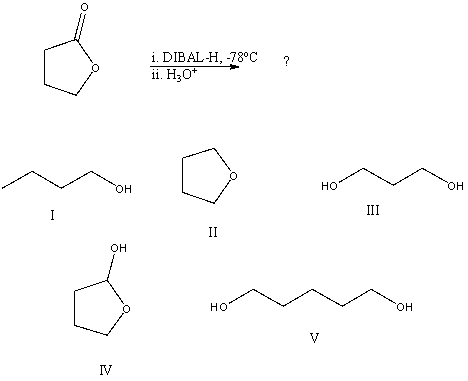
(Multiple Choice)
4.9/5 (78)
(78) What would be the final organic product of the following reaction? 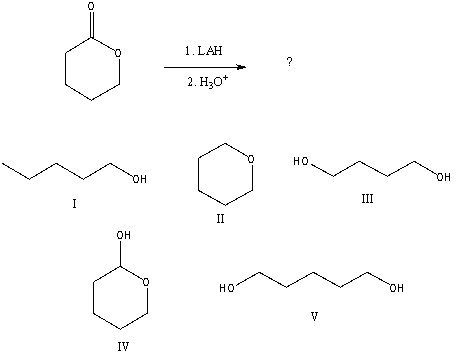
(Multiple Choice)
4.8/5 (80)
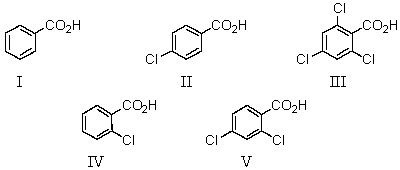
(80) Which of the following acids would be expected to have the largest value for pKa?
(Multiple Choice)
4.9/5 (79)
(79) 
Which reagent would best serve as the basis for a simple chemical test to distinguish between C6H5CH=CHCOOH and C6H5CH=CHCH3?
(Multiple Choice)
4.8/5 (72)
(72) 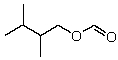
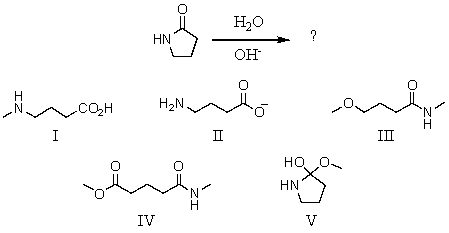
The correct structure for methyl bicyclo[2.2.2]octane-2-carboxylate is: 
(Multiple Choice)
4.9/5 (74)
(74) 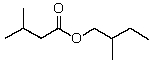 is:
Carbonation of a Grignard reagent or the SN2 displacement of an organic halide with cyanide ion followed hydrolysis are both good methods for the conversion of organic halides to carboxylic acids of one more carbon atom.For the following reaction,which of these two procedures would be the process of choice and why? 
(Essay)
4.8/5 (72)
(72) What would be the final product of this reaction sequence? 
(Multiple Choice)
4.7/5 (81)
(81) Nylon 12 is a polyamide that has found significant commercial value in the manufacture of automobile fuel lines.Nylon 12 is prepared industrially through the polymerization of the 13-member ring lactam monomer shown: 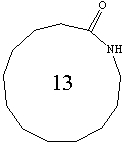 This lactam is readily prepared by the reaction of the cyclododecanone oxime with aqueous acid.
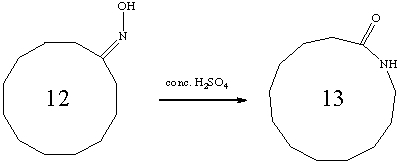 Propose a mechanism for this transformation.
This lactam is readily prepared by the reaction of the cyclododecanone oxime with aqueous acid. Propose a mechanism for this transformation. (Essay)
4.8/5 (77)
(77) What would be the final organic product of the following reaction? 
(Multiple Choice)
4.9/5 (86)
(86) What is the expected product,A,of the following reaction sequence? 
(Multiple Choice)
4.9/5 (77)
(77) 
Filters
- Essay(0)
- Multiple Choice(0)
- Short Answer(0)
- True False(0)
- Matching(0)