



 Chat with AI
Exam 21: Phenols and Aryl Halides: Nucleophilic Aromatic Substitution

Exam 1: Carbon Compounds and Chemical Bonds134 Questions
Exam 2: Representative Carbon Compounds: Functional Groups, Intermolecular Forces, and Infrared Ir Spectroscopy114 Questions
Exam 3: An Introduction to Organic Reactions: Acids and Bases47 Questions
Exam 4: Alkanes: Nomenclature, Conformational Analysis, and an Introduction to Synthesis125 Questions
Exam 5: Stereochemistry: Chiral Molecules150 Questions
Exam 6: Ionic Reactions - Nucleophilic Substitution and Elimination Reactions of Alkyl Halides146 Questions
Exam 7: Alkenes and Alkynes I: Properties and Synthesis, Elimination Reactions of Alkyl Halides99 Questions
Exam 8: Alkenes and Alkynes Ii: Addition Reactions140 Questions
Exam 9: Nuclear Magnetic Resonance and Mass Spectrometry: Tools for Structure Determination94 Questions
Exam 10: Radical Reactions114 Questions
Exam 11: Alcohols and Ethers172 Questions
Exam 12: Alcohols From Carbonyl Compounds Oxidation-Reduction and Organometallic Compounds147 Questions
Exam 13: Conjugated Unsaturated Systems166 Questions
Exam 14: Aromatic Compounds151 Questions
Exam 15: Reactions of Aromatic Compounds173 Questions
Exam 16: Aldehydes and Ketones I Nucleophilic Addition to the Carbonyl Group165 Questions
Exam 17: Aldehydes and Ketones Ii Aldol Reactions131 Questions
Exam 18: Carboxylic Acids and Their Derivatives Nucleophilic Addition - Elimination at the Acyl Carbon124 Questions
Exam 19: Synthesis and Reactions of Beta-Dicarbonyl Compounds: More Chemistry of Enolate Ions131 Questions
Exam 20: Amines148 Questions
Exam 21: Phenols and Aryl Halides: Nucleophilic Aromatic Substitution87 Questions
Exam 22: Carbohydrates104 Questions
Exam 23: Lipids99 Questions
Exam 24: Amino Acids and Proteins94 Questions
Exam 25: Nucleic Acids and Protein Synthesis89 Questions
Select questions type


The formation of equal amounts of m-toluidine (m-aminotoluene)and p-toluidine in the reaction of p-bromotoluene with sodium amide in liquid ammonia at -33 C suggests this species as the reaction intermediate: 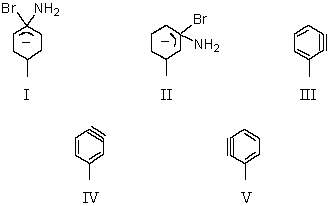
(Multiple Choice)
4.8/5  (83)
(83) 
Which of the following reactions would yield p-tert-butylphenol?
(Multiple Choice)
4.8/5 (81)
(81) Nitration of phenol gives only ortho and para products.What is the reason for this?
(Essay)
4.8/5 (74)
(74) Draw the structure of the product obtained when the following substance is heated strongly: 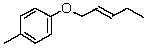
(Essay)
4.7/5 (78)
(78) Methyl salicylate,commonly found in topical muscle relaxants,has the following structure:  Which of the following signals is NOT expected to be observed in its NMR spectrum?
 (Multiple Choice)
4.9/5 (80)
(80) A key step in the industrial synthesis of phenol from cumene is the oxidation of cumene to cumene hydroperoxide with oxygen.Outline the mechanistic steps that lead to this oxidation product. 
(Essay)
4.8/5 (79)
(79) Draw the structure of the final product obtained when 2-nitrophenol reacts with acetic anhydride in presence of base.
(Essay)
5.0/5 (87)
(87) What product is likely to be obtained by the action of Ag+ or Fe+3 on the following substance? 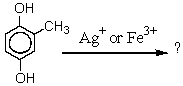
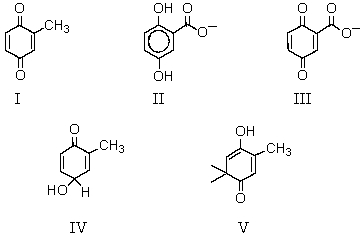
(Multiple Choice)
4.8/5 (80)
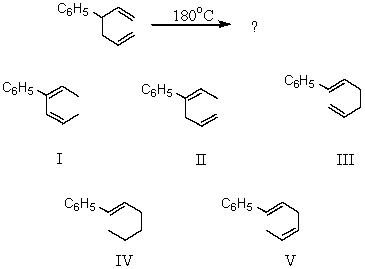
(80) 
Which is the leaving group when the following substance reacts with sodium cyanide in DMSO solution? 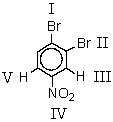
(Multiple Choice)
4.8/5 (94)
(94) Discuss the less boiling point of o-nitrophenol compared to p-nitrophenol.
(Essay)
4.9/5 (80)
(80) 
The carbon-halogen bonds in aryl and vinyl halides are both __________ and _____________ than the corresponding bonds in alkyl halides.
(Essay)
5.0/5 (73)
(73) Indicate the correct product,if any,of the following reaction. 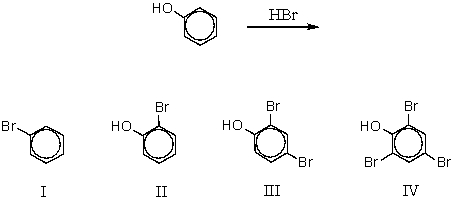
(Multiple Choice)
4.7/5 (70)
(70) 
Filters
- Essay(0)
- Multiple Choice(0)
- Short Answer(0)
- True False(0)
- Matching(0)