



 Chat with AI
Exam 16: Aldehydes and Ketones I Nucleophilic Addition to the Carbonyl Group

Exam 1: Carbon Compounds and Chemical Bonds134 Questions
Exam 2: Representative Carbon Compounds: Functional Groups, Intermolecular Forces, and Infrared Ir Spectroscopy114 Questions
Exam 3: An Introduction to Organic Reactions: Acids and Bases47 Questions
Exam 4: Alkanes: Nomenclature, Conformational Analysis, and an Introduction to Synthesis125 Questions
Exam 5: Stereochemistry: Chiral Molecules150 Questions
Exam 6: Ionic Reactions - Nucleophilic Substitution and Elimination Reactions of Alkyl Halides146 Questions
Exam 7: Alkenes and Alkynes I: Properties and Synthesis, Elimination Reactions of Alkyl Halides99 Questions
Exam 8: Alkenes and Alkynes Ii: Addition Reactions140 Questions
Exam 9: Nuclear Magnetic Resonance and Mass Spectrometry: Tools for Structure Determination94 Questions
Exam 10: Radical Reactions114 Questions
Exam 11: Alcohols and Ethers172 Questions
Exam 12: Alcohols From Carbonyl Compounds Oxidation-Reduction and Organometallic Compounds147 Questions
Exam 13: Conjugated Unsaturated Systems166 Questions
Exam 14: Aromatic Compounds151 Questions
Exam 15: Reactions of Aromatic Compounds173 Questions
Exam 16: Aldehydes and Ketones I Nucleophilic Addition to the Carbonyl Group165 Questions
Exam 17: Aldehydes and Ketones Ii Aldol Reactions131 Questions
Exam 18: Carboxylic Acids and Their Derivatives Nucleophilic Addition - Elimination at the Acyl Carbon124 Questions
Exam 19: Synthesis and Reactions of Beta-Dicarbonyl Compounds: More Chemistry of Enolate Ions131 Questions
Exam 20: Amines148 Questions
Exam 21: Phenols and Aryl Halides: Nucleophilic Aromatic Substitution87 Questions
Exam 22: Carbohydrates104 Questions
Exam 23: Lipids99 Questions
Exam 24: Amino Acids and Proteins94 Questions
Exam 25: Nucleic Acids and Protein Synthesis89 Questions
Select questions type


What would be the product of the following reaction sequence? 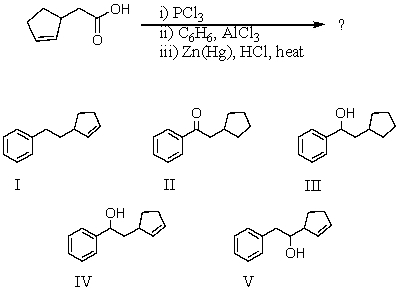
(Multiple Choice)
4.8/5  (65)
(65) Propose a structure that fits the following spectroscopic data:
C5H10O
IR: 1728 cm−1
Broadband decoupled 13C NMR: 22.59,23.57,52.66,202.71
DEPT Experiments show: signal at 23.57 as CH,signal at 22.59 as CH3,and signal at 52.66 as CH2.
(Essay)
4.8/5 (82)
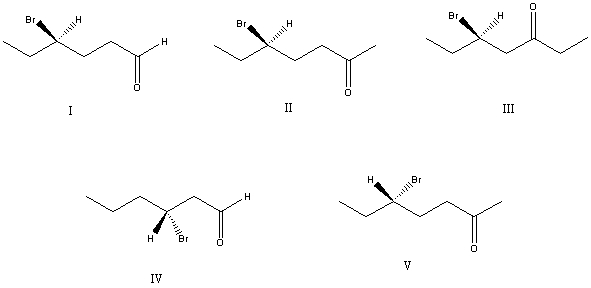
(82) What,in general,is the order of increasing reactivity of these carbonyl compounds towards nucleophilic reagents? 
(Multiple Choice)
4.8/5 (74)
(74) What is the correct structure for 5-hydroxy-2-phenyl-3-hexanone? 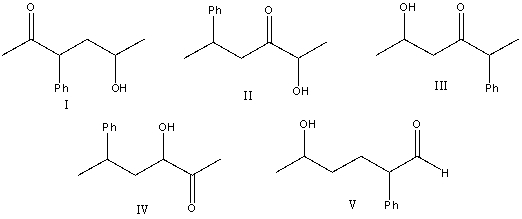
(Multiple Choice)
4.9/5 (85)
(85) Which of the following is formed when 3-methylcyclopentanone reacts with hydroxylamine? 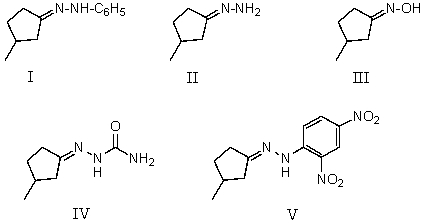
(Multiple Choice)
4.9/5 (82)
(82) Complete the following reaction sequence,giving structural details of all significant intermediates. 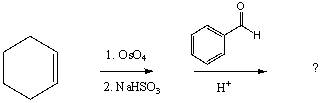
(Essay)
4.9/5 (74)
(74) 
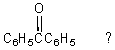
Explain clearly how you might use 1H NMR to distinguish between
2-phenylacetaldehyde and acetophenone.
(Essay)
4.8/5 (95)
(95) 
What would be the product of the following reaction sequence? 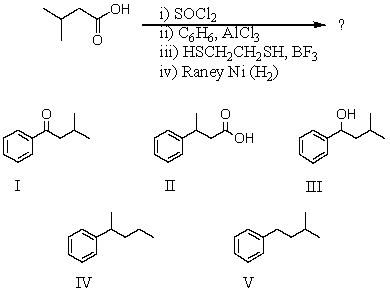
(Multiple Choice)
4.9/5 (74)
(74) Select the structure of the major product in the following reaction. 
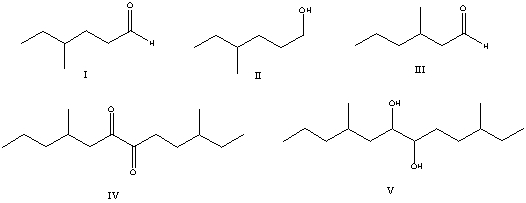
(Multiple Choice)
4.9/5 (71)
(71) What is the major product of the following reaction sequence? 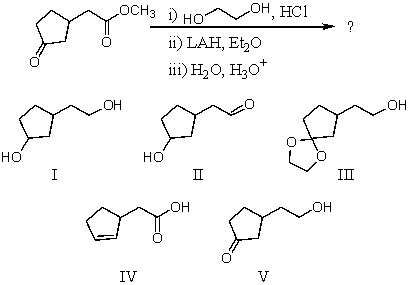
(Multiple Choice)
4.9/5 (71)
(71) Acetals are unstable in the presence of an aqueous solution of which of these?
(Multiple Choice)
4.9/5 (84)
(84) What is the correct structure for 4-chloro-3-methylbenzaldehyde? 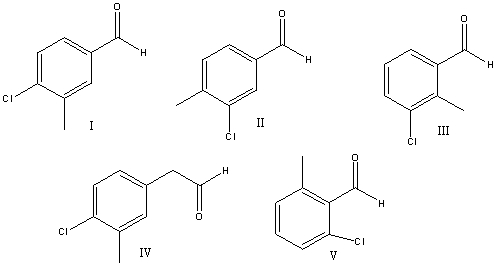
(Multiple Choice)
4.9/5 (74)
(74) A correct name for the following compound would be which of those below? 
(Multiple Choice)
4.8/5 (80)
(80) The driving force for the Wittig reaction is the formation of the very strong _______________ bond in _______________.
(Short Answer)
4.8/5 (59)
(59) A compound with an OH and OR group attached to the same carbon is known as a(n)_____________.
(Short Answer)
4.7/5 (89)
(89) What is the correct structure for 3-methyl-5-(2,5-dinitrophenyl)pentanal? 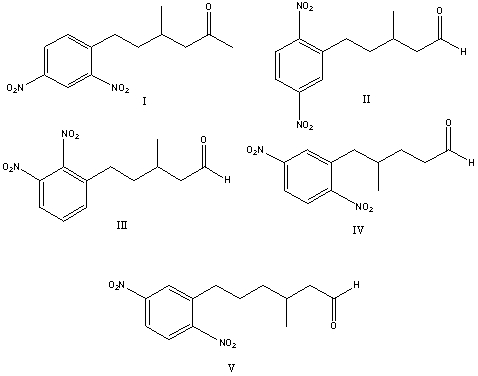
(Multiple Choice)
4.9/5 (80)
(80) Which of the following is formed when 2,2,3-trimethylcyclohexanone reacts with hydroxylamine? 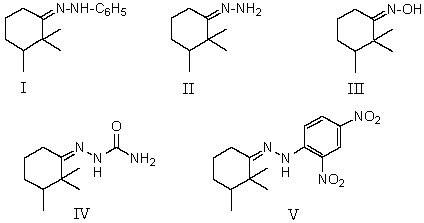
(Multiple Choice)
4.8/5 (73)
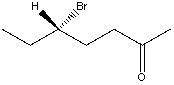
(73) 

Filters
- Essay(0)
- Multiple Choice(0)
- Short Answer(0)
- True False(0)
- Matching(0)