



 Chat with AI
Exam 13: Conjugated Unsaturated Systems

Exam 1: Carbon Compounds and Chemical Bonds134 Questions
Exam 2: Representative Carbon Compounds: Functional Groups, Intermolecular Forces, and Infrared Ir Spectroscopy114 Questions
Exam 3: An Introduction to Organic Reactions: Acids and Bases47 Questions
Exam 4: Alkanes: Nomenclature, Conformational Analysis, and an Introduction to Synthesis125 Questions
Exam 5: Stereochemistry: Chiral Molecules150 Questions
Exam 6: Ionic Reactions - Nucleophilic Substitution and Elimination Reactions of Alkyl Halides146 Questions
Exam 7: Alkenes and Alkynes I: Properties and Synthesis, Elimination Reactions of Alkyl Halides99 Questions
Exam 8: Alkenes and Alkynes Ii: Addition Reactions140 Questions
Exam 9: Nuclear Magnetic Resonance and Mass Spectrometry: Tools for Structure Determination94 Questions
Exam 10: Radical Reactions114 Questions
Exam 11: Alcohols and Ethers172 Questions
Exam 12: Alcohols From Carbonyl Compounds Oxidation-Reduction and Organometallic Compounds147 Questions
Exam 13: Conjugated Unsaturated Systems166 Questions
Exam 14: Aromatic Compounds151 Questions
Exam 15: Reactions of Aromatic Compounds173 Questions
Exam 16: Aldehydes and Ketones I Nucleophilic Addition to the Carbonyl Group165 Questions
Exam 17: Aldehydes and Ketones Ii Aldol Reactions131 Questions
Exam 18: Carboxylic Acids and Their Derivatives Nucleophilic Addition - Elimination at the Acyl Carbon124 Questions
Exam 19: Synthesis and Reactions of Beta-Dicarbonyl Compounds: More Chemistry of Enolate Ions131 Questions
Exam 20: Amines148 Questions
Exam 21: Phenols and Aryl Halides: Nucleophilic Aromatic Substitution87 Questions
Exam 22: Carbohydrates104 Questions
Exam 23: Lipids99 Questions
Exam 24: Amino Acids and Proteins94 Questions
Exam 25: Nucleic Acids and Protein Synthesis89 Questions
Select questions type


The LUMO of 1,3-pentadiene has how many electrons in its ground state?
(Multiple Choice)
5.0/5  (85)
(85) 
UV-vis spectroscopy can be used to indicate whether _________________ is present.
(Short Answer)
4.8/5 (74)
(74) Which of the following dienes would you expect to be the most stable?
(Multiple Choice)
4.7/5 (76)
(76) Treatment of 2-butene (cis or trans)with Cl2 at 400 C would yield mainly:
(Multiple Choice)
4.8/5 (70)
(70) 
A reaction under kinetic (or rate)control will yield predominantly:
(Multiple Choice)
4.9/5 (88)
(88) Treatment of 4-methylcyclohexene with N-bromosuccinimide in CCl4 would yield mainly: 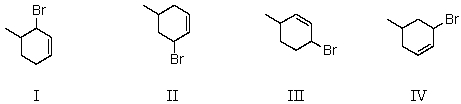
(Multiple Choice)
4.8/5 (89)
(89) Which alkene would you expect to have the highest heat of hydrogenation?
(Multiple Choice)
4.9/5 (68)
(68) Estimate the stabilization energy for 1,3-butadiene using the heats of hydrogenation in Table 1. Table 1.
Heats of Hydrogenation for Selected Compounds
Compound
Moles H2
H(kJ mol-1)
1-Butene
1
-127
1-Pentene
1
-126
1,3-Butadiene
2
-239
Trans-1,3-Pentadiene
2
-226
(Multiple Choice)
4.7/5 (79)
(79) Steroids are naturally occurring polycyclic compounds classified as lipids.The Diels-
Alder reaction has been widely used in their preparation.Shown below is a precursor
molecule used in a total steroid synthesis.What combination of diene and dieneophile can
be used to prepare this compound through the use of a Diels-Alder cycloaddition reaction. 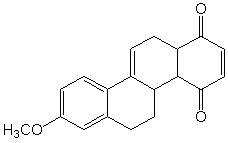
(Essay)
4.9/5 (90)
(90) Which diene and dienophile would you choose to synthesize the following compound? 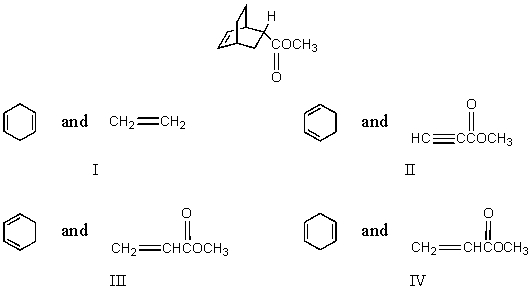
(Multiple Choice)
4.8/5 (83)
(83) Which carbon-carbon bond in the following compound would you expect to be longest? 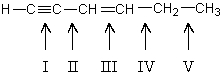
(Multiple Choice)
4.7/5 (81)
(81) The first step in the total synthesis of synthetic cholesterol involves production of the
intermediate structure shown.Which combination of diene and dieneophile will result in
its preparation? 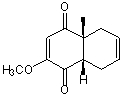
(Essay)
4.8/5 (70)
(70) An equilibrium-controlled reaction will yield predominantly:
(Multiple Choice)
4.8/5 (82)
(82) Which set of conditions does not result in allylic halogenation of an alkene?
(Multiple Choice)
4.8/5 (93)
(93) Ignoring stereochemistry,the 1:1 reaction of bromine with 1,3-cyclohexadiene at 25 C in the dark and in the absence of peroxide forms which of these? 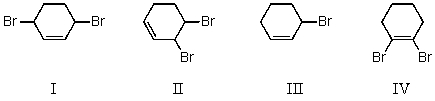
(Multiple Choice)
4.8/5 (82)
(82) Which of these dienes is the most reactive in the Diels-Alder reaction?
(Multiple Choice)
4.8/5 (74)
(74) Which pair does not represent a pair of resonance structures? 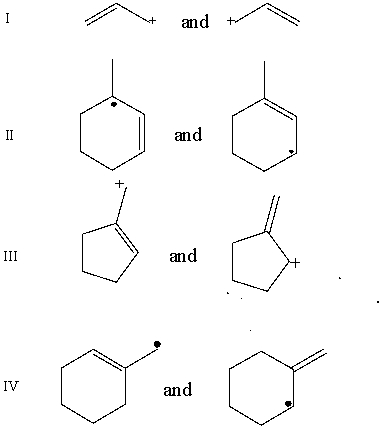
(Multiple Choice)
4.8/5 (82)
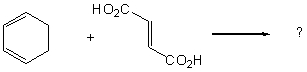
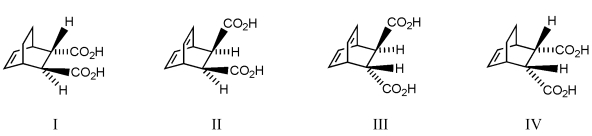
(82) 
Filters
- Essay(0)
- Multiple Choice(0)
- Short Answer(0)
- True False(0)
- Matching(0)