



 Chat with AI
Exam 18: Amino Acids and Proteins

Exam 1: Matter and Measurements143 Questions
Exam 2: Atoms and the Periodic Table91 Questions
Exam 3: Ionic Compounds75 Questions
Exam 4: Molecular Compounds75 Questions
Exam 5: Classification and Balancing of Chemical Reactions53 Questions
Exam 6: Chemical Reactions: Mole and Mass Relationships46 Questions
Exam 7: Chemical Reactions: Energy, rates, and Equilibrium73 Questions
Exam 8: Gases, liquids, and Solids73 Questions
Exam 9: Solutions110 Questions
Exam 10: Acids and Bases102 Questions
Exam 11: Nuclear Chemistry88 Questions
Exam 12: Introduction to Organic Chemistry: Alkanes83 Questions
Exam 13: Alkenes, alkynes, and Aromatic Compounds85 Questions
Exam 14: Some Compounds With Oxygen, sulfur, or a Halogen94 Questions
Exam 15: Amines46 Questions
Exam 16: Aldehydes and Ketones77 Questions
Exam 17: Carboxylic Acids and Their Derivatives84 Questions
Exam 18: Amino Acids and Proteins78 Questions
Exam 19: Enzymes and Vitamins75 Questions
Exam 20: The Generation of Biochemical Energy66 Questions
Exam 21: Carbohydrates72 Questions
Exam 22: Carbohydrate Metabolism60 Questions
Exam 23: Lipids79 Questions
Exam 24: Lipid Metabolism58 Questions
Exam 25: Nucleic Acids and Protein Synthesis67 Questions
Exam 26: Genomics38 Questions
Exam 27: Protein and Amino Acid Metabolism47 Questions
Exam 28: Chemical Messengers: Hormones, neurotransmitters, and Drugs73 Questions
Exam 29: Body Fluids63 Questions
Select questions type


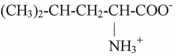 This question has four parts:
a.For the amino acid shown above in zwitterion form,circle the carboxyl group,underline the amine group,label the alpha carbon,and draw a box around the R group.
b.Write the name and abbreviation of your amino acid.
c.Classify the amino acid as polar,non-polar,acidic,or basic.Explain the basis for your classification.
d.Draw the structure of the amino acid at a pH well below its isoelectric point and well above its isoelectric point.
This question has four parts:
a.For the amino acid shown above in zwitterion form,circle the carboxyl group,underline the amine group,label the alpha carbon,and draw a box around the R group.
b.Write the name and abbreviation of your amino acid.
c.Classify the amino acid as polar,non-polar,acidic,or basic.Explain the basis for your classification.
d.Draw the structure of the amino acid at a pH well below its isoelectric point and well above its isoelectric point. (Essay)
4.8/5  (62)
(62) Detergents would most likely disrupt what type of stabilizing interaction?
(Multiple Choice)
4.8/5 (80)
(80) Which type of interaction is not directly involved in maintaining tertiary structure?
(Multiple Choice)
4.9/5 (83)
(83) Which amino acid is a secondary amine with its nitrogen and the alpha-carbon joined as part of a ring structure?
(Multiple Choice)
4.8/5 (70)
(70) The protein configuration that is primarily determined from interactions between R groups is the
(Multiple Choice)
4.7/5 (64)
(64) All of the following are non-covalent interactions important in maintaining the secondary,tertiary,and quaternary aspects of amino acids except
(Multiple Choice)
4.9/5 (81)
(81) The side chains or R groups of amino acids can be classified into each of the following categories except
(Multiple Choice)
4.8/5 (77)
(77) In the tetrapeptide Ala-Cys-Val-Leu,the N-terminal amino acid is ________.
(Multiple Choice)
4.8/5 (80)
(80) All of the following are examples of denaturing proteins except
(Multiple Choice)
4.9/5 (68)
(68) The two protein chains in insulin are held together by ________.
(Multiple Choice)
4.9/5 (80)
(80) When a glycoprotein is hydrolyzed,the products would include
(Multiple Choice)
4.9/5 (86)
(86) List three denaturing agents that can act on proteins and explain how each one disrupts the protein's structure.
(Essay)
4.7/5 (85)
(85) Which of these amino acids has a thiol group as part of its side chain?
(Multiple Choice)
4.8/5 (75)
(75) Which pair of amino acids can form hydrogen bonds between their R groups?
(Multiple Choice)
4.9/5 (70)
(70) 
Filters
- Essay(0)
- Multiple Choice(0)
- Short Answer(0)
- True False(0)
- Matching(0)