



 Chat with AI
Exam 7: Reactions of Alkynes Introduction to Multistep Synthesis

Exam 1: Remembering General Chemistry: Electronic Structure and Bonding81 Questions
Exam 2: Acids and Bases: Central to Understanding Organic Chemistry37 Questions
Exam 3: An Introduction to Organic Compounds123 Questions
Exam 4: Isomers: the Arrangement of Atoms in Space111 Questions
Exam 5: Alkenes Thermodynamics and Kinetics76 Questions
Exam 6: Reactions of Alkenes93 Questions
Exam 7: Reactions of Alkynes Introduction to Multistep Synthesis119 Questions
Exam 8: Electron Delocalization, Resonance, and Aromaticity More About Molecular Orbital Theory166 Questions
Exam 9: Substitution Reactions of Alkyl Halides118 Questions
Exam 10: Elimination Reactions of Alkyl Halides Competition Between Substitution and Elimination94 Questions
Exam 11: Reactions of Alcohols, Ethers, Epoxides, and Sulfur-Containing Compounds100 Questions
Exam 12: Organometallic Compounds57 Questions
Exam 13: Reactions of Alkanes, Radicals130 Questions
Exam 14: Mass Spectrometry, Infrared Spectroscopy, and Uvvis Spectroscopy127 Questions
Exam 15: Nmr Spectroscopy110 Questions
Exam 16: Reactions of Carboxylic Acids and Carboxylic Acid Derivatives128 Questions
Exam 17: Reactions of Aldehydes and Ketones116 Questions
Exam 18: Reactions at the Alpha Carbon of Carbonyl Compounds113 Questions
Exam 19: Reactions of Benzene and Substituted Benzenes155 Questions
Exam 20: More About Amines Heterocylic Compounds115 Questions
Exam 21: Carbohydrates100 Questions
Exam 22: Amino Acids, Peptides, and Proteins105 Questions
Exam 23: Catalysis85 Questions
Exam 24: The Organic Mechanisms of the Coenzymes92 Questions
Exam 25: The Chemistry of Metabolism94 Questions
Exam 26: Nucleosides, Nucleotides, and Nucleic Acids85 Questions
Exam 27: Synthetic Polymers106 Questions
Exam 28: Pericyclic Reactions92 Questions
Select questions type


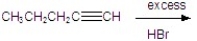

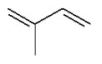

Which of the following is the final and major product of this reaction? 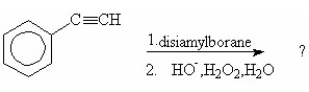
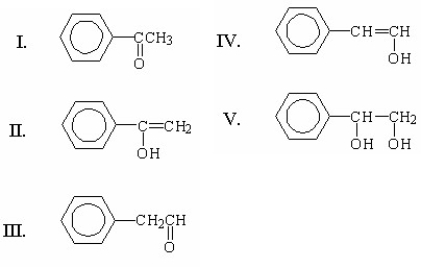
(Multiple Choice)
4.9/5  (83)
(83) An optically active compound (A), C6H10, reacts with H2/Ni to produce compound (B), C6H14. (B)is optically inactive. Deduce the structures of (A)and (B).
(Essay)
4.9/5 (88)
(88) 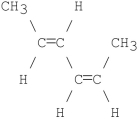
Provide the structure of the intermediate which forms in the first step of the reaction of 1-butyne with water in the presence of H2SO4/HgSO4.
(Essay)
4.8/5 (90)
(90) Write structures and give IUPAC names for all alkynes with molecular formula C5H8.
(Essay)
4.9/5 (84)
(84) Describe a sequence of reactions by which CH3CH2CH2COCH2CH3 can be prepared from 1-butyne.
(Short Answer)
4.8/5 (74)
(74) 
Provide the structure of the major organic product of the following reaction. 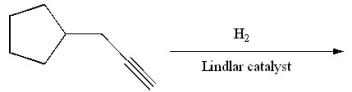
(Essay)
4.8/5 (74)
(74) 
Describe a sequence of reactions by which 3-heptyne can be straightforwardly prepared from acetylene.
(Short Answer)
4.9/5 (84)
(84) 
Provide the sequence of reagents that are needed to accomplish the multistep synthesis below. 
(Essay)
4.7/5 (86)
(86) Provide the structure of the major organic product(s)in the reaction below. 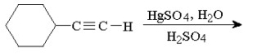
(Essay)
5.0/5 (85)
(85) Although you might expect 1-propyne to be more reactive than 1-propene in electrophilic addition reactions, the reverse is true. Explain this using your knowledge of the mechanism of electrophilic additions to both alkynes and alkenes.
(Essay)
4.8/5 (71)
(71) What type of organic product results when 1-butyne is treated with 6M aqueous NaOH?
(Multiple Choice)
4.9/5 (88)
(88) 
Filters
- Essay(0)
- Multiple Choice(0)
- Short Answer(0)
- True False(0)
- Matching(0)