



 Chat with AI
Exam 4: Isomers: the Arrangement of Atoms in Space

Exam 1: Remembering General Chemistry: Electronic Structure and Bonding81 Questions
Exam 2: Acids and Bases: Central to Understanding Organic Chemistry37 Questions
Exam 3: An Introduction to Organic Compounds123 Questions
Exam 4: Isomers: the Arrangement of Atoms in Space111 Questions
Exam 5: Alkenes Thermodynamics and Kinetics76 Questions
Exam 6: Reactions of Alkenes93 Questions
Exam 7: Reactions of Alkynes Introduction to Multistep Synthesis119 Questions
Exam 8: Electron Delocalization, Resonance, and Aromaticity More About Molecular Orbital Theory166 Questions
Exam 9: Substitution Reactions of Alkyl Halides118 Questions
Exam 10: Elimination Reactions of Alkyl Halides Competition Between Substitution and Elimination94 Questions
Exam 11: Reactions of Alcohols, Ethers, Epoxides, and Sulfur-Containing Compounds100 Questions
Exam 12: Organometallic Compounds57 Questions
Exam 13: Reactions of Alkanes, Radicals130 Questions
Exam 14: Mass Spectrometry, Infrared Spectroscopy, and Uvvis Spectroscopy127 Questions
Exam 15: Nmr Spectroscopy110 Questions
Exam 16: Reactions of Carboxylic Acids and Carboxylic Acid Derivatives128 Questions
Exam 17: Reactions of Aldehydes and Ketones116 Questions
Exam 18: Reactions at the Alpha Carbon of Carbonyl Compounds113 Questions
Exam 19: Reactions of Benzene and Substituted Benzenes155 Questions
Exam 20: More About Amines Heterocylic Compounds115 Questions
Exam 21: Carbohydrates100 Questions
Exam 22: Amino Acids, Peptides, and Proteins105 Questions
Exam 23: Catalysis85 Questions
Exam 24: The Organic Mechanisms of the Coenzymes92 Questions
Exam 25: The Chemistry of Metabolism94 Questions
Exam 26: Nucleosides, Nucleotides, and Nucleic Acids85 Questions
Exam 27: Synthetic Polymers106 Questions
Exam 28: Pericyclic Reactions92 Questions
Select questions type


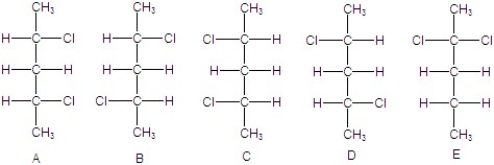
What is the relationship between the structures shown below? 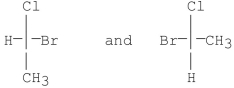
(Multiple Choice)
4.8/5  (78)
(78) Which of the statements below correctly describes an achiral molecule?
(Multiple Choice)
4.8/5 (91)
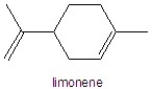
(91) 
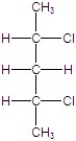
Which of the following terms best describes the pair of compounds shown: enantiomers, diastereomers, or the same compound? 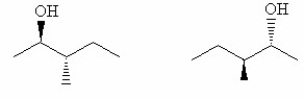
(Short Answer)
4.8/5 (86)
(86) 

A sample of (+)and (-)-3-chlorohexane has a rotation of -20 degrees. Pure (+)-3-chlorohexane has a rotation of +40 degrees. Calculate the enantiomeric excess and the amount of (-)and (+)-3-chlorohexane in the original sample.
(Short Answer)
4.9/5 (85)
(85) 
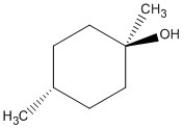

In the Fischer projection below, what are the configurations of the two asymmetric centers? 
(Multiple Choice)
4.8/5 (79)
(79) Twenty grams of a compound was dissolved in 100 mL of solvent and gave an observed rotation of -20 degrees. The sample tube is 4 dm long. Calculate the specific rotation.
(Short Answer)
4.8/5 (75)
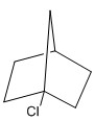
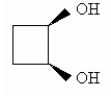
(75) Which of the following statements correctly describes the molecule shown below? 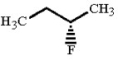
(Multiple Choice)
4.8/5 (84)
(84) 
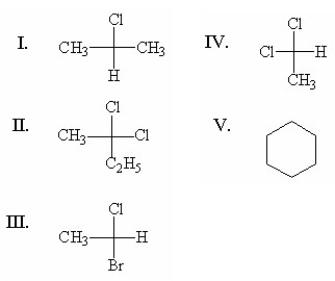
Draw the structure of (2S,3R)-dichloropentane. Take particular care to indicate three-dimensional stereochemistry detail properly.
(Essay)
4.8/5 (80)
(80) 

Filters
- Essay(0)
- Multiple Choice(0)
- Short Answer(0)
- True False(0)
- Matching(0)