



 Chat with AI
Exam 18: Life in the Universe

Exam 1: Our Place in the Universe71 Questions
Exam 2: Patterns in the Skymotions of Earth92 Questions
Exam 3: Laws of Motion70 Questions
Exam 4: Light and Telescopes71 Questions
Exam 5: The Formation of Stars and Planets79 Questions
Exam 6: Terrestrial Worlds in the Inner Solar System91 Questions
Exam 7: Atmospheres of Venus, Earth, and Mars69 Questions
Exam 8: The Giant Planets79 Questions
Exam 9: Small Bodies of the Solar System75 Questions
Exam 10: Measuring the Stars75 Questions
Exam 11: Our Star: The Sun71 Questions
Exam 12: Evolution of Low-Mass Stars73 Questions
Exam 13: Evolution of High-Mass Stars71 Questions
Exam 14: The Expansion of Space71 Questions
Exam 15: The Realm of the Galaxies71 Questions
Exam 16: Our Galaxy: The Milky Way80 Questions
Exam 17: Modern Cosmology and the Origin of Structure100 Questions
Exam 18: Life in the Universe41 Questions
Select questions type


Scientists have shown that ammonia and methane,mixed together with hydrogen,carbon dioxide,or nitrogen,and exposed to electrical sparks,can produce some of the amino acids essential for life.
(True/False)
4.9/5  (85)
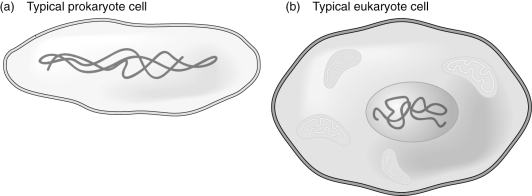
(85) Complex microorganisms that have complex DNA enclosed in a cell nucleus are called:
(Multiple Choice)
4.9/5 (92)
(92) Calculate the maximum likelihood that any technically advanced civilization that arose still exists in our galaxy today.
(Essay)
4.9/5 (79)
(79) Which one of the following is NOT one of the six chemical elements commonly found in living organisms?
(Multiple Choice)
4.8/5 (79)
(79) According to the theory of evolution,chemical reactions resulting in the mutation of a molecule are a natural and inevitable occurrence.
(True/False)
4.8/5 (76)
(76) Given the following information,what would be the number of intelligent civilizations in our galaxy? If all stars formed planets; each planet has a 0.1 percent chance of supporting life; every time conditions are right life develops; and only 0.001 percent of the time intelligent life develops surviving indefinitely.
(Essay)
4.8/5 (77)
(77) The habitable zone for a 1 M star ranges from 0.9 to 1.4 AU from the star.
(True/False)
4.8/5 (87)
(87) Examine the figure below. 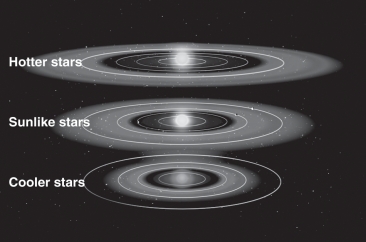 The habitable zone around a star depends most on its:
 (Multiple Choice)
4.8/5 (82)
(82) Mutations always lead to improvements in an organism's ability to survive and reproduce.
(True/False)
4.8/5 (72)
(72) If the most pessimistic assumptions in the Drake equation were true,we would:
(Multiple Choice)
4.9/5 (74)
(74) Why was the comet impact a chance happening that benefited the evolution of humans?
(Multiple Choice)
4.8/5 (75)
(75) Approximately 10 percent of all life on Earth has been in the form of microorganisms.
(True/False)
4.9/5 (88)
(88) If the entire history of the Earth were scaled to fit into one day,what time of day would microorganisms first form,oxygen start becoming a significant component of the atmosphere,and humans split off from their genetic ancestors?
(Essay)
4.8/5 (72)
(72) 
If you wanted to find intelligent life in the universe,what spectral types of stars would you study and why?
(Essay)
4.8/5 (66)
(66) If we model the history of the Earth as a single day,at what time would the first human civilizations appear?
(Multiple Choice)
4.9/5 (84)
(84) Which one of the following is NOT one of the three categories of terrestrial life based on their DNA characteristics?
(Multiple Choice)
4.8/5 (82)
(82) SETI's Allen Telescope Array (image below)is designed to search __________ for signs of intelligent life. 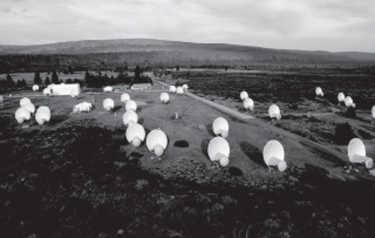
(Multiple Choice)
4.9/5 (84)
(84) 
Filters
- Essay(0)
- Multiple Choice(0)
- Short Answer(0)
- True False(0)
- Matching(0)