



 Chat with AI
Exam 5: The Formation of Stars and Planets

Exam 1: Our Place in the Universe71 Questions
Exam 2: Patterns in the Skymotions of Earth92 Questions
Exam 3: Laws of Motion70 Questions
Exam 4: Light and Telescopes71 Questions
Exam 5: The Formation of Stars and Planets79 Questions
Exam 6: Terrestrial Worlds in the Inner Solar System91 Questions
Exam 7: Atmospheres of Venus, Earth, and Mars69 Questions
Exam 8: The Giant Planets79 Questions
Exam 9: Small Bodies of the Solar System75 Questions
Exam 10: Measuring the Stars75 Questions
Exam 11: Our Star: The Sun71 Questions
Exam 12: Evolution of Low-Mass Stars73 Questions
Exam 13: Evolution of High-Mass Stars71 Questions
Exam 14: The Expansion of Space71 Questions
Exam 15: The Realm of the Galaxies71 Questions
Exam 16: Our Galaxy: The Milky Way80 Questions
Exam 17: Modern Cosmology and the Origin of Structure100 Questions
Exam 18: Life in the Universe41 Questions
Select questions type


Explain how astronomers use the Doppler effect to detect the presence of extra-solar planets.
(Essay)
4.9/5  (78)
(78) You record the spectrum of a star and find that the calcium absorption line,whose rest wavelength is 393.3 nm,has an observed wavelength of 394.0 nm.What is the radial velocity of this star?
(Multiple Choice)
4.9/5 (83)
(83) Doppler shift can be used to determine the 3-dimensional velocity of a star.
(True/False)
4.8/5 (77)
(77) Explain the process of protostar formation shown in the figure below.
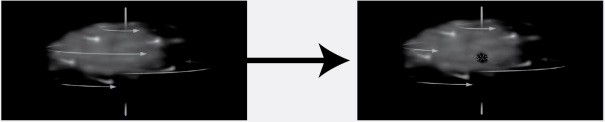
(Essay)
4.8/5 (84)
(84) Was it ever possible (or is it currently possible)for Jupiter to become a star?
(Multiple Choice)
4.9/5 (75)
(75) The planet Mercury still shows evidence of impact craters from the early periods of solar system formation.
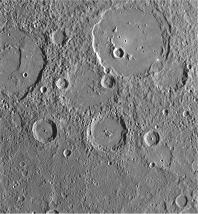
(True/False)
4.8/5 (87)
(87) Explain why astronomers believe that the formation of planets is a natural by-product of star formation.
(Essay)
4.9/5 (65)
(65) Astronomers believe that the "hot Jupiters" found orbiting other stars must have migrated inward over time by:
(Multiple Choice)
4.7/5 (84)
(84) Detecting a planet around another star using the transit method is difficult because:
(Multiple Choice)
4.9/5 (75)
(75) The plane of an accretion disk is always perpendicular to the axis of rotation of the interstellar cloud out of which it forms.
(True/False)
4.9/5 (87)
(87) An observer outside our solar system,who monitors the velocity of our Sun over time,will find that its velocity varies by +/- 12 m/s over a period of 12 years,because of:
(Multiple Choice)
4.8/5 (86)
(86) Astronomers have used radial velocity monitoring to discover:
(Multiple Choice)
4.9/5 (79)
(79) When astronomers began searching for extra-solar planets,they were surprised to discover Jupiter-sized planets much closer than 1 AU from their parent stars.Why is this surprising?
(Multiple Choice)
4.8/5 (91)
(91) If a collapsing interstellar cloud formed only a protostar without an accretion disk around it,what would happen?
(Multiple Choice)
4.8/5 (61)
(61) The Solar System was formed when a passing star tidally extruded mass from the forming Sun.
(True/False)
4.8/5 (92)
(92) In order to "see" into the dense molecular clouds of the Eagle Nebula (image below),what wavelength of light must be used? 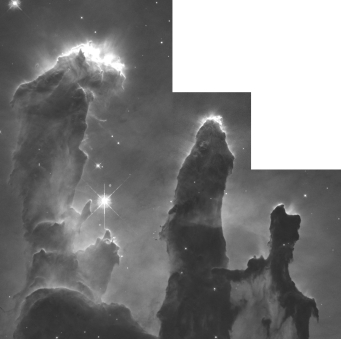
(Multiple Choice)
4.9/5 (78)
(78) What evidence do we have that the accretion disk that formed the Solar System was initially very centrally condensed?
(Essay)
4.7/5 (79)
(79) Why do outer planets like Jupiter have huge gaseous atmospheres of hydrogen and helium while the inner planets do not?
(Multiple Choice)
4.9/5 (82)
(82) 
Filters
- Essay(0)
- Multiple Choice(0)
- Short Answer(0)
- True False(0)
- Matching(0)