



 Chat with AI
Exam 9: Monopoly Markets

Exam 1: Economics: Foundations and Models159 Questions
Exam 2: Choices and Trade-Offs in the Market192 Questions
Exam 3: Where Prices Come From: The Interaction of Demand and Supply202 Questions
Exam 4: Elasticity: The Responsiveness of Demand and Supply224 Questions
Exam 5: Economic Efficiency, Government Price Setting and Taxes187 Questions
Exam 6: Consumer Choice and Behavioural Economics254 Questions
Exam 7: Technology Production and Costs301 Questions
Exam 8: Firms in Perfectly Competitive Markets269 Questions
Exam 9: Monopoly Markets281 Questions
Exam 10: Monopolistic Competition: The Competitive Model in a More Realistic255 Questions
Exam 11: Oligopoly: Markets With Few Competitors186 Questions
Exam 12: The Markets for Labour and Other Factors of Production250 Questions
Exam 13: Comparative Advantage and the Gains From International Trade131 Questions
Exam 14: Government Intervention in the Market113 Questions
Exam 15: Externalities, Environmental Policy and Public Goods212 Questions
Exam 16: The Distribution of Income and Social Policy121 Questions
Select questions type


Figure 9.12 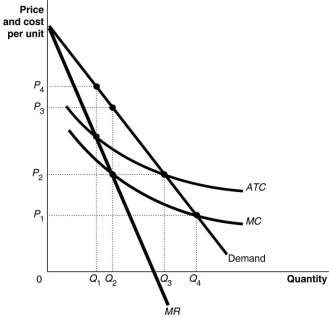 Figure 9.12 shows the cost and demand curves for the ETSA.
-Refer to Figure 9.12.ETSA Power is a natural monopoly because
Figure 9.12 shows the cost and demand curves for the ETSA.
-Refer to Figure 9.12.ETSA Power is a natural monopoly because (Multiple Choice)
4.9/5  (89)
(89) Joss is a marketing consultant.Iris and Daphne are potential customers interested in commissioning Joss to undertake a market survey and compile the findings in a report.Iris is willing to pay $500 for the service while Daphne is willing to pay $800.Suppose that the opportunity cost of Joss's time is $1200.Assume that Iris and Daphne do not know each other.If the price is $800 per copy,
(Multiple Choice)
4.9/5 (79)
(79) Ordinarily, governments attempt to promote competition in markets.Why do governments use patents to block entry into some markets when this prohibits competition?
(Multiple Choice)
4.8/5 (86)
(86) Figure 9.10  -Refer to Figure 9.10.Compared to a perfectly competitive market, consumer surplus is lower in a monopoly by an amount equal to the
 (Multiple Choice)
4.7/5 (83)
(83) Joss is a marketing consultant.Iris and Daphne are potential customers interested in commissioning Joss to undertake a market survey and compile the findings in a report.Iris is willing to pay $500 for the service while Daphne is willing to pay $800.Suppose that the opportunity cost of Joss's time is $1200.Assume that Iris and Daphne do not know each other.Which of the following statements is true?
(Multiple Choice)
4.9/5 (79)
(79) Figure 9.9  Figure 9.9 shows the demand and cost curves for a monopolist.
-Refer to Figure 9.9.The economically efficient output level is
Figure 9.9 shows the demand and cost curves for a monopolist.
-Refer to Figure 9.9.The economically efficient output level is (Multiple Choice)
4.8/5 (84)
(84) If Mort's House of Flowers sells one dozen roses to different customers at different prices, economists would consider this an example of
(Multiple Choice)
4.9/5 (73)
(73) a.What is the difference between a horizontal merger and a vertical merger?
b.Give an example of each type of merger.
c.Could a horizontal merger be welfare improving?
__________________________________________________________________________________________________________________________________________________________________________________________
(Essay)
4.8/5 (84)
(84) Which of the following undermines a firm's ability to engage in price discrimination?
(Multiple Choice)
4.9/5 (85)
(85) Relative to a perfectly competitive market, a monopoly results in
(Multiple Choice)
4.8/5 (82)
(82) Because a monopoly's demand curve is the same as the market demand curve for its product
(Multiple Choice)
4.8/5 (82)
(82) Which of the following does not arise from price discrimination?
(Multiple Choice)
4.7/5 (86)
(86) If a monopolist's price is $50 at the output where marginal revenue equals marginal cost and average total cost is $43, then the incremental profit from the last unit sold is $7.
(True/False)
4.7/5 (78)
(78) A successful strategy of price discrimination requires that a firm be a price-taker.
(True/False)
4.9/5 (81)
(81) Figure 9.6  Figure 9.6 shows the cost and demand curves for a monopolist.
-Refer to Figure 9.6.What are the profit-maximising output and price for the monopolist?
Figure 9.6 shows the cost and demand curves for a monopolist.
-Refer to Figure 9.6.What are the profit-maximising output and price for the monopolist? (Multiple Choice)
5.0/5 (74)
(74) Suppose a monopoly is producing its profit-maximising output level.Now suppose the government imposes a lump-sum tax on the monopoly, independent of its output.As a result, the monopolist will increase the price of its product to cover its higher cost.
(True/False)
4.7/5 (87)
(87) If a monopolist engages in first-degree price discrimination, it will produce the same output level as a perfectly competitive industry.
(True/False)
4.7/5 (73)
(73) Which of the following is not a requirement for a successful price discrimination strategy?
(Multiple Choice)
4.7/5 (80)
(80) 
Filters
- Essay(0)
- Multiple Choice(0)
- Short Answer(0)
- True False(0)
- Matching(0)