



 Chat with AI
Exam 9: Monopoly Markets

Exam 1: Economics: Foundations and Models159 Questions
Exam 2: Choices and Trade-Offs in the Market192 Questions
Exam 3: Where Prices Come From: The Interaction of Demand and Supply202 Questions
Exam 4: Elasticity: The Responsiveness of Demand and Supply224 Questions
Exam 5: Economic Efficiency, Government Price Setting and Taxes187 Questions
Exam 6: Consumer Choice and Behavioural Economics254 Questions
Exam 7: Technology Production and Costs301 Questions
Exam 8: Firms in Perfectly Competitive Markets269 Questions
Exam 9: Monopoly Markets281 Questions
Exam 10: Monopolistic Competition: The Competitive Model in a More Realistic255 Questions
Exam 11: Oligopoly: Markets With Few Competitors186 Questions
Exam 12: The Markets for Labour and Other Factors of Production250 Questions
Exam 13: Comparative Advantage and the Gains From International Trade131 Questions
Exam 14: Government Intervention in the Market113 Questions
Exam 15: Externalities, Environmental Policy and Public Goods212 Questions
Exam 16: The Distribution of Income and Social Policy121 Questions
Select questions type


Figure 9.1  -Refer to Figure 9.1.Which of the following statements about the firm depicted in the diagram is true?
 (Multiple Choice)
4.9/5  (89)
(89) A necessary condition for successful price discrimination is
(Multiple Choice)
4.7/5 (81)
(81) If a theatre company expects $250 000 in ticket revenue from five performances and $288 000 in ticket revenue if it adds a sixth performance, the
(Multiple Choice)
4.9/5 (69)
(69) A firm that engages in price discrimination must be able to identify the preferences of every customer it serves.
(True/False)
5.0/5 (64)
(64) If a monopolist's price is $50 at 63 units of output, and marginal revenue equals marginal cost, and average total cost equals $43, then what is the firm's total profit?
(Multiple Choice)
4.8/5 (89)
(89) Consider the following actions undertaken by a firm:
a.charging the same price for products of different quality
b.charging different prices to different consumers for the same product when the variation cannot be explained by cost differences
c.charging different prices for products of different qualities
d.charging a lower price to match a competitor's price
The actions that will be considered price discrimination are
(Multiple Choice)
4.9/5 (91)
(91) Perfect price discrimination will lead a firm to produce up to the point where price equals marginal cost, the efficient level of output.
(True/False)
4.8/5 (88)
(88) Research has shown that most economic profits from selling a prescription drug are eliminated 20 years after the drug is first offered for sale.The main reason for the elimination of profits is
(Multiple Choice)
4.8/5 (84)
(84) If we use a narrow definition of monopoly, then a monopoly is defined as a firm
(Multiple Choice)
4.8/5 (89)
(89) Wendell can sell five motor homes per week at a price of $22 000.If he lowers the price of motor homes to $20 000 per week he will sell six motor homes.The marginal revenue of the sixth motor home is
(Multiple Choice)
4.9/5 (83)
(83) Long-run economic profits would most likely exist in which market structure?
(Multiple Choice)
4.7/5 (82)
(82) Which of the following is not a way by which price-discriminating firms can segment a market?
(Multiple Choice)
4.9/5 (86)
(86) A merger between the Ford Motor Company and General Motors would be an example of a
(Multiple Choice)
4.8/5 (84)
(84) A snack shop inside a hotel in a busy city has a monopoly on food sales if it is the only food vendor in the hotel that is open 24 hours a day.
(True/False)
4.8/5 (72)
(72) What is the difference between price discrimination and other forms of discrimination?
__________________________________________________________________________________________________________________________________________________________________________________________
(Essay)
4.8/5 (90)
(90) Table 9.1  A monopoly producer of foreign language translation software faces a demand and cost structure as given in Table 9.1.
-Refer to Table 9.1.The marginal revenue from the sale of the 12th unit is
A monopoly producer of foreign language translation software faces a demand and cost structure as given in Table 9.1.
-Refer to Table 9.1.The marginal revenue from the sale of the 12th unit is (Multiple Choice)
4.9/5 (77)
(77) a.What is the defining characteristic of a natural monopoly?
b.Should the government break up a natural monopoly into two or more firms to make the industry more competitive?
c.Suppose the government wants to ensure that some of the benefits of declining average total cost are passed on to consumers.To achieve this goal, it requires that the natural monopoly set its price equal to marginal cost.Is this a feasible goal? Explain.
d.What is an alternative to marginal cost pricing that ensures that consumers reap some of the benefits of declining average total cost?
__________________________________________________________________________________________________________________________________________________________________________________________
(Essay)
4.9/5 (84)
(84) Figure 9.12 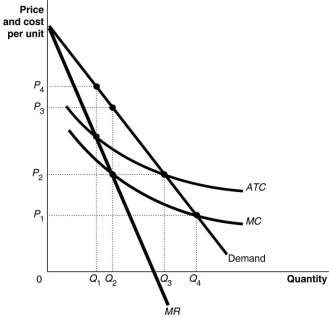 Figure 9.12 shows the cost and demand curves for the ETSA.
-Refer to Figure 9.12.Why won't regulators require that ETSA Power produce the economically efficient output level?
Figure 9.12 shows the cost and demand curves for the ETSA.
-Refer to Figure 9.12.Why won't regulators require that ETSA Power produce the economically efficient output level? (Multiple Choice)
4.9/5 (89)
(89) Some consumer electronic products such as plasma TVs, DVD players and digital cameras are introduced at very high prices, but over time, their prices start falling (beyond what could be attributed to falling costs as companies take advantage of economies of scale and cheaper technologies).Which of the following is the best explanation for this observation?
(Multiple Choice)
4.8/5 (80)
(80) 
Filters
- Essay(0)
- Multiple Choice(0)
- Short Answer(0)
- True False(0)
- Matching(0)