



 Chat with AI
Exam 2: Thinking Like an Economist

Exam 1: Ten Principles of Economics347 Questions
Exam 2: Thinking Like an Economist535 Questions
Exam 3: Interdependence and the Gains From Trade442 Questions
Exam 4: The Market Forces of Supply and Demand569 Questions
Exam 5: Elasticity and Its Application503 Questions
Exam 6: Supply, Demand, and Government Policies556 Questions
Exam 7: Consumers, Producers, and the Efficiency of Markets460 Questions
Exam 8: Application: The Costs of Taxation422 Questions
Exam 9: Application: International Trade409 Questions
Exam 10: Measuring a Nations Income428 Questions
Exam 11: Measuring the Cost of Living436 Questions
Exam 12: Production and Growth417 Questions
Exam 13: Saving, Investment, and the Financial System473 Questions
Exam 14: The Basic Tools of Finance419 Questions
Exam 15: Unemployment571 Questions
Exam 16: The Monetary System423 Questions
Exam 17: Money Growth and Inflation388 Questions
Exam 18: Open-Economy Macroeconomic Models448 Questions
Exam 19: A Macroeconomic Theory of the Open Economy374 Questions
Exam 20: Aggregate Demand and Aggregate Supply471 Questions
Exam 21: The Influence of Monetary and Fiscal Policy on Aggregate Demand416 Questions
Exam 22: The Short-Run Trade-Off Between Inflation and Unemployment400 Questions
Exam 23: Six Debates Over Macroeconomic Policy235 Questions
Select questions type


Economists face an obstacle that many other scientists do not face. What is that obstacle?
(Multiple Choice)
4.9/5  (82)
(82) Home is a country that produces two goods, pears and cellular phones. Last year, Home produced 450 bushels of pears and 1050 cellular phones. This year it produced 450 bushels of pears and 2000 cellular phones. Given no other information, which of the following events could explain this change?
(Multiple Choice)
5.0/5 (85)
(85) Figure 2-9
 -Refer to Figure 2-9, Panel (a). Production at point B is
 (Multiple Choice)
4.9/5 (62)
(62) The slope of a horizontal line is infinite, and the slope of a vertical line is zero.
(True/False)
4.9/5 (72)
(72) Figure 2-4  -Refer to Figure 2-4. Inefficient production is represented by which point(s)?
 (Multiple Choice)
4.8/5 (94)
(94) Figure 2-13 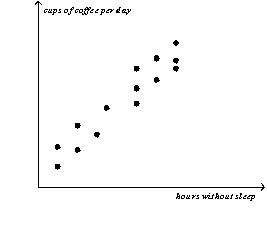 -Refer to Figure 2-13. Cups of coffee per day and the hours that someone can go without sleep appear to have
 (Multiple Choice)
4.8/5 (89)
(89) Points on the production possibilities frontier represent efficient levels of production.
(True/False)
4.9/5 (78)
(78) Figure 2-3  -Refer to Figure 2-3. At which point is this economy producing its maximum possible quantity of pans?
 (Multiple Choice)
4.8/5 (82)
(82) The production possibilities frontier is a graph that shows the various combinations of output that an economy can possibly produce given the available factors of production and
(Multiple Choice)
4.9/5 (89)
(89) While the scientific method is applicable to studying natural sciences, it is not applicable to studying a nation's economy.
(True/False)
4.9/5 (91)
(91) 
Filters
- Essay(0)
- Multiple Choice(0)
- Short Answer(0)
- True False(0)
- Matching(0)