



 Chat with AI
Exam 11: Monopolistic Competition and Oligopoly

Exam 1: Economics: Foundations and Models459 Questions
Exam 2: Trade-Offs, Comparative Advantage, and the Market System495 Questions
Exam 3: Where Prices Come From: The Interaction of Demand and Supply476 Questions
Exam 4: Market Efficiency and Market Failure464 Questions
Exam 5: The Economics of Health Care337 Questions
Exam 6: Firms, The Stock Market, and Corporate Governance456 Questions
Exam 7: Consumer Choice and Elasticity384 Questions
Exam 8: Technology,Production,and Costs274 Questions
Exam 9: Firms in Perfectly Competitive Markets297 Questions
Exam 10: Monopoly and Antitrust Policy279 Questions
Exam 11: Monopolistic Competition and Oligopoly410 Questions
Exam 12: GDP: Measuring Total Production and Income261 Questions
Exam 13: Unemployment and Inflation290 Questions
Exam 14: Economic Growth, The Financial System, and Business Cycles251 Questions
Exam 15: Aggregate Demand and Aggregate Supply Analysis286 Questions
Exam 16: Money,Banks,and the Federal Reserve System278 Questions
Exam 17: Monetary Policy280 Questions
Exam 18: Fiscal Policy292 Questions
Exam 19: Comparative Advantage, International Trade, and Exchange Rates443 Questions
Select questions type


There are many wheat farmers in the world,and there are also many McDonald's restaurants in the world.Why,then,does a McDonald's restaurant face a downward-sloping demand curve while a wheat farmer faces a horizontal demand curve?
(Essay)
4.9/5  (91)
(91) Figure 11-17
 -Refer to Figure 11-17.What is the amount of excess capacity?
 (Multiple Choice)
4.8/5 (81)
(81) Explain the similarities and differences between the long-run equilibrium for a perfectly competitive firm and a monopolistically competitive firm.Illustrate your answer with a graph demonstrating the long-run equilibrium for the two types of firms.
(Essay)
4.9/5 (84)
(84) Figure 11-11
 -Refer to Figure 11-11.What is the productively efficient output for the firm represented in the diagram?
 (Multiple Choice)
4.8/5 (94)
(94) Figure 11-11
-Refer to Figure 11-11.What is the allocatively efficient output for the firm represented in the diagram?
-Refer to Figure 11-11.What is the allocatively efficient output for the firm represented in the diagram? (Multiple Choice)
4.8/5 (83)
(83) What effect does the entry of new firms in a monopolistically competitive market have on the economic profits of existing firms in the market? How might existing firms attempt to counteract this effect?
(Essay)
4.9/5 (97)
(97) Monopolistically competitive firms achieve allocative efficiency but not productive efficiency.
(True/False)
4.9/5 (66)
(66) What is the most important difference between perfectly competitive markets and monopolistically competitive markets?
(Essay)
4.8/5 (69)
(69) The barrier to entry that allowed Alcoa to make persistent economic profits was ownership of an essential input.
(True/False)
4.8/5 (89)
(89) What is meant by the term "government-imposed barrier to entry"? Why would a government be willing to impose barriers to entering an industry?
(Essay)
4.9/5 (74)
(74) Table 11-9
 Alpha and Beta are the only firms selling gyros in the upscale town of Delphi. Each firm must decide on whether to offer a discount to students to compete for customers. If one firm offers a discount but the other does not, then the firm that offers the discount will increase its profit. Table 11-9 shows the payoff matrix for this game.
-Refer to Table 11-9.What is the Nash equilibrium in this game?
Alpha and Beta are the only firms selling gyros in the upscale town of Delphi. Each firm must decide on whether to offer a discount to students to compete for customers. If one firm offers a discount but the other does not, then the firm that offers the discount will increase its profit. Table 11-9 shows the payoff matrix for this game.
-Refer to Table 11-9.What is the Nash equilibrium in this game? (Multiple Choice)
4.9/5 (76)
(76) A monopolistically competitive firm that is profitable in the short run will face competition that will eventually eliminate the firm's profits in the long run.But the firm can stave off competition and continue to earn economic profits if
(Multiple Choice)
4.7/5 (78)
(78) Table 11-13
 Two rival oligopolists in the coffee industry, Wide Awake and Zuma, have to decide on their pricing strategy. Each can choose either a high price or a low price. Table 11-13 shows the payoff matrix with the profits that each firm can expect to earn depending on the pricing strategy it adopts.
-Refer to Table 11-13.Which of the following is true?
Two rival oligopolists in the coffee industry, Wide Awake and Zuma, have to decide on their pricing strategy. Each can choose either a high price or a low price. Table 11-13 shows the payoff matrix with the profits that each firm can expect to earn depending on the pricing strategy it adopts.
-Refer to Table 11-13.Which of the following is true? (Multiple Choice)
4.7/5 (84)
(84) If an industry is made up of five identical-sized firms,the four-firm concentration ratio is
(Multiple Choice)
4.8/5 (75)
(75) Figure 11-14
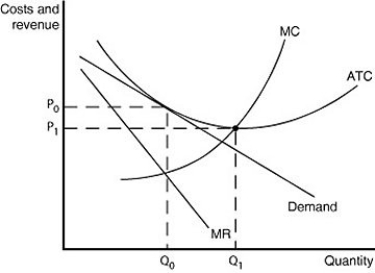 Figure 11-14 illustrates a monopolistically competitive firm.
-Refer to Figure 11-14.It is possible to lower the average cost of production by expanding output beyond Q₀ to Q₁.Why wouldn't a firm expand its output to Q₁?
Figure 11-14 illustrates a monopolistically competitive firm.
-Refer to Figure 11-14.It is possible to lower the average cost of production by expanding output beyond Q₀ to Q₁.Why wouldn't a firm expand its output to Q₁? (Multiple Choice)
4.9/5 (84)
(84) Figure 11-7
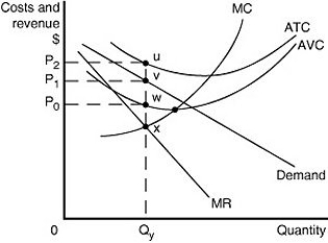 Figure 11-7 shows short-run cost and demand curves for a monopolistically competitive firm in the footwear market.
-Refer to Figure 11-7.Which of the following statements describes the best course of action for the firm depicted in the diagram?
Figure 11-7 shows short-run cost and demand curves for a monopolistically competitive firm in the footwear market.
-Refer to Figure 11-7.Which of the following statements describes the best course of action for the firm depicted in the diagram? (Multiple Choice)
5.0/5 (65)
(65) If a perfectly competitive firm maximizes short-run profits,its marginal revenue will be positive and less than its price.
(True/False)
4.8/5 (100)
(100) 
Filters
- Essay(0)
- Multiple Choice(0)
- Short Answer(0)
- True False(0)
- Matching(0)