



 Chat with AI
Exam 5: The Nature of Light

Exam 1: Astronomy and the Universe78 Questions
Exam 2: Knowing the Heavens99 Questions
Exam 3: Eclipses and the Motion of the Moon67 Questions
Exam 4: Gravitation and the Waltz of the Planets105 Questions
Exam 5: The Nature of Light91 Questions
Exam 6: Optics and Telescopes97 Questions
Exam 7: Comparative Planetology I: Our Solar System63 Questions
Exam 8: Comparative Planetology II: the Origin of Our Solar System53 Questions
Exam 9: The Living Earth78 Questions
Exam 10: Our Barren Moon101 Questions
Exam 11: Mercury, Venus, and Mars: Terrestrial, yet Unique99 Questions
Exam 12: Jupiter and Saturn: Lords of the Planets97 Questions
Exam 13: Jupiter and Saturns Satellites of Fire and Ice110 Questions
Exam 14: Uranus, Neptune, Pluto, and the Kuiper Belt: Remote Worlds105 Questions
Exam 15: Asteroids, Comets, and Impacts80 Questions
Exam 16: Our Star, the Sun68 Questions
Exam 17: The Nature of the Stars113 Questions
Exam 18: The Birth of Stars97 Questions
Exam 19: Stellar Evolution: on and After the Main Sequence64 Questions
Exam 20: Stellar Evolution: The Death of Stars78 Questions
Exam 21: Stellar Remnants: Neutron Stars and Black Holes107 Questions
Exam 22: Our Galaxy48 Questions
Exam 23: Galaxies85 Questions
Exam 24: Quasars and Active Galaxies73 Questions
Exam 25: Cosmology: The Origin and Evolution of the Universe68 Questions
Exam 26: Exploring the Early Universe72 Questions
Exam 27: The Search for Extraterrestrial Life26 Questions
Select questions type


Using Wien's law, what is the approximate peak wavelength of radiation emitted by (live) human beings, who are (normally) at a temperature of about 310 K (1 μm = 10-6 m)?

Free
(Multiple Choice)
4.8/5  (81)
(81) Correct Answer: Verified
A
A police radar bounces microwaves of wavelength 3 mm from the front of a speeding car and measures the Doppler shift in wavelength of the reflected waves. The shift is doubled because of the reflection. What will be the wavelength shift if the speeding car is moving at 60 mph (80 km/h or 22.2 ms-1)?
Free
(Multiple Choice)
4.9/5 (67)
(67) Correct Answer:Verified
VerifiedA
You are looking at a glowing field of hot lava from a satellite high above Earth's atmosphere. Hot lava emits most of its radiation in the infrared, and Earth's atmosphere is not completely transparent to infrared. What kind of spectrum will you see?
Free
(Multiple Choice)
4.8/5 (83)
(83) Correct Answer:Verified
VerifiedC
The upward Lyman series transitions in hydrogen begin with electrons in the ground state (n = 1), which is the state of most hydrogen atoms. Yet the Balmer series was studied first and was the basis of the early attempts to explain the lines. This is because:
(Multiple Choice)
4.9/5 (84)
(84) What happens in general when ultraviolet radiation passes through a tube of cool hydrogen gas?
(Multiple Choice)
4.9/5 (75)
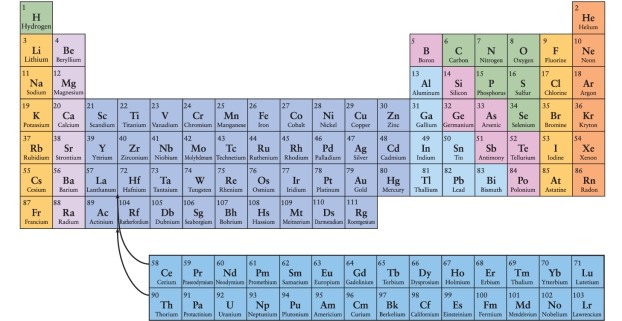
(75) According to the arrangement of elements in the periodic table, which of the following elements would be expected to have chemical properties most similar to those of nitrogen, N, whose atomic number is 7?
(Multiple Choice)
4.9/5 (76)
(76) The energy E of a photon or quantum of electromagnetic radiation is related to the wavelength λ of the radiation by what relation (h = Planck's constant)?
(Multiple Choice)
4.8/5 (70)
(70) What type of radiation is emitted by hot hydrogen gas when electrons jump from the n = 8 level to the n = 7 level of the atoms?
(Multiple Choice)
4.8/5 (74)
(74) What is the wavelength of radio waves from the FM radio station KTYD, which operates at the frequency 99.9 MHz?
(Multiple Choice)
4.9/5 (86)
(86) No matter how close or how far Galileo was from his assistant, he always measured roughly the same time in performing the lantern experiment. Just what time was Galileo measuring?
(Multiple Choice)
4.9/5 (88)
(88) Using Wien's law, which relates the peak wavelength λmax, (1 μm = 10-6 m) emitted by a body to its temperature T, what is the peak wavelength of electromagnetic radiation emitted by a piece of iron that is just melting (1538°C)? (See Box 5-2 and Figure 5-7 of Universe, 11th ed.)
(Multiple Choice)
4.7/5 (81)
(81) What is the wavelength of electromagnetic radiation whose frequency is 106 cycles per second (106 Hz or 1000 kHz, the frequency of ordinary AM radio)?
(Multiple Choice)
4.9/5 (79)
(79) The dark absorption lines in the solar spectrum are caused by absorption:
(Multiple Choice)
5.0/5 (81)
(81) Which one of these scientists was the last to perform his investigation of electromagnetic radiation?
(Multiple Choice)
4.9/5 (76)
(76) Around 1801, Thomas Young in England showed that light behaves as a wave by:
(Multiple Choice)
4.9/5 (75)
(75) Proxima Centauri, our Sun's nearest stellar neighbor, has a surface temperature of about 3300 K. What color will this star appear to the naked eye?
(Multiple Choice)
4.9/5 (80)
(80) The Sun's surface has a temperature of 5800 K. What will be the peak wavelength of the spectrum of a star that emits twice the Sun's flux of energy?
(Multiple Choice)
4.8/5 (79)
(79) 
Filters
- Essay(0)
- Multiple Choice(0)
- Short Answer(0)
- True False(0)
- Matching(0)