



 Chat with AI

Exam 3: ATI-TEAS-Reading

Exam 1: ATI-TEAS-English & Language Usage232 Questions
Exam 2: ATI-TEAS-Math296 Questions
Exam 3: ATI-TEAS-Reading375 Questions
Exam 4: ATI-TEAS-Science405 Questions
 Free Exam
Select questions type


Which of the following medications is in a form other than a pill?
(Multiple Choice)
4.8/5  (80)
(80) A student is writing an astronomy paper and needs statistical information for the year 1986. Which source should she consult?
(Multiple Choice)
4.8/5 (90)
(90) During the 18th century, toll roads began appearing all over England, spreading from London all the way to Scotland. But these roads were made of small stones piled on top of mud, so even a light rain could render them impassable. A blind engineer named John Metcalf came up with a solution. He insisted that roads have a strong stone foundation. He "crowned" the roads too, meaning that he made them higher in the middle than on the sides. He added a ditch on either side, providing proper drainage to keep the roadways from caving in due to excess moisture. This also prevented potholes. But his methods proved costly and many local governments were loath to pay the construction costs. Undeterred, Metcalf challenged a colonel to race him to London. Thanks to the lousy road conditions, he made it to the city on foot faster than the colonel could get there in his horse-drawn buggy. As a result, towns across England began adopting Metcalf's engineering ideas. Even today, many of these ideas are still in use not only in England but around the world.
What is the main idea of the passage?
(Multiple Choice)
5.0/5 (77)
(77) 3 4 5 6 12 14
Arrange the numbers above into a pyramid with three in the bottom row, two in the middle and one on top. Follow these guidelines when placing the squares:
One of the numbers in the bottom row should be odd.
The two numbers in the middle have a difference of 1.
The top block is a multiple of 12.
Which of the following arrangements corresponds with the directions above?
(Multiple Choice)
4.8/5 (78)
(78) Rachel Carson
Rachel Carson (1907-1964) was an American marine biologist, conservationist, and author. She was born on a family farm in Pennsylvania and spent her youth exploring the countryside and writing stories, often about animals. It seems as if Carson was born to be an author. By the age of ten, she had already had her first book published. She began her adult career as an aquatic biologist in the U.S. Bureau of Fisheries, but became a full-time writer by the 1950s. More than anything else, she was interested in what can happen when, as she put it, "Things go out of kilter." Because of this, she began work on her groundbreaking book Silent Spring.
Developed in 1939, DDT was the most potent pesticide that world had ever known. It showed just how vulnerable nature was to the actions of humanity. While most pesticides of the day killed only one or two types of insects, DDT could kill hundreds. Originally used only by the military to clear South Pacific islands of malaria-causing insects during World War Two, it was cleared for civilian use in 1945. Carson grew justifiably more and more concerned about DDT as its effects on the environment slowly became known. She tried to publish magazine articles to raise the alarm about the poison, but no one would publish her work. Having gathered a vast amount of research on the subject, Carson started a four-year writing odyssey that culminated with the publishing of Silent Spring in 1962.
Carson described how a single application of DDT could poison the environment for weeks or even months. It could enter water sources and remain toxic even when diluted. Ultimately, it accumulated in the fatty tissues of animals-including human beings-and caused cancer and genetic damage. The book's most famous chapter, "A Fable for Tomorrow," described an American town where all life-even human children-had been "silenced" from the deleterious effects of the poison.
The reaction from the chemical industry was immediate. A major chemical manufacturer published a response to Silent Spring with a brochure that made fun of Carson's work. It described a world that was plagued by famine, disease, and insect swarms because chemical pesticides had been banned. In spite of this backlash, her careful work paid off. DDT was ultimately banned after President John F. Kennedy ordered a committee to investigate the effects of the chemical on the environment. But perhaps the most important legacy of her book was a new awareness of humanity's potential to inflict damage on the environment. Before the book, conservation had never garnered much public interest. But the problems that Carson wrote about-water contamination, cancer, and mass extinction-could not be ignored. For the first time, the urgent need to regulate industry to protect the environment became accepted. And from this, the modern environmental movement was born.
Which of the following sentences contains an opinion?
(Multiple Choice)
4.9/5 (85)
(85) Tidal Power
The gravitational pull of the moon and the sun, as well as Earth's rotation, create the tides-the rise and fall in sea levels. In some places, tidal action can cause water levels-especially those near the shore-to vary up to forty feet. Today, the awesome power of the tides is used to generate electricity. The two main types of tidal power systems are tidal barrages and tidal turbines.
Tidal barrages use a structure similar to a dam. The structure, called a barrage, is located across an inlet of an ocean bay or lagoon. Massive gates attached to the barrage open and close to control water levels and flow rates. They allow the tidal basin to fill with water on the incoming flood current. This water is then emptied through an electric turbine system on the outgoing current. As water races through the turbine system, electricity is generated.
Tidal turbines look and operate quite similar to wind turbines, but because water is about 800 times denser than air, tidal turbines must be much sturdier and heavier. These power generation units are permanently attached to the sea floor in areas with a strong tidal flow. They operate as the ocean's current spins past massive blades. The blades are attached to turbines that produce electricity. Systems in Scotland and South Korea have tidal turbines that are capable of producing up to 1.5 megawatts of electricity-enough electricity to power roughly 1,500 homes.
But tidal power is not without some drawbacks. Scientists think that the electromagnetic waves generated by the tidal turbines could disrupt ocean life. In particular, scientists are worried that they might affect the migration patterns of aquatic animals. But already, a workaround has been suggested-the turbines are simply turned off when certain migrating sea mammals approach them. Another drawback of tidal power is the high cost of construction. They are, for example, much more expensive to install than wind or solar power facilities. Still, tidal power facilities are durable, lasting as much as four times as long as wind or solar power plants.
Tidal power emits zero greenhouse gases, so it is an extremely clean power source. It takes up relatively little space, too, when compared to other green energy projects. For example, the Sihwa Lake Tidal Power Station in South Korea was easily added to an existing 12.5 kilometer-long seawall. Windfarms and even solar farms, on the other hand, can take up vast tracts of land, sometimes amounting to hundreds of square kilometers. Another benefit of tidal power is that the power it generates is extremely predictable. Obviously, the gravitational pull of the sun and moon are not going to cease any time soon. The benefits of tidal power seem to outweigh its drawbacks. Clearly, it's time to produce more of these electricity-generating facilities wherever possible.
Still, tidal power facilities are durable, lasting as much as four times as long as wind or solar power plants.
What is the author's purpose in the following sentence (above) from the fourth paragraph of the passage?
(Multiple Choice)
4.9/5 (83)
(83) A patient who takes which of the following medications should avoid spending too much time outdoors during the day?
(Multiple Choice)
4.7/5 (88)
(88) Use the map below to answer the question.
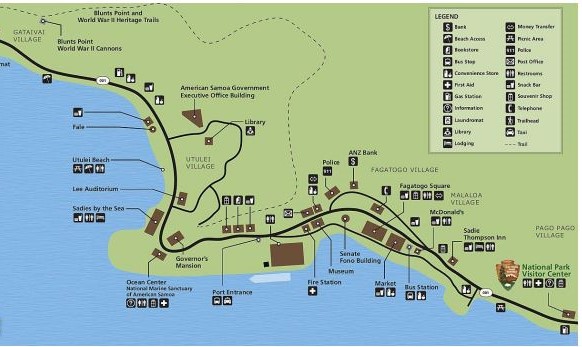 Where might a visitor go to get information about the National Marine Sanctuary of American Samoa?
 (Multiple Choice)
4.8/5 (79)
(79) From: Tom Smith (tsmith@oceansideinn.com)
To: June Parker (jparker@mail.com)
Subject: Response to Inquiry
Date: May 30
Dear Ms. Parker,
Thank you for contacting us here at the Oceanside Inn. We would be happy to provide you with accommodations for you and your family during your stay here next month. However, all of our suites are booked during the lodging dates that you requested in your email. I can offer you a possible solution. We can book your family in two rooms at the end of the hallway.
The two rooms would be right next to each other, and you would have some privacy away from the other guests. Each room has its own bathroom with shower and two queen-sized beds. In addition, there is an interior door linking the two rooms to each other. We hope that these rooms will suit your needs. If so, we will be happy to book you into the rooms for five days starting on June 3rd. The rooms run for $85 per night, and we offer a 10% Drivers' Club discount, if you happen to be a member. The price includes a buffet breakfast. Would you like to proceed with this reservation? If I can be of further assistance, please let me know.
Sincerely,
Tom Smith
Desk Manager, Oceanside Inn
What logical conclusion can be drawn, based on information found in the email?
(Multiple Choice)
4.9/5 (84)
(84) Use the job posting below to answer the question.
Call Center Representative-Customer Service; Online Lending
(posted 5/24)
Bring your customer service skills and exceptional phone etiquette to our dynamic call center!
Work Location: 223 Venture Way, on the northeast corner of Azalea Road and Venture Way
Job Responsibilities:
As a Call Center Representative, you receive inbound calls providing courteous assistance with customers' existing accounts with Super Quick Cash or assistance with potential customers applying for loans via our internet lending services. Our Call Center Representatives create a positive experience and resolve customer inquiries in a timely manner. Our representatives seek to find the best fitting products by identifying key needs and pitching them to customers. Maintaining a high commitment to confidentiality, and performing duties in a manner supporting Heartland Financial Services' vision and values is key to continued success.
Specific Requirements:
High school diploma or GED
1-year customer service, Call Center a plus
Data-entry experience
Successful decision making and negotiating abilities
Attention to detail and ability to multitask
Ability to work full-time
To apply, simply navigate to our company website's Current Jobs Page. Click on the call center representative job. You will be asked to upload your cover letter and resume.
Heartland Financial Services
223 Venture Way
Los Angeles, CA 90145
727-555-9855
Heartlandfinancial.com
Which of the following requirements does NOT apply to the posted job?
(Multiple Choice)
4.9/5 (89)
(89) Use the pie chart below to answer the question.
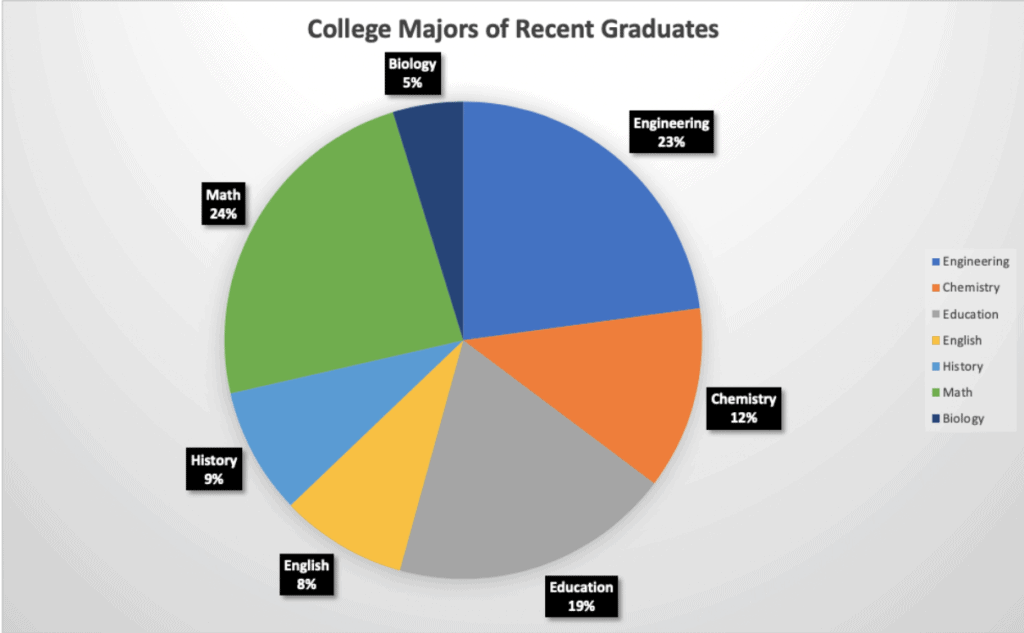 Which major represents the least percentage of any of the majors shown on the pie chart?
 (Multiple Choice)
4.7/5 (72)
(72) Most of us get a dirty look every so often, and we usually don't think much of it. But in many places around the world, "the evil eye" is taken very seriously and requires special action to avoid harm-or even death. Simply put, the evil eye is a look given by someone that is said to convey the power of a magical curse and cause some type of misfortune for another person. According to tradition, babies and children are most susceptible to harm from the evil eye. In many countries, including Greece, Romania, and India, praising a child publicly can invite the attention of the evil eye. In order to ward off the evil eye, parents of thoughtlessly praised children may ask the person who gave the compliment to spit in the child's face! In this way, the child's status is reduced, thus eliminating the need to give the child the evil eye. The best way to deal with the evil eye is to avoid it altogether. Since that's not always possible, lucky charms and amulets-often blue to symbolize heaven or godliness-can be worn. Whatever the truth regarding the evil eye, these charms should be worn at all times. After all, they're beautiful and can act as a great conversation starter!
Which of the following statements best describes an argument made in the passage?
(Multiple Choice)
4.7/5 (84)
(84) Use the taxonomy outline below to answer the question.
Phylum Porifera (Sponges)
Hexactinellida (Glass sponges)
Venus flower basket
Staurocalyptus
Demospongia
Red volcano sponge
Spongilla lacustris
Geodia barretti
Calcarea
Sycon capricorn
Leucetta chagosensis
Clathrina heronensis
Which of the following statements is correct based on the outline above?
(Multiple Choice)
4.8/5 (81)
(81) Use the pie chart below to answer the question.
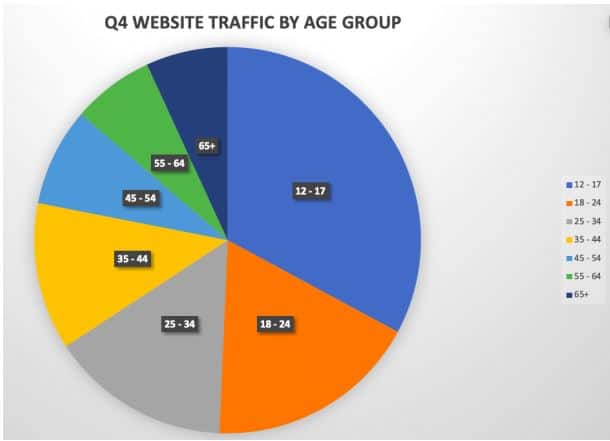 Which of the following statements is true according to the pie chart?
 (Multiple Choice)
4.8/5 (92)
(92) The Science of Yawning
Have you yawned today? If you can't remember or perhaps haven't noticed, you're similar to most Americans. According to a 2007 study, yawning is considered a basic bodily function, such as scratching an itch or crossing one's legs, and people hardly make note of the act. Despite its normality in our daily routines, the question regarding why yawning occurs still has not been answered with certainty. Interestingly enough, little research has been paid to studying yawning, due to a debate surrounding its importance. Many scientists disagree on the importance surrounding research for yawning. Those against the research believe that it will not greatly impact the scientific and medicinal communities, while others believe that there is a case to be made for the possible physiological significance of a somewhat pointless act.
There are a few possible causes as to why one yawns, and even fewer theories related to the evolutionary reason for yawning. The most established theory is that yawning helps a person increase his or hers state of alertness. This is one reason as to why yawning has been associated with sleepiness, or when a person is extremely fatigued. In fact, one famous study has suggested that yawning may have developed as a way of keeping animals alert to possible predators. This gives way to the "contagious" yawn theory, which involves an instinctual reaction to warn another member of the "herd" to stay alert in times of danger. These evolutionary theories are also connected to theories regarding empathy. Various studies have shown that spatial proximity in socially close primates is an indicator of yawn contagion.
Other scientists believe that yawning is a sign of the body regulating its temperature and cooling itself down. Neuroscientists have attributed yawning to another possible theory regarding the neurotransmitters in the brain. They believe that chemicals responsible for yawning, including serotonin and dopamine, also cause feelings such as hunger and happiness. Thus, as more of these compounds are activated in the brain, the more frequently a person yawns. In one psychological study on the effects of antidepressant medication, researchers found that people undergoing withdrawal from opioids and those taking serotonin reuptake inhibitors (SSRIs) yawned more often than the people in the control group. This can give way to the idea that chemicals in the brain-especially serotonin-can have an impact on the frequency of yawning.
Yawning continues to be an interesting phenomenon with a plethora of possible causes. Theories ranging from chemical balances to empathy relation are all within the realms of possible reasons as to why people yawn, but scientists will most likely study these theories for decades to come. Until a conclusive, definitive answer is reached, it may be safe to assume that yawning acts as a diverse linguistic signal that can represent various functional outcomes.
Which of these options best summarizes the passage?
(Multiple Choice)
4.9/5 (90)
(90) Use the recipe below to answer the question.
HOMEMADE BRIOCHE HAMBURGER BUNS
Makes 4 buns
INGREDIENTS:
● 1/2 c. warm whole milk
● 1 tbsp. warm water
● 2 eggs
● 1 tsp. active dry yeast
● 1 tbsp. granulated sugar
● 1 egg
● 1 3/4 c. bread flour
● 1/2 tsp. kosher salt
● 1 1/2 tbsp. unsalted butter, room temperature
FOR THE TOPPING:
● 1 egg yolk
● 1/2 tsp. water
● 2 tbsp. sesame seeds (optional)
DIRECTIONS:
1) In a medium mixing bowl, whisk warm water, milk, yeast and sugar; then beat in the eggs.
2) Mix flours, salt and butter. Pour yeast mixture into the bowl and mix.
3) Put out on counter and knead for 10 minutes.
4) Let rise for 2 to 3 hours.
5) Line a baking sheet with parchment paper or a baking mat. Punch the dough down and divide the dough into 8 equal pieces (you can use a kitchen scale to be exact).
6) Form into balls and place on baking sheet about 2 inches apart. Cover with a greased piece of plastic wrap. Rest in a warm place for 1 hour, or until puffy and slightly risen.
7) Preheat oven to 375 degrees.
8) To make the egg wash, in a small bowl, whisk the egg yolk with water. Brush generously on each bun, covering the entire surface, then sprinkle with sesame seeds, if desired.
9) Place the buns in the oven and bake for 15-18 minutes or until they turn a deep golden brown. Remove from the oven and allow to cool on the sheet for 5 minutes before transferring them to a wire rack to cool completely.
When should the dough be "punched down?"
(Multiple Choice)
5.0/5 (89)
(89) The Science of Yawning
Have you yawned today? If you can't remember or perhaps haven't noticed, you're similar to most Americans. According to a 2007 study, yawning is considered a basic bodily function, such as scratching an itch or crossing one's legs, and people hardly make note of the act. Despite its normality in our daily routines, the question regarding why yawning occurs still has not been answered with certainty. Interestingly enough, little research has been paid to studying yawning, due to a debate surrounding its importance. Many scientists disagree on the importance surrounding research for yawning. Those against the research believe that it will not greatly impact the scientific and medicinal communities, while others believe that there is a case to be made for the possible physiological significance of a somewhat pointless act.
There are a few possible causes as to why one yawns, and even fewer theories related to the evolutionary reason for yawning. The most established theory is that yawning helps a person increase his or hers state of alertness. This is one reason as to why yawning has been associated with sleepiness, or when a person is extremely fatigued. In fact, one famous study has suggested that yawning may have developed as a way of keeping animals alert to possible predators. This gives way to the "contagious" yawn theory, which involves an instinctual reaction to warn another member of the "herd" to stay alert in times of danger. These evolutionary theories are also connected to theories regarding empathy. Various studies have shown that spatial proximity in socially close primates is an indicator of yawn contagion.
Other scientists believe that yawning is a sign of the body regulating its temperature and cooling itself down. Neuroscientists have attributed yawning to another possible theory regarding the neurotransmitters in the brain. They believe that chemicals responsible for yawning, including serotonin and dopamine, also cause feelings such as hunger and happiness. Thus, as more of these compounds are activated in the brain, the more frequently a person yawns. In one psychological study on the effects of antidepressant medication, researchers found that people undergoing withdrawal from opioids and those taking serotonin reuptake inhibitors (SSRIs) yawned more often than the people in the control group. This can give way to the idea that chemicals in the brain-especially serotonin-can have an impact on the frequency of yawning.
Yawning continues to be an interesting phenomenon with a plethora of possible causes. Theories ranging from chemical balances to empathy relation are all within the realms of possible reasons as to why people yawn, but scientists will most likely study these theories for decades to come. Until a conclusive, definitive answer is reached, it may be safe to assume that yawning acts as a diverse linguistic signal that can represent various functional outcomes.
Which of the following is a logical conclusion based on the passage?
(Multiple Choice)
4.8/5 (66)
(66) Draw a horizontal line. From the midpoint of this line, draw a perpendicular line extending upward. Write the letter "N" on each end of the horizontal line and the letter "O" at the end of the vertical line. Rotate the drawing 180 degrees clockwise.
Which of the following drawings correctly corresponds with the directions?
(Multiple Choice)
4.9/5 (72)
(72) Rachel Carson
Rachel Carson (1907-1964) was an American marine biologist, conservationist, and author. She was born on a family farm in Pennsylvania and spent her youth exploring the countryside and writing stories, often about animals. It seems as if Carson was born to be an author. By the age of ten, she had already had her first book published. She began her adult career as an aquatic biologist in the U.S. Bureau of Fisheries, but became a full-time writer by the 1950s. More than anything else, she was interested in what can happen when, as she put it, "Things go out of kilter." Because of this, she began work on her groundbreaking book Silent Spring.
Developed in 1939, DDT was the most potent pesticide that world had ever known. It showed just how vulnerable nature was to the actions of humanity. While most pesticides of the day killed only one or two types of insects, DDT could kill hundreds. Originally used only by the military to clear South Pacific islands of malaria-causing insects during World War Two, it was cleared for civilian use in 1945. Carson grew justifiably more and more concerned about DDT as its effects on the environment slowly became known. She tried to publish magazine articles to raise the alarm about the poison, but no one would publish her work. Having gathered a vast amount of research on the subject, Carson started a four-year writing odyssey that culminated with the publishing of Silent Spring in 1962.
Carson described how a single application of DDT could poison the environment for weeks or even months. It could enter water sources and remain toxic even when diluted. Ultimately, it accumulated in the fatty tissues of animals-including human beings-and caused cancer and genetic damage. The book's most famous chapter, "A Fable for Tomorrow," described an American town where all life-even human children-had been "silenced" from the deleterious effects of the poison.
The reaction from the chemical industry was immediate. A major chemical manufacturer published a response to Silent Spring with a brochure that made fun of Carson's work. It described a world that was plagued by famine, disease, and insect swarms because chemical pesticides had been banned. In spite of this backlash, her careful work paid off. DDT was ultimately banned after President John F. Kennedy ordered a committee to investigate the effects of the chemical on the environment. But perhaps the most important legacy of her book was a new awareness of humanity's potential to inflict damage on the environment. Before the book, conservation had never garnered much public interest. But the problems that Carson wrote about-water contamination, cancer, and mass extinction-could not be ignored. For the first time, the urgent need to regulate industry to protect the environment became accepted. And from this, the modern environmental movement was born.
Which of the following has a similar theme to the Rachel Carson passage?
(Multiple Choice)
4.9/5 (79)
(79) Use the taxonomy outline below to answer the question.
Phylum Porifera (Sponges)
Hexactinellida (Glass sponges)
Venus flower basket
Staurocalyptus
Demospongia
Red volcano sponge
Spongilla lacustris
Geodia barretti
Calcarea
Sycon capricorn
Leucetta chagosensis
Clathrina heronensis
Which of the following statements is correct based on the outline above?
(Multiple Choice)
4.8/5 (88)
(88) Free Exam 
Filters
- Essay(0)
- Multiple Choice(0)
- Short Answer(0)
- True False(0)
- Matching(0)