



 Chat with AI

Exam 3: ATI-TEAS-Reading

Exam 1: ATI-TEAS-English & Language Usage232 Questions
Exam 2: ATI-TEAS-Math296 Questions
Exam 3: ATI-TEAS-Reading375 Questions
Exam 4: ATI-TEAS-Science405 Questions
 Free Exam
Select questions type


The Science of Yawning
Have you yawned today? If you can't remember or perhaps haven't noticed, you're similar to most Americans. According to a 2007 study, yawning is considered a basic bodily function, such as scratching an itch or crossing one's legs, and people hardly make note of the act. Despite its normality in our daily routines, the question regarding why yawning occurs still has not been answered with certainty. Interestingly enough, little research has been paid to studying yawning, due to a debate surrounding its importance. Many scientists disagree on the importance surrounding research for yawning. Those against the research believe that it will not greatly impact the scientific and medicinal communities, while others believe that there is a case to be made for the possible physiological significance of a somewhat pointless act.
There are a few possible causes as to why one yawns, and even fewer theories related to the evolutionary reason for yawning. The most established theory is that yawning helps a person increase his or hers state of alertness. This is one reason as to why yawning has been associated with sleepiness, or when a person is extremely fatigued. In fact, one famous study has suggested that yawning may have developed as a way of keeping animals alert to possible predators. This gives way to the "contagious" yawn theory, which involves an instinctual reaction to warn another member of the "herd" to stay alert in times of danger. These evolutionary theories are also connected to theories regarding empathy. Various studies have shown that spatial proximity in socially close primates is an indicator of yawn contagion.
Other scientists believe that yawning is a sign of the body regulating its temperature and cooling itself down. Neuroscientists have attributed yawning to another possible theory regarding the neurotransmitters in the brain. They believe that chemicals responsible for yawning, including serotonin and dopamine, also cause feelings such as hunger and happiness. Thus, as more of these compounds are activated in the brain, the more frequently a person yawns. In one psychological study on the effects of antidepressant medication, researchers found that people undergoing withdrawal from opioids and those taking serotonin reuptake inhibitors (SSRIs) yawned more often than the people in the control group. This can give way to the idea that chemicals in the brain-especially serotonin-can have an impact on the frequency of yawning.
Yawning continues to be an interesting phenomenon with a plethora of possible causes. Theories ranging from chemical balances to empathy relation are all within the realms of possible reasons as to why people yawn, but scientists will most likely study these theories for decades to come. Until a conclusive, definitive answer is reached, it may be safe to assume that yawning acts as a diverse linguistic signal that can represent various functional outcomes.
Which of the following describes the structure of the passage?
(Multiple Choice)
4.9/5  (93)
(93) Use the job posting below to answer the question.
$25-$30 an hour + Commission
(posted 6/17)
City Lights Remodeling is America's #1 remodeler as ranked by Remodeling Magazine based on sales. We are a rapidly growing company and are currently seeking well-spoken, energetic and eager-to-learn individuals who are interested in starting a career with one of the nation's top home remodeling companies.
City Lights Remodeling is an incredible business that allows its employees to grow with the company. We have several high-earning opportunities available. We offer a lucrative performance-based compensation plan which includes base pay plus commission and monthly bonuses.
The candidates chosen for this salaried position will speak directly with prospective clients in communities located in and around the Greater-Las Vegas area and surrounding cities. They will engage in meaningful conversations with homeowners in their own houses, generate interest in our products, and schedule appointments to meet with a Project Consultant.
No experience necessary
Paid professional training
Full-time career opportunity
Fun and successful, high-energy work culture
Uncapped commission with base pay + monthly bonuses
No telephone cold calls
Fun outings- Ski trips, barbecues, holiday parties, casino trips, sporting events, concert tickets, etc.
Again, we offer…
Fun and successful work culture
Base + Commission + Additional Bonuses
NO CAP on commission
To apply, simply navigate to our company website's current jobs page. Click on the call center representative job. You will be asked to upload your cover letter and resume.
City Lights Remodeling
213 Boulder Highway
Las Vegas, Nevada 90236
Citylightsremodeling.com
Which of the following is NOT true according to the job posting?
(Multiple Choice)
4.9/5 (82)
(82) Mary never balances the checkbook herself because family finances are her husband's province.
Which of the following definitions is correct for "province" as used in the sentence above?
(Multiple Choice)
4.8/5 (85)
(85) G R G L N R E Y O C
Using the letter string above, delete every second letter. Replace the "O" with the letter "A" and add the letter "E" to the end of the string.
Which of the following words can be made with the remaining letters?
(Multiple Choice)
4.7/5 (70)
(70) Tidal Power
The gravitational pull of the moon and the sun, as well as Earth's rotation, create the tides-the rise and fall in sea levels. In some places, tidal action can cause water levels-especially those near the shore-to vary up to forty feet. Today, the awesome power of the tides is used to generate electricity. The two main types of tidal power systems are tidal barrages and tidal turbines.
Tidal barrages use a structure similar to a dam. The structure, called a barrage, is located across an inlet of an ocean bay or lagoon. Massive gates attached to the barrage open and close to control water levels and flow rates. They allow the tidal basin to fill with water on the incoming flood current. This water is then emptied through an electric turbine system on the outgoing current. As water races through the turbine system, electricity is generated.
Tidal turbines look and operate quite similar to wind turbines. But because water is about 800 times denser than air, tidal turbines must be much sturdier and heavier. These power generation units are permanently attached to the sea floor in areas with a strong tidal flow. They operate as the ocean's current spins past massive blades. The blades are attached to turbines that produce electricity. Systems in Scotland and South Korea have tidal turbines that are capable of producing up to 1.5 megawatts of electricity-enough electricity to power roughly 1,500 homes.
But tidal power is not without some drawbacks. Scientists think that the electromagnetic waves generated by the tidal turbines could disrupt ocean life. In particular, scientists are worried that they might affect the migration patterns of aquatic animals. But already, a workaround has been suggested-the turbines are simply turned off when certain migrating sea mammals approach them. Another drawback of tidal power is the high cost of construction. They are, for example, much more expensive to install than wind or solar power facilities. Still, tidal power facilities are durable, lasting as much as four times as long as wind or solar power plants.
Tidal power emits zero greenhouse gases, so it is an extremely clean power source. It takes up relatively little space, too, when compared to other green energy projects. For example, the Sihwa Lake Tidal Power Station in South Korea was easily added to an existing 12.5 kilometer-long seawall. Windfarms and even solar farms, on the other hand, can take up vast tracts of land, sometimes amounting to hundreds of square kilometers. Another benefit of tidal power is that the power it generates is extremely predictable. Obviously, the gravitational pull of the sun and moon are not going to cease any time soon. The benefits of tidal power seem to outweigh its drawbacks. Clearly, it's time to produce more of these electricity-generating facilities wherever possible.
Which of the following has a similar theme to the Tidal Power passage?
(Multiple Choice)
4.9/5 (86)
(86) Arachnophobia: The Fear of Spiders
Have you ever jumped at the unexpected sight of a black eight-legged spider? If you have, you are not alone. It has been estimated that as many as one in three women and one in four men have experienced varying degrees of arachnophobia, more commonly known as a fear of spiders. Since the term phobia means an extreme fear of a particular object or idea, not everyone who dislikes spiders has a phobia. In fact, the level of fear experienced by people with classic cases of arachnophobia include interruptions of daily life, such as refusing to clean the house in fear of finding a spider or cobweb. Although the exact reason behind society's fear of spiders is still up to question, scientists have provided various theories that shed light on the possible reasonings behind the phenomenon.
One theory, for example, dates back to our ancestors. While most spiders do not pose a serious risk to humans, they are in some way venomous, and a fear of spiders in Paleolithic times may have helped humans survive and reproduce. Other scientists, however, disagree with this theory, since fears of deadlier animals and insects (such as scorpions and tigers) are not as common as arachnophobia. Some scientists have also posited that the fear of spiders came about from negativity regarding the species that has been passed down through generations. In other words, even if most spiders aren't deadly, people have been taught to have strong, negative reactions to them throughout history.
Psychologists have put forth two major cognitive-behavioral techniques (CBT) aimed at helping those experiencing the potentially debilitating effects of arachnophobia, which can include not being able to go to work or perform daily tasks. The first CBT technique, known as Cognitive Reframing, helps change the way a patient perceives various triggers. The goal of this technique is to change one's physical reaction to spiders, thus eliminating the severity of the phobia. Those who undergo this therapy are encouraged to challenge the fearful thoughts associated with spiders and replace them with positive thoughts. Systematic Desensitization, on the other hand, is a product of classical conditioning and behavioral therapy. This therapy includes relaxation techniques such as deep breathing and progressive muscle relaxation, which seek to calm stressful physical responses to the phobia.
In more intense cases of arachnophobia, however, antidepressant or anti-anxiety medications are prescribed as a way to coincide with the effects of CBT therapy and offer additional support. Psychologists believe that the combination of medication and CBT therapy could lead to quicker, more stable results in patients. Interestingly, virtual reality therapy, which includes fake, virtual representations of phobias, may be just as effective as traditional treatments. However, a virtual eight-legged spider is not as scary as the real thing!
What is the meaning of the word "debilitating", as used in paragraph 3?
(Multiple Choice)
4.7/5 (72)
(72) Most of us get a dirty look every so often, and we usually don't think much of it. But in many places around the world, "the evil eye" is taken very seriously and requires special action to avoid harm-or even death. Simply put, the evil eye is a look given by someone that is said to convey the power of a magical curse and cause some type of misfortune for another person. According to tradition, babies and children are most susceptible to harm from the evil eye. In many countries, including Greece, Romania, and India, praising a child publicly can invite the attention of the evil eye. In order to ward off the evil eye, parents of thoughtlessly praised children may ask the person who gave the compliment to spit in the child's face! In this way, the child's status is reduced, thus eliminating the need to give the child the evil eye. The best way to deal with the evil eye is to avoid it altogether. Since that's not always possible, lucky charms and amulets-often blue to symbolize heaven or godliness-can be worn. Whatever the truth regarding the evil eye, these charms should be worn at all times. After all, they're beautiful and can act as a great conversation starter!
Which of the following best rephrases the topic of the passage?
(Multiple Choice)
4.9/5 (85)
(85) The Science of Yawning
Have you yawned today? If you can't remember or perhaps haven't noticed, you're similar to most Americans. According to a 2007 study, yawning is considered a basic bodily function, such as scratching an itch or crossing one's legs, and people hardly make note of the act. Despite its normality in our daily routines, the question regarding why yawning occurs still has not been answered with certainty. Interestingly enough, little research has been paid to studying yawning, due to a debate surrounding its importance. Many scientists disagree on the importance surrounding research for yawning. Those against the research believe that it will not greatly impact the scientific and medicinal communities, while others believe that there is a case to be made for the possible physiological significance of a somewhat pointless act.
There are a few possible causes as to why one yawns, and even fewer theories related to the evolutionary reason for yawning. The most established theory is that yawning helps a person increase his or hers state of alertness. This is one reason as to why yawning has been associated with sleepiness, or when a person is extremely fatigued. In fact, one famous study has suggested that yawning may have developed as a way of keeping animals alert to possible predators. This gives way to the "contagious" yawn theory, which involves an instinctual reaction to warn another member of the "herd" to stay alert in times of danger. These evolutionary theories are also connected to theories regarding empathy. Various studies have shown that spatial proximity in socially close primates is an indicator of yawn contagion.
Other scientists believe that yawning is a sign of the body regulating its temperature and cooling itself down. Neuroscientists have attributed yawning to another possible theory regarding the neurotransmitters in the brain. They believe that chemicals responsible for yawning, including serotonin and dopamine, also cause feelings such as hunger and happiness. Thus, as more of these compounds are activated in the brain, the more frequently a person yawns. In one psychological study on the effects of antidepressant medication, researchers found that people undergoing withdrawal from opioids and those taking serotonin reuptake inhibitors (SSRIs) yawned more often than the people in the control group. This can give way to the idea that chemicals in the brain-especially serotonin-can have an impact on the frequency of yawning.
Yawning continues to be an interesting phenomenon with a plethora of possible causes. Theories ranging from chemical balances to empathy relation are all within the realms of possible reasons as to why people yawn, but scientists will most likely study these theories for decades to come. Until a conclusive, definitive answer is reached, it may be safe to assume that yawning acts as a diverse linguistic signal that can represent various functional outcomes.
Which of the following statements rephrases the author's main argument about the cause of yawning?
(Multiple Choice)
4.8/5 (81)
(81) Wasted Food
Chances are, a portion of the food you purchase ends up being wasted. In the U.S., the Environmental Protection Agency (EPA) estimates that approximately 31% of the overall food supply is wasted. This impacts food security, resource conservation, and even climate change - 18% of the country's emissions of methane, a powerful greenhouse gas, come from landfills. It's now time to take a stand and reduce the amount of food waste sent to landfills. The sustainable management of food does not only impact climate change but can also help to feed millions of people.
The EPA defines sustainable management of food as a "systematic approach that seeks to reduce wasted food and its associated impacts over the entire life cycle." It starts with the use of natural resources to produce the food and follows the cycle through manufacturing, sales, and consumption. It ends with decisions regarding recovery or final consumption. The main tenets of the system are "Reduce, Reuse, and Recycle."
"Wasted food" describes food that was not used as it was originally intended. It not only includes food that is sent to landfills or combustion facilities, but also food that is donated to feed people, food that is used to create feed for animals and even food that is used to create organic compost. Examples include unused kitchen trimmings from restaurants, byproducts from food and beverage processing plants, unsold food from grocery stores, and even residential plate waste.
Without a doubt, wasted food is a growing problem today. In 2015, the EPA estimated that more the vast majority-nearly 95%-of this waste ended up in landfills and incinerators. This puts a huge burden on our landfills, in many cases causing them to quickly reach capacity. The amount of wasted food is staggering. Approximately 31% of the 430 billion pounds of food produced in the U.S. was not available for human consumption at the consumer level. In other words, one-third of the total amount of food produced remained uneaten.
But at the same time, this wasted food presents a tremendous opportunity. Recovering wasted food through donation, salvaging, and composting can create jobs. It is estimated that more than 36,000 people work in the food recycling industry, with more being added each year. Furthermore, we can feed people with this wasted food. You can contact your local food rescue organizations for information about where to donate and what type of food local charities accept. Finally, countries can donate food waste on a global basis. The United Nations predicts that through eliminating food waste, there would be enough extra food available to feed all of the chronically undernourished people of the world-without increasing food production. Clearly, the need to reduce, reuse, and recycle wasted food exists. Think about how you might be able to do this and implement a plan of action for cutting down on wasted food today.
Which of the following is a logical conclusion drawn from information found passage?
(Multiple Choice)
4.9/5 (62)
(62) Use the map below to answer the question.
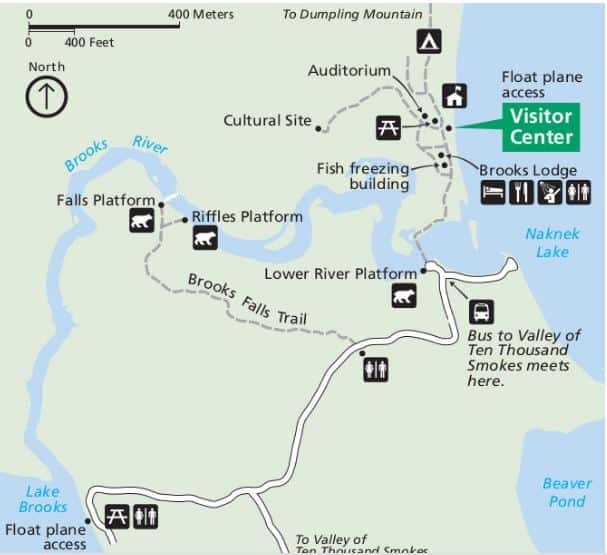 Which of the following statements is true according to the map?
 (Multiple Choice)
4.7/5 (74)
(74) Rachel Carson
Rachel Carson (1907-1964) was an American marine biologist, conservationist, and author. She was born on a family farm in Pennsylvania and spent her youth exploring the countryside and writing stories, often about animals. It seems as if Carson was born to be an author. By the age of ten, she had already had her first book published. She began her adult career as an aquatic biologist in the U.S. Bureau of Fisheries, but became a full-time writer by the 1950s. More than anything else, she was interested in what can happen when, as she put it, "Things go out of kilter." Because of this, she began work on her groundbreaking book Silent Spring.
Developed in 1939, DDT was the most potent pesticide that world had ever known. It showed just how vulnerable nature was to the actions of humanity. While most pesticides of the day killed only one or two types of insects, DDT could kill hundreds. Originally used only by the military to clear South Pacific islands of malaria-causing insects during World War Two, it was cleared for civilian use in 1945. Carson grew justifiably more and more concerned about DDT as its effects on the environment slowly became known. She tried to publish magazine articles to raise the alarm about the poison, but no one would publish her work. Having gathered a vast amount of research on the subject, Carson started a four-year writing odyssey that culminated with the publishing of Silent Spring in 1962.
Carson described how a single application of DDT could poison the environment for weeks or even months. It could enter water sources and remain toxic even when diluted. Ultimately, it accumulated in the fatty tissues of animals-including human beings-and caused cancer and genetic damage. The book's most famous chapter, "A Fable for Tomorrow," described an American town where all life-even human children-had been "silenced" from the deleterious effects of the poison.
The reaction from the chemical industry was immediate. A major chemical manufacturer published a response to Silent Spring with a brochure that made fun of Carson's work. It described a world that was plagued by famine, disease, and insect swarms because chemical pesticides had been banned. In spite of this backlash, her careful work paid off. DDT was ultimately banned after President John F. Kennedy ordered a committee to investigate the effects of the chemical on the environment. But perhaps the most important legacy of her book was a new awareness of humanity's potential to inflict damage on the environment. Before the book, conservation had never garnered much public interest. But the problems that Carson wrote about-water contamination, cancer, and mass extinction-could not be ignored. For the first time, the urgent need to regulate industry to protect the environment became accepted. And from this, the modern environmental movement was born.
Which of the following best rephrases the author's point of view as presented in the second paragraph?
(Multiple Choice)
4.9/5 (86)
(86) Monarch Butterflies
Take a moment and think of a butterfly-any type of butterfly at all. Chances are good that the distinct orange, black, and yellow monarch butterfly came to mind. The monarch is perhaps the most beautiful of all butterflies in existence. That is, to a human the coloration is beautiful, but not so for other animals. The coloring is like a flashing red light to potential predators, sending a warning that the insect is foul tasting and poisonous. However, the greatest threat to the wellbeing of the monarch butterfly might not be coming from predators, but from the activities of humans.
As larvae, monarch caterpillars feed almost exclusively on the milkweed plant. This plant is critical for their survival and adults will return to areas rich in milkweed to lay their eggs directly on the plants. The milkweed that they feed on contains a poisonous toxin that is then stored in their bodies. This is what makes the monarch butterfly taste so terrible to predators. An animal that eats a monarch probably won't die, but it will feel sick enough to avoid other monarchs in the future.
Perhaps the most amazing aspect of the monarch is its 3000-mile annual migration. Every year as winter approaches, millions of these insects leave their homes in the United States and Canada, heading south to Southern California and Mexico. They travel between fifty and one hundred miles a day, the entire journey taking up to two months to complete. The monarchs return to the same forests every year, with some landing on the same trees that their ancestors did years earlier. As many as one billion of these delicate creatures find their way to the mountains of Mexico each year. Towards the end of winter, the monarchs mate. The males die soon afterwards but the females fly north, depositing eggs on milkweed plants along the way. Eventually, they too will die along the journey. The eggs will hatch and the larvae will become butterflies. These insects then continue the journey north.
Sadly, this regal insect is facing a number of threats to its existence. For one, scientists predict that one major effect of climate change will be wetter and colder winters. If they are dry, monarchs can survive sub-freezing temperatures, but if they're wet, they will freeze to death. Furthermore, as summers warm, habitats that are suitable for them will begin to move further and further north. This results in longer migrations. Before long, the distances may simply be too much for the insects to handle. Finally, the monarch faces extreme habitat loss in Mexico. Illegal logging there has greatly reduced the forests where the butterflies head in the winter. This problem in particular has become so serious that the International Union for Conservation of Nature listed the monarch as a "threatened phenomena." Will the monarch survive? It seems that it is up to the actions of human beings.
Which of the following best describes the author's purpose in the first two sentences of the passage?
(Multiple Choice)
4.8/5 (60)
(60) Superhero flicks are one hot genre of movies today. And why not? After all, they're the most interesting genre of film on tap today. For the past several years, a number of the top grossing cinematic offerings have been superhero movies. But how can a genre that used to target mainly children be so popular today? One reason is that superheroes are just plain good people. They show an astonishing level of virtue and humanity, and this is easy to identify with. A superhero is the kind of person that we are or that we hope to become. Additionally, superhero origin stories often deal with death and loss, and this can evoke a sympathetic response from the audience. Take Batman, for instance. For most of his life, he has struggled with the memory of watching his parents die. And who among us hasn't felt a similar sting of loss? So in a world of evil and misfortune, people love to see their superheroes who act as symbols of virtue and who vanquish villains-as well as their own weaknesses.
Below are several trends that are being discussed in the media. Which of the following resembles the theme of the passage about superheroes?
(Multiple Choice)
4.8/5 (66)
(66) Use the pie chart below to answer the question.
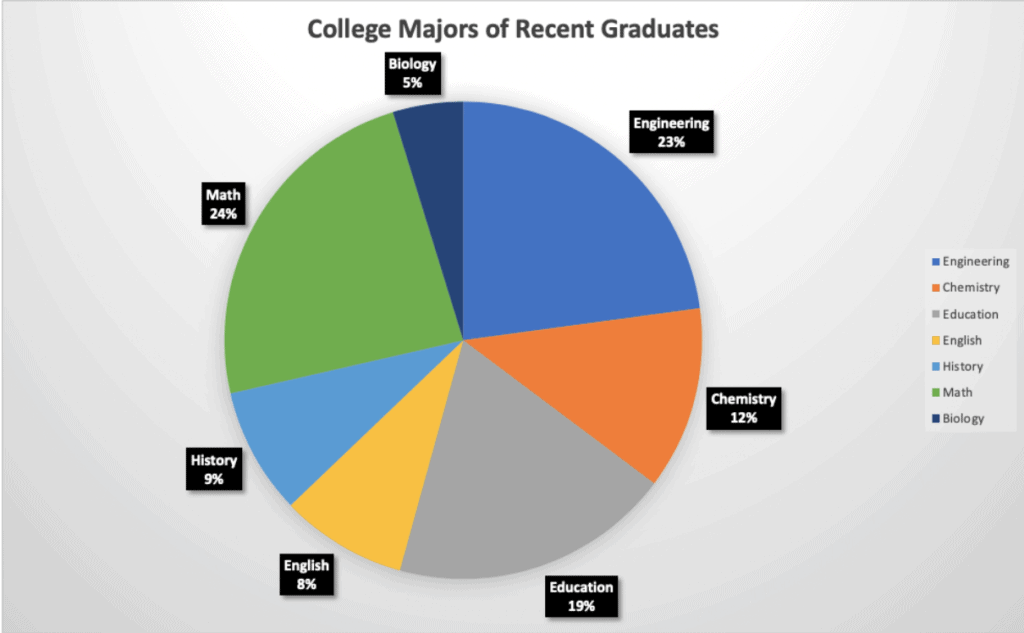 Which three categories of majors account for more than half of all of the majors listed?
 (Multiple Choice)
4.9/5 (70)
(70) Use the job posting below to answer the question.
Call Center Representative-Customer Service; Online Lending
(posted 5/24)
Bring your customer service skills and exceptional phone etiquette to our dynamic call center!
Work Location: 223 Venture Way, on the northeast corner of Azalea Road and Venture Way
Job Responsibilities:
As a Call Center Representative, you receive inbound calls providing courteous assistance with customers' existing accounts with Super Quick Cash or assistance with potential customers applying for loans via our internet lending services. Our Call Center Representatives create a positive experience and resolve customer inquiries in a timely manner. Our representatives seek to find the best fitting products by identifying key needs and pitching them to customers. Maintaining a high commitment to confidentiality, and performing duties in a manner supporting Heartland Financial Services' vision and values is key to continued success.
Specific Requirements:
High school diploma or GED
1-year customer service, Call Center a plus
Data-entry experience
Successful decision making and negotiating abilities
Attention to detail and ability to multitask
Ability to work a flexible schedule
To apply, simply navigate to our company website's Current Jobs Page. Click on the call center representative job. You will be asked to upload your cover letter and resume.
Heartland Financial Services
223 Venture Way
Los Angeles, CA 90145
727-555-9855
Heartlandfinancial.com
Which of the following is a requirement of the job?
(Multiple Choice)
5.0/5 (86)
(86) Joe is inclined to be moody and often shows his emotions to others.
Which of the following definitions is correct for "inclined" as used in the sentence above?
(Multiple Choice)
4.9/5 (74)
(74) Use the map below to answer the question.
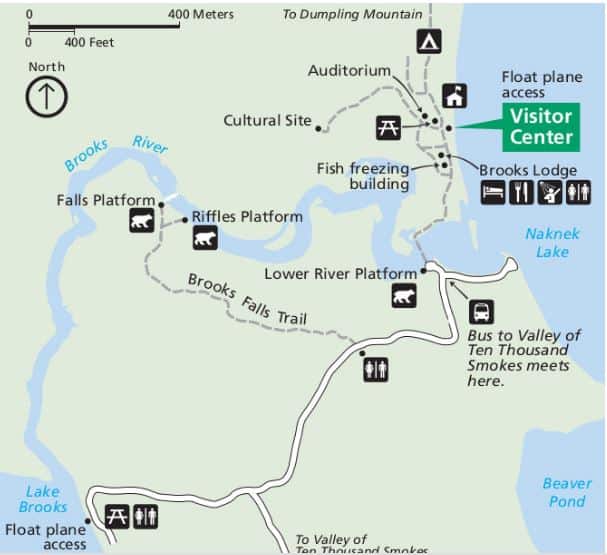 Which feature on the map is closest to Falls Platform?
 (Multiple Choice)
4.9/5 (83)
(83) Superhero flicks are one hot genre of movies today. And why not? After all, they're the most interesting genre of film on tap today. For the past several years, a number of the top grossing cinematic offerings have been superhero movies. But how can a genre that used to target mainly children be so popular today? One reason is that superheroes are just plain good people. They show an astonishing level of virtue and humanity, and this is easy to identify with. A superhero is the kind of person that we are or that we hope to become. Additionally, superhero origin stories often deal with death and loss, and this can evoke a sympathetic response from the audience. Take Batman, for instance. For most of his life, he has struggled with the memory of watching his parents die. And who among us hasn't felt a similar sting of loss? So in a world of evil and misfortune, people love to see their superheroes who act as symbols of virtue and who vanquish villains-as well as their own weaknesses.
Which of the following words describes many theatergoers' relation with superheroes?
(Multiple Choice)
4.8/5 (61)
(61) A donut shop sells exactly seven different types of donuts: 1, 2, 3, 4, 5, 6, and 7. Choose five different types of donuts to buy using the following guidelines:
If type 2 is chosen, type 3 cannot be chosen.
If type 3 is chosen, type 6 must be chosen.
If type 7 is chosen, type 4 must be chosen.
Which of the following combinations of donuts corresponds with the directions?
(Multiple Choice)
4.8/5 (69)
(69) Nutrition Facts
Serving Size: 2 oz. (56 mg.)
Servings per container: 3
Amount per serving
Calories 200
Calories from fat 5
_____________________________
% Daily Value *
Total Fat 0.5g 1%
Saturated fat 0g 0%
Trans Fat 0g
Cholesterol 0mg 0%
Sodium 1000mg 42%
Potassium 105mg 3%
Total Carb 40g 13%
Dietary Fiber 1g 5%
Sugars 3g
Protein 5g
_____________________________
Vitamin A 0%
Vitamin C 0%
Calcium 0%
Iron 8%
Thiamin 15%
Riboflavin 6%
Niacin 10%
Folic Acid 15%
* Percent daily values are based on a 2,000 calorie diet. Your daily values may be higher or lower depending on your calorie needs.
Calories: 2,000 2,500
Total Fat Less than 65g 80g
Sat Fat Less than 20g 25g
Cholesterol Less than 300mg 300mg
Sodium Less than 2,400mg 2,400mg
Total Carb 300g 375g
Dietary Fiber 25g 30g
How many calories are contained in the entire package?
(Multiple Choice)
5.0/5 (88)
(88) Free Exam 
Filters
- Essay(0)
- Multiple Choice(0)
- Short Answer(0)
- True False(0)
- Matching(0)