



 Chat with AI

Exam 3: ATI-TEAS-Reading

Exam 1: ATI-TEAS-English & Language Usage232 Questions
Exam 2: ATI-TEAS-Math296 Questions
Exam 3: ATI-TEAS-Reading375 Questions
Exam 4: ATI-TEAS-Science405 Questions
 Free Exam
Select questions type


During the 18th century, toll roads began appearing all over England, spreading from London all the way to Scotland. But these roads were made of small stones piled on top of mud, so even a light rain could render them impassable. A blind engineer named John Metcalf came up with a solution. He insisted that roads have a strong stone foundation. He "crowned" the roads too, meaning that he made them higher in the middle than on the sides. He added a ditch on either side, providing proper drainage to keep the roadways from caving in due to excess moisture. This also prevented potholes. But his methods proved costly and many local governments were loath to pay the construction costs. Undeterred, Metcalf challenged a colonel to race him to London. Thanks to the lousy road conditions, he made it to the city on foot faster than the colonel could get there in his horse-drawn buggy. As a result, towns across England began adopting Metcalf's engineering ideas. Even today, many of these ideas are still in use not only in England but around the world.
Which of the following words would the author use to describe John Metcalf?
(Multiple Choice)
5.0/5  (73)
(73) To: All Young's City Books staff
From: Charles Young
Date: 3 January
Subject: Staff Recommendations
As you know, when our customers browse for books, they often ask you for recommendations. As you may also know, February is Contemporary African American Writers Month. In honor of that, I'd like to create a display on the west wall of our store that highlights our staff's recommendations for books by African American writers. I'd like for every employee to choose a book you enjoyed reading and write a short synopsis (a paragraph is fine) of the book and describe why you recommend it. Recommendations can be written on a form that is available from Jenny at the special orders desk and should be submitted to me by the end of next week. That will give us plenty of time to create the display. In addition, the book that you recommend should be written by an African American writer who is currently living. The book can be fiction or nonfiction and must've been published within the last ten years. Your recommendation will be displayed next to copies of the book.
I know that all of you are avid readers. I'm looking forward to seeing our customers' reactions to this display and to your knowledge and expertise.
Thank you,
Charles
What is the purpose of this memo?
(Multiple Choice)
4.8/5 (65)
(65) Monarch Butterflies
Take a moment and think of a butterfly-any type of butterfly at all. Chances are good that the distinct orange, black, and yellow monarch butterfly came to mind. The monarch is perhaps the most beautiful of all butterflies in existence. That is, to a human the coloration is beautiful, but not so for other animals. The coloring is like a flashing red light to potential predators, sending a warning that the insect is foul tasting and poisonous. However, the greatest threat to the wellbeing of the monarch butterfly might not be coming from predators, but from the activities of humans.
As larvae, monarch caterpillars feed almost exclusively on the milkweed plant. This plant is critical for their survival and adults will return to areas rich in milkweed to lay their eggs directly on the plants. The milkweed that they feed on contains a poisonous toxin that is then stored in their bodies. This is what makes the monarch butterfly taste so terrible to predators. An animal that eats a monarch probably won't die, but it will feel sick enough to avoid other monarchs in the future.
Perhaps the most amazing aspect of the monarch is its 3000-mile annual migration. Every year as winter approaches, millions of these insects leave their homes in the United States and Canada, heading south to Southern California and Mexico. They travel between fifty and one hundred miles a day, the entire journey taking up to two months to complete. The monarchs return to the same forests every year, with some landing on the same trees that their ancestors did years earlier. As many as one billion of these delicate creatures find their way to the mountains of Mexico each year. Towards the end of winter, the monarchs mate. The males die soon afterwards but the females fly north, depositing eggs on milkweed plants along the way. Eventually, they too will die along the journey. The eggs will hatch and the larvae will become butterflies. These insects then continue the journey north.
Sadly, this regal insect is facing a number of threats to its existence. For one, scientists predict that one major effect of climate change will be wetter and colder winters. If they are dry, monarchs can survive sub-freezing temperatures, but if they're wet, they will freeze to death. Furthermore, as summers warm, habitats that are suitable for them will begin to move further and further north. This results in longer migrations. Before long, the distances may simply be too much for the insects to handle. Finally, the monarch faces extreme habitat loss in Mexico. Illegal logging there has greatly reduced the forests where the butterflies head in the winter. This problem in particular has become so serious that the International Union for Conservation of Nature listed the monarch as a "threatened phenomena." Will the monarch survive? It seems that it is up to the actions of human beings.
What is the author's purpose in including the third paragraph in this passage?
(Multiple Choice)
4.9/5 (70)
(70) A nursery has exactly seven types of trees: 1, 2, 3, 4, 5, 6, and 7. Choose five different types of trees to plant in the yard using the following guidelines:
If type 2 is chosen, type 4 cannot be chosen.
If type 3 is chosen, type 6 must be chosen.
If type 5 is chosen, type 7 must be chosen.
Which of the following combinations of trees corresponds with the directions?
(Multiple Choice)
4.8/5 (76)
(76) Where would a student look to find copyright information for a given book?
(Multiple Choice)
4.9/5 (84)
(84) 3 4 5 6 12 14
Arrange the numbers above into a pyramid with three in the bottom row, two in the middle and one on top. Follow these guidelines when placing the squares:
Squares in the bottom row have even numbers.
The two numbers in the middle have a difference of 2.
The top block is a multiple of 2.
Which of the following arrangements corresponds with the directions above?
(Multiple Choice)
4.7/5 (90)
(90) Use the map below to answer the question.
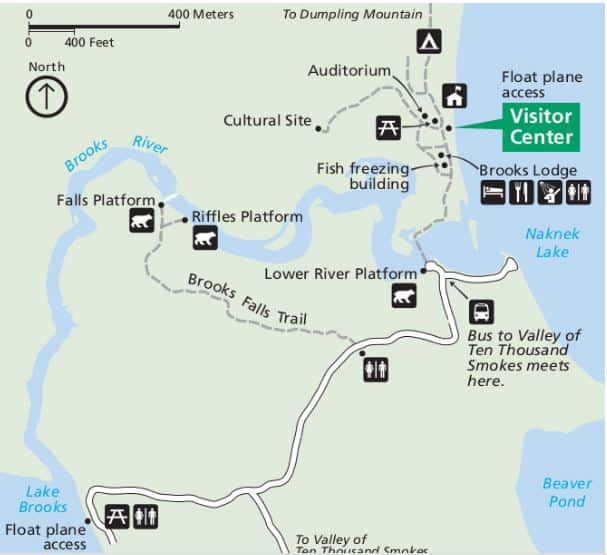 Which of the following is NOT available at Brooks Lodge?
 (Multiple Choice)
4.7/5 (77)
(77) A candy shop sells exactly seven types of chocolate treats: 1, 2, 3, 4, 5, 6, and 7. Choose five different types of chocolate treats to buy using the following guidelines:
If type 1 is chosen, type 3 cannot be chosen.
If type 3 is chosen, type 4 must be chosen.
If type 5 is chosen, type 3 must be chosen.
Which of the following combinations of chocolate treats corresponds with the directions?
(Multiple Choice)
4.9/5 (69)
(69) Use the pie chart below to answer the question.
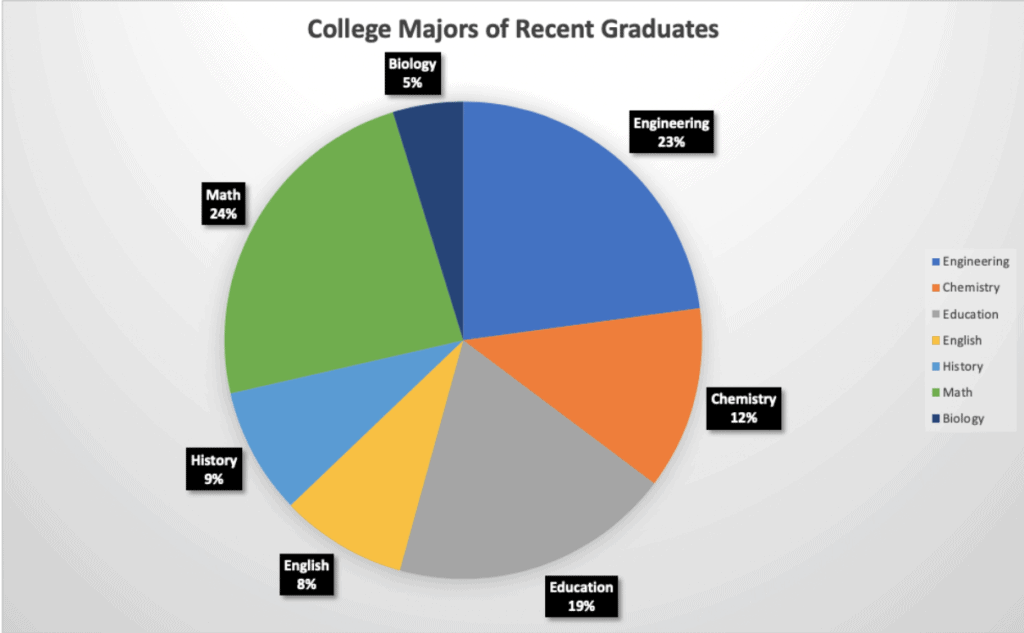 Which of the following is true about math majors, according to the pie chart?
 (Multiple Choice)
5.0/5 (76)
(76) Use the map below to answer the question.
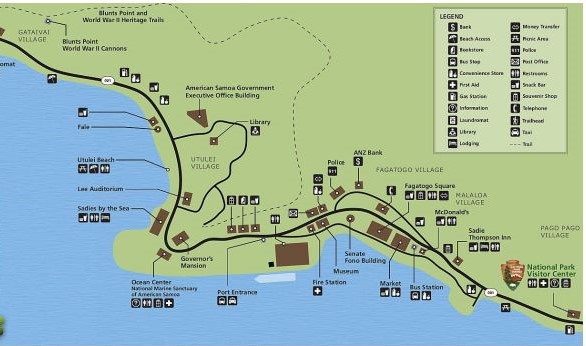 In which of the following villages is the library located?
 (Multiple Choice)
4.8/5 (90)
(90) Whether we like it or not, global climate change will have pronounced effects on the world we live in. Oddly enough, climate change brings with it some minor positive effects. For instance, the frost-free growing season will lengthen. This means that farmers will have a longer period of time in which to grow crops. Ultimately, some farmers may be able to plant and harvest two crops per year, rather than just one. But for every positive effect, there are ten negative ones. Temperatures will continue to rise. Of course, this could spell the doom for polar ice caps. Climate change also brings with it changes in precipitation patterns. More precipitation is expected for the northern U.S., while much less is expected for the Southwest. But perhaps more than anything else, climate change could devastate our coastal cities. Experts estimate that sea levels will rise one to four feet within the next sixty years. So, while not all of the results of climate change are negative, we clearly stand to lose more than we gain.
Which of the following is a likely source used when writing this passage?
(Multiple Choice)
4.7/5 (75)
(75) Rachel Carson
Rachel Carson (1907-1964) was an American marine biologist, conservationist, and author. She was born on a family farm in Pennsylvania and spent her youth exploring the countryside and writing stories, often about animals. It seems as if Carson was born to be an author. By the age of ten, she had already had her first book published. She began her adult career as an aquatic biologist in the U.S. Bureau of Fisheries, but became a full-time writer by the 1950s. More than anything else, she was interested in what can happen when, as she put it, "Things go out of kilter." Because of this, she began work on her groundbreaking book Silent Spring.
Developed in 1939, DDT was the most potent pesticide that world had ever known. It showed just how vulnerable nature was to the actions of humanity. While most pesticides of the day killed only one or two types of insects, DDT could kill hundreds. Originally used only by the military to clear South Pacific islands of malaria-causing insects during World War Two, it was cleared for civilian use in 1945. Carson grew justifiably more and more concerned about DDT as its effects on the environment slowly became known. She tried to publish magazine articles to raise the alarm about the poison, but no one would publish her work. Having gathered a vast amount of research on the subject, Carson started a four-year writing odyssey that culminated with the publishing of Silent Spring in 1962.
Carson described how a single application of DDT could poison the environment for weeks or even months. It could enter water sources and remain toxic even when diluted. Ultimately, it accumulated in the fatty tissues of animals-including human beings-and caused cancer and genetic damage. The book's most famous chapter, "A Fable for Tomorrow," described an American town where all life-even human children-had been "silenced" from the deleterious effects of the poison.
The reaction from the chemical industry was immediate. A major chemical manufacturer published a response to Silent Spring with a brochure that made fun of Carson's work. It described a world that was plagued by famine, disease, and insect swarms because chemical pesticides had been banned. In spite of this backlash, her careful work paid off. DDT was ultimately banned after President John F. Kennedy ordered a committee to investigate the effects of the chemical on the environment. But perhaps the most important legacy of her book was a new awareness of humanity's potential to inflict damage on the environment. Before the book, conservation had never garnered much public interest. But the problems that Carson wrote about-water contamination, cancer, and mass extinction-could not be ignored. For the first time, the urgent need to regulate industry to protect the environment became accepted. And from this, the modern environmental movement was born.
Which of the following is the author's purpose in the fourth paragraph?
(Multiple Choice)
4.7/5 (86)
(86) Use the advertisement below to answer the question.
Welcome to Heartland Insurance
You're going to love Heartland's quality protection, flexible coverage, varying policy periods, low premiums and our award-winning customer service.
Auto: Heartland provides comprehensive auto insurance for drivers that other companies might not want to insure. We specialize in insuring drivers who have not previously had insurance or who have been dropped from other insurance plans. Our policies reward drivers with lower rates when their driving records improve and when they go claim-free for a certain period of time.
Motorcycle: Our preferred motorcycle insurance plans include protection you won't find in most standard policies, such as collision coverage that includes the total cost of towing and road service, automatic coverage of up to $2500 of optional equipment, and rental car coverage of up to $50 per day. Additional coverage can be purchased for accessories valued over $2,500. Special discounts* apply to members of approved riding clubs, riders who complete a certified training course, and riders with more than five years' claim-free riding.
Be sure to ask about our $200 new customer discount!
Local callers to our uptown location: 575-555-4539
Local callers to our downtown location: 575-555-9587
-or apply online and receive a 10% discount just for downloading our new app!
*Discounts vary and may not be available in all fifty states.
Who would NOT be eligible for a special discount?
(Multiple Choice)
4.9/5 (79)
(79) Marie Curie
Marie Curie (1867 - 1934) was a famous Polish scientist and Nobel Prize winner. While she is often regarded as an important historical figure, most people may not realize the extent of Curie's accomplishments in the scientific field, let alone the remaining impact these effects have had on modern scientific developments. Originally named Maria Sklodowska, the famous scientist was born in Warsaw, Poland in 1867. Due to her family's involvement in government affairs, the Sklodowska family suffered a significant economic loss and they were forced to give up their property during the Polish national uprisings.
Despite the economic challenges faced by her family, Marie was adamant in pursuing her education and was known for her prodigious memory from a young age. After working diligently as a teacher in Poland, Marie made her way to Paris in 1891 to study at the Sorbonne (the University of Paris). Brought together by their mutual passion for science, Marie met her future husband, Pierre Curie, in 1894. Their marriage the following year marked the beginning of a series of scientific breakthroughs.
The pair seemed destined to make a difference in the scientific field due to their passion for physics and chemistry. Together, they discovered two new elements: polonium and radium. Marie devoted her research towards obtaining a pure form of radium in the metallic state, but struggled to finalize the project. In the meantime, she penned the term "radioactivity" after following Henri Becquerel's discovery of the phenomenon in 1896. Soon after, Marie, along with her husband Pierre and Becquerel, won the Nobel Prize for Physics in 1903.
After Pierre's sudden death in 1906, Marie continued her experiments and research mostly on her own, all while raising her two daughters, Irene and Eve. During the years after her husband's death, Curie was installed as the first female professor at the Sorbonne in 1906 and was awarded the Nobel Prize for Chemistry for the isolation of a pure form of radium in 1911. When it comes to Curie's varied achievements, her research on the use of X-radiography is most often hailed as her greatest, as it would later pave the way towards treating illnesses and advancing the medicinal field. Due to the nature of her research and her time as a radiologist in field hospitals, Curie was often unprotected when exposed to X-rays. Decades of this exposure lead to her death from leukemia in 1934.
Despite the initial adversity and hardship faced by Curie, she contributed groundbreaking findings in the scientific field. Her immense contributions have not just made an impact when it comes to science, though. Curie is also an important symbol for women's history, as she was able to defy traditional stereotypes of women during her lifetime, and was the first woman in history to win a Nobel Prize. By realizing the hurdles that Curie faced in her early years, her desire to change the scientific field for the better, and her astounding accomplishments, one can come to truly understand and appreciate Curie's achievements.
Which of the following statements from the passage provides evidence that Marie Curie was "an important symbol for women's history"?
(Multiple Choice)
4.8/5 (86)
(86) A student is writing a research paper about Alzheimer's disease. Which source could he use to discover the amount of scientific research that has already been done?
(Multiple Choice)
4.9/5 (66)
(66) Use the job posting below to answer the question.
$25-$30 an hour + Commission
(posted 6/17)
City Lights Remodeling is America's #1 remodeler as ranked by Remodeling Magazine based on sales. We are a rapidly growing company and are currently seeking well-spoken, energetic and eager-to-learn individuals who are interested in starting a career with one of the nation's top home remodeling companies.
City Lights Remodeling is an incredible business that allows its employees to grow with the company. We have several high-earning opportunities available. We offer a lucrative performance-based compensation plan which includes base pay plus commission and monthly bonuses.
The candidates chosen for this salaried position will speak directly with prospective clients in communities located in and around the Greater-Las Vegas area and surrounding cities. They will engage in meaningful conversations with homeowners in their own houses, generate interest in our products, and schedule appointments to meet with a Project Consultant.
No experience necessary
Paid professional training
Full-time career opportunity
Fun and successful, high-energy work culture
Uncapped commission with base pay + monthly bonuses
No telephone cold calls
Fun outings- Ski trips, barbecues, holiday parties, casino trips, sporting events, concert tickets, etc.
Again, we offer…
Fun and successful work culture
Base + Commission + Additional Bonuses
NO CAP on commission
To apply, simply navigate to our company website's current jobs page. Click on the call center representative job. You will be asked to upload your cover letter and resume.
City Lights Remodeling
213 Boulder Highway
Las Vegas, Nevada 90236
Citylightsremodeling.com
Which of the following could a potential applicant conclude, based on the job posting?
(Multiple Choice)
4.9/5 (75)
(75) Use the job posting below to answer the question.
Henderson State College Fundraiser for Development/Capital Campaign
Henderson State College in Nevada seeks a highly experienced fundraiser to work for the College's in-house fundraising program. The successful candidate will report directly to the director of development and will provide support for the college's Capital Campaign. Work will be conducted in a team environment with the deans of each department of the college.
Requirements: Must be willing to work without supervision, travel and devote the time necessary to achieve audacious goals. Evening and weekend work required. Bachelor's degree required, although a master's degree is preferred. Demonstrated success in soliciting major gifts is an absolute must. Must have a minimum of twelve years' experience in fundraising and managing in a team-oriented environment.
Those who have worked in a university setting will have an advantage in the selection process.
Interested candidates should send a cover letter and resume with salary requirements to the address listed below:
Charles Smith, Director of Personnel Management
Henderson State College
Office of Human Resources
456 Desert View Road
Henderson, Nevada 91293
Email: smithc@HSC.edu
Phone: 454-555-9383
Which candidate would be the best fit for this role?
(Multiple Choice)
4.9/5 (88)
(88) Monarch Butterflies
Take a moment and think of a butterfly-any type of butterfly at all. Chances are good that the distinct orange, black, and yellow monarch butterfly came to mind. The monarch is perhaps the most beautiful of all butterflies in existence. That is, to a human the coloration is beautiful, but not so for other animals. The coloring is like a flashing red light to potential predators, sending a warning that the insect is foul tasting and poisonous. However, the greatest threat to the wellbeing of the monarch butterfly might not be coming from predators, but from the activities of humans.
As larvae, monarch caterpillars feed almost exclusively on the milkweed plant. This plant is critical for their survival and adults will return to areas rich in milkweed to lay their eggs directly on the plants. The milkweed that they feed on contains a poisonous toxin that is then stored in their bodies. This is what makes the monarch butterfly taste so terrible to predators. An animal that eats a monarch probably won't die, but it will feel sick enough to avoid other monarchs in the future.
Perhaps the most amazing aspect of the monarch is its 3000-mile annual migration. Every year as winter approaches, millions of these insects leave their homes in the United States and Canada, heading south to Southern California and Mexico. They travel between fifty and one hundred miles a day, the entire journey taking up to two months to complete. The monarchs return to the same forests every year, with some landing on the same trees that their ancestors did years earlier. As many as one billion of these delicate creatures find their way to the mountains of Mexico each year. Towards the end of winter, the monarchs mate. The males die soon afterwards but the females fly north, depositing eggs on milkweed plants along the way. Eventually, they too will die along the journey. The eggs will hatch and the larvae will become butterflies. These insects then continue the journey north.
Sadly, this regal insect is facing a number of threats to its existence. For one, scientists predict that one major effect of climate change will be wetter and colder winters. If they are dry, monarchs can survive sub-freezing temperatures, but if they're wet, they will freeze to death. Furthermore, as summers warm, habitats that are suitable for them will begin to move further and further north. This results in longer migrations. Before long, the distances may simply be too much for the insects to handle. Finally, the monarch faces extreme habitat loss in Mexico. Illegal logging there has greatly reduced the forests where the butterflies head in the winter. This problem in particular has become so serious that the International Union for Conservation of Nature listed the monarch as a "threatened phenomena." Will the monarch survive? It seems that it is up to the actions of human beings.
Which of the following is an opinion stated in the passage?
(Multiple Choice)
4.9/5 (74)
(74) John D. Rockefeller is said to be the richest person ever to live, with an estimated wealth of $336 billion. But evidence suggests that an African named Mansa Musa probably surpassed that staggering amount. Musa lived in western Africa and became a surprisingly selfless emperor of the Mali people in 1312 A.D. By trading gold and salt, he amassed an enormous fortune, now estimated at $400 billion dollars in today's money. He is most famous for his pilgrimage to Mecca. Members of his caravan numbered some 60,000 people, and he made the journey with hundreds of animals and plenty of gold. He freely gave this gold to the poor that he met along the route. He had a number of mosques built, too. Legend has it that he built one every Friday during his reign. The most famous of these is the Djinguereber Mosque in Timbuktu, Mali.
Which of the following words would the author use to describe Mansa Musa?
(Multiple Choice)
4.7/5 (86)
(86) Monarch Butterflies
Take a moment and think of a butterfly-any type of butterfly at all. Chances are good that the distinct orange, black, and yellow monarch butterfly came to mind. The monarch is perhaps the most beautiful of all butterflies in existence. That is, to a human the coloration is beautiful, but not so for other animals. The coloring is like a flashing red light to potential predators, sending a warning that the insect is foul tasting and poisonous. However, the greatest threat to the wellbeing of the monarch butterfly might not be coming from predators, but from the activities of humans.
As larvae, monarch caterpillars feed almost exclusively on the milkweed plant. This plant is critical for their survival and adults will return to areas rich in milkweed to lay their eggs directly on the plants. The milkweed that they feed on contains a poisonous toxin that is then stored in their bodies. This is what makes the monarch butterfly taste so terrible to predators. An animal that eats a monarch probably won't die, but it will feel sick enough to avoid other monarchs in the future.
Perhaps the most amazing aspect of the monarch is its 3000-mile annual migration. Every year as winter approaches, millions of these insects leave their homes in the United States and Canada, heading south to Southern California and Mexico. They travel between fifty and one hundred miles a day, the entire journey taking up to two months to complete. The monarchs return to the same forests every year, with some landing on the same trees that their ancestors did years earlier. As many as one billion of these delicate creatures find their way to the mountains of Mexico each year. Towards the end of winter, the monarchs mate. The males die soon afterwards but the females fly north, depositing eggs on milkweed plants along the way. Eventually, they too will die along the journey. The eggs will hatch and the larvae will become butterflies. These insects then continue the journey north.
Sadly, this regal insect is facing a number of threats to its existence. For one, scientists predict that one major effect of climate change will be wetter and colder winters. If they are dry, monarchs can survive sub-freezing temperatures, but if they're wet, they will freeze to death. Furthermore, as summers warm, habitats that are suitable for them will begin to move further and further north. This results in longer migrations. Before long, the distances may simply be too much for the insects to handle. Finally, the monarch faces extreme habitat loss in Mexico. Illegal logging there has greatly reduced the forests where the butterflies head in the winter. This problem in particular has become so serious that the International Union for Conservation of Nature listed the monarch as a "threatened phenomena." Will the monarch survive? It seems that it is up to the actions of human beings.
Which of the following statements rephrases the author's main argument about the fate of the monarch butterfly?
(Multiple Choice)
4.9/5 (74)
(74) Free Exam 
Filters
- Essay(0)
- Multiple Choice(0)
- Short Answer(0)
- True False(0)
- Matching(0)