



 Chat with AI
Exam 12: The Milky Way Galaxy

Exam 1: Here and Now97 Questions
Exam 2: A Users Guide to the Sky116 Questions
Exam 3: Cycles of the Sun and Moon154 Questions
Exam 4: The Origin of Modern Astronomy144 Questions
Exam 5: Light and Telescopes156 Questions
Exam 6: Atoms and Spectra125 Questions
Exam 7: The Sun146 Questions
Exam 8: The Family of Stars190 Questions
Exam 9: The Formation and Structure of Stars136 Questions
Exam 10: The Deaths of Stars128 Questions
Exam 11: Neutron Stars and Black Holes99 Questions
Exam 12: The Milky Way Galaxy117 Questions
Exam 13: Galaxies: Normal and Active151 Questions
Exam 14: Modern Cosmology112 Questions
Exam 15: Origin of the Solar System and Extrasolar Planets104 Questions
Exam 16: Earth and Moon: Bases for Comparative Planetology98 Questions
Exam 17: Mercury, Venus, and Mars83 Questions
Exam 18: The Outer Solar System137 Questions
Exam 19: Meteorites, Asteroids, and Comets91 Questions
Exam 20: Astrobiology: Life on Other Worlds97 Questions
Select questions type


Discuss how Harlow Shapley determined the structure of the Milky Way galaxy from his study of globular clusters.
(Essay)
4.9/5  (91)
(91) The Sun will one day pass through the instability strip and become a variable star.
(True/False)
4.8/5 (95)
(95)  The pink color in the above visual image is from __________.
 (Multiple Choice)
4.9/5 (63)
(63) The orbits of population I stars
I. are confined to disk of the galaxy.
II. are very elliptical.
III. are nearly circular.
IV. are randomly inclined to the disk of the galaxy.
(Multiple Choice)
4.9/5 (77)
(77) The density wave theory explains spurs and branches along the spiral arms.
(True/False)
4.9/5 (87)
(87) In the diagram below, the approximate absolute magnitude of a Type II Cepheid with a period of 30 days is ____________________. 
(Short Answer)
4.7/5 (76)
(76) Figure 12-1  Refer to Figure 12-1. A Type I Cepheid has been located in an open cluster. The period of the Cepheid variable is 30 days and the variables apparent visual magnitude, m , is 10. First, use 12-1 to estimate the absolute visual magnitude, M . Calculate the distance to this open cluster? Hint: d pc = 10( m - M + 5)/5
 (Multiple Choice)
4.9/5 (85)
(85)  The relative abundance of chemical elements are shown by atomic mass number. Which is/are the metal(s)?
 (Multiple Choice)
4.8/5 (81)
(81) As viewed from above or face-on, a ____________ spiral galaxy has many branches and spurs, making the arms less discernible.
(Short Answer)
4.9/5 (90)
(90) Stars are eternal and unchanging in your lifetime but not over a star's lifetime
(True/False)
4.9/5 (66)
(66) 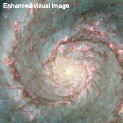 The pink color tracing the spiral arms are from emission nebulae.
 (True/False)
4.8/5 (84)
(84) 
Filters
- Essay(0)
- Multiple Choice(0)
- Short Answer(0)
- True False(0)
- Matching(0)