



 Chat with AI
Exam 31: Animal Phylogeny, Acoelomates, and Protostomes

Exam 1: Introduction to Biological Concepts and Research86 Questions
Exam 2: Life, Chemistry, and Water87 Questions
Exam 3: Biological Molecules: the Carbon Compounds of Life86 Questions
Exam 4: Cells87 Questions
Exam 5: Membranes and Transport88 Questions
Exam 6: Energy, Enzymes, and Biological Reactions87 Questions
Exam 7: Cellular Respiration: Harvesting Chemical Energy88 Questions
Exam 8: Photosynthesis83 Questions
Exam 9: Cell Communication87 Questions
Exam 10: Cell Division and Mitosis88 Questions
Exam 11: Meiosis: the Cellular Basis of Sexual Reproduction80 Questions
Exam 12: Mendel, Genes, and Inheritance79 Questions
Exam 13: Genes, Chromosomes, and Human Genetics92 Questions
Exam 14: Dna Structure, Replication, and Organization79 Questions
Exam 15: Gene Expression: From Dna to Protein83 Questions
Exam 16: Regulation of Gene Expression84 Questions
Exam 17: Bacterial and Viral Genetics85 Questions
Exam 18: Dna Technology: Making and Using Genetically Altered Organisms, and Other Applications90 Questions
Exam 19: Genomes and Proteomes81 Questions
Exam 20: The Development of Evolutionary Thought92 Questions
Exam 21: Microevolution: Genetic Changes Within Populations88 Questions
Exam 22: Speciation89 Questions
Exam 23: Paleobiology and Macroevolution87 Questions
Exam 24: Systematic Biology: Phylogeny and Classification95 Questions
Exam 25: The Origin of Life86 Questions
Exam 26: Prokaryotes and Viruses86 Questions
Exam 27: Protists90 Questions
Exam 28: Seedless Plants88 Questions
Exam 29: Seed Plants90 Questions
Exam 30: Fungi88 Questions
Exam 31: Animal Phylogeny, Acoelomates, and Protostomes95 Questions
Exam 32: Deuterostomes: Vertebrates and Their Closest Relatives93 Questions
Exam 33: The Plant Body90 Questions
Exam 34: Transport in Plants94 Questions
Exam 35: Plant Nutrition85 Questions
Exam 36: Reproduction and Development in Flowering Plants89 Questions
Exam 37: Plant Signals and Responses to the Environment90 Questions
Exam 38: Introduction to Animal Organization and Physiology87 Questions
Exam 39: Information Flow and the Neuron88 Questions
Exam 40: Nervous Systems88 Questions
Exam 41: Sensory Systems87 Questions
Exam 42: The Endocrine System94 Questions
Exam 43: Muscles, Bones, and Body Movements87 Questions
Exam 44: The Circulatory System87 Questions
Exam 45: Defenses Against Disease83 Questions
Exam 46: Gas Exchange: the Respiratory System87 Questions
Exam 47: Digestive Systems and Animal Nutrition92 Questions
Exam 48: Regulating the Internal Environment: Osmoregulation, Excretion, and Thermoregulation88 Questions
Exam 49: Animal Reproduction76 Questions
Exam 50: Animal Development88 Questions
Exam 51: Ecology and the Biosphere88 Questions
Exam 52: Population Ecology92 Questions
Exam 53: Population Interactions and Community Ecology89 Questions
Exam 54: Ecosystems90 Questions
Exam 55: Biodiversity and Conservation Biology89 Questions
Exam 56: Animal Behavior87 Questions
Select questions type


The ____ is the initial opening between the developing gut and the outside environment for most animal embryos.
(Multiple Choice)
4.8/5  (77)
(77) Members of the ____ flatworm lineage are vertebrate endoparasites; some, called blood flukes, cause an often deadly disease in humans called schistosomiasis.
(Multiple Choice)
4.8/5 (75)
(75) Members of the ____ lineage have a pair of hinged shells that can be closed by contraction of one or two adductor muscles.
(Multiple Choice)
5.0/5 (85)
(85) Match each of the groups of organisms listed with the correct phylum.
Premises:
bristle worms, earthworms, and leeches
Responses:
Porifera
Annelida
Cnidaria
Correct Answer: Verified
Premises:
Responses:
(Matching)
5.0/5 (72)
(72) Most contemporary animal lineages first appeared between 530 and 520 million years ago, the time period referred to as the ____ explosion.
(Multiple Choice)
4.8/5 (76)
(76) Match each of the groups of organisms listed with the correct phylum.
Premises:
spiders, insects, shrimp, and crabs
Responses:
Cnidaria
Onychophora
Arthropoda
Correct Answer:Verified
VerifiedPremises:
Responses:
(Matching)
5.0/5 (74)
(74) Ringlike patterns on an earthworm and "six-pack abs" in humans are evidence of ____ in an animal's body plan.
(Multiple Choice)
4.8/5 (77)
(77) Flatworms have specialized cells called ____ that function in osmoregulation.
(Multiple Choice)
4.9/5 (82)
(82) Match each of the groups of organisms listed with the correct phylum.
Premises:
comb jellies
Responses:
Nematoda
Platyhelminthes
Cnidaria
Correct Answer:Verified
VerifiedPremises:
Responses:
(Matching)
4.8/5 (78)
(78) Match each of the groups of organisms listed with the correct phylum.
Premises:
sponges
Responses:
Nematoda
Porifera
Cnidaria
Correct Answer:Verified
VerifiedPremises:
Responses:
(Matching)
4.8/5 (79)
(79) Members of the ____ flatworm lineage are parasites of vertebrates, characterized by modified heads for attaching to the intestinal wall of hosts, and a series of reproductive units called proglottids.
(Multiple Choice)
4.8/5 (82)
(82) The members of the ____ Cnidarian lineage exist only as polyps as adults, and most build calcium carbonate exoskeletons and have mutualistic relationships with photosynthetic protists.
(Multiple Choice)
4.9/5 (81)
(81) Members of the ____ Ecdysozoan phylum, commonly called roundworms, are so plentiful in soil and other places that they may be the most abundant animals on Earth.,
(Multiple Choice)
4.7/5 (64)
(64) Examine the parts of a trochophore larva. Match each letter with the structure it represents.
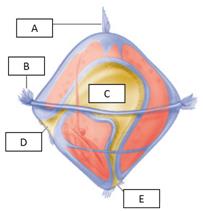
Figure 31.1
Figure 31.1
Correct Answer:Verified
VerifiedPremises:
Responses:
(Matching)
4.9/5 (67)
(67) Molecular sequence analysis has revealed that Crustacea is paraphyletic, because it includes an ancestor but not all of its descendants; the descendants not included in this clade are the ____.
(Multiple Choice)
4.8/5 (85)
(85) Most biologists now agree that the common ancestor of all animals was probably a eumetazoan.
(True/False)
4.9/5 (69)
(69) In most protostomes, the ____ is the developmental origin of the body cavity between the gut and muscles of the body wall.
(Multiple Choice)
5.0/5 (96)
(96) Most biologists agree that the most recent common ancestor of all animals was probably a ____, an idea first proposed by Ernst Haeckel in 1874.
(Multiple Choice)
4.9/5 (96)
(96) More than half of the known animal species comprise the ____ Ecdysozoan phylum.
(Multiple Choice)
4.9/5 (69)
(69) Members of the ____ subphylum are now all extinct, but they were extremely numerous in shallow Paleozoic seas. Most of them were dorsoventrally flattened and heavily armored, with two deep longitudinal grooves that gave their body a three-lobed appearance.
(Multiple Choice)
4.8/5 (76)
(76) 
Filters
- Essay(0)
- Multiple Choice(0)
- Short Answer(0)
- True False(0)
- Matching(0)