



 Chat with AI
Exam 15: The Milky Way Galaxy

Exam 1: Here and Now50 Questions
Exam 2: A Users Guide to the Sky68 Questions
Exam 3: Moon Phases and Eclipses68 Questions
Exam 4: Origins of Modern Astronomy64 Questions
Exam 5: Gravity76 Questions
Exam 6: Light and Telescopes69 Questions
Exam 7: Atoms and Spectra73 Questions
Exam 8: The Sun72 Questions
Exam 9: The Family of Stars70 Questions
Exam 10: The Interstellar Medium51 Questions
Exam 11: Formation and Structure of Stars44 Questions
Exam 12: Stellar Evolution51 Questions
Exam 13: Deaths of Stars74 Questions
Exam 14: Neutron Stars and Black Holes69 Questions
Exam 15: The Milky Way Galaxy73 Questions
Exam 16: Galaxies75 Questions
Exam 17: Supermassive Black Holes and Active Galaxies68 Questions
Exam 18: Modern Cosmology71 Questions
Exam 19: Origin of the Solar System and Extrasolar Planets69 Questions
Exam 20: Earth the Active Planet71 Questions
Exam 21: The Moon and Mercury71 Questions
Exam 22: Venus and Mars67 Questions
Exam 23: Jupiter and Saturn68 Questions
Exam 24: Uranus Neptune Pluto and the Kuiper Belt70 Questions
Exam 25: Meteorites Asteroids and Comets65 Questions
Exam 26: Astrobiology68 Questions
Select questions type


Stars at different distances from the galactic center revolve with different periods, an effect called _______________ rotation.
(Short Answer)
4.8/5  (77)
(77) Almost all of the gas and dust in the Milky Way is located in the ____.
(Multiple Choice)
4.8/5 (71)
(71) Why was it difficult for astronomers to develop a clear understanding of the Milky Way until the last few decades?
(Essay)
4.9/5 (69)
(69) One of the most important features that must be explained by models during the formation of the galaxy is the ____.
(Multiple Choice)
4.7/5 (76)
(76) A group of one hundred to a few thousand stars in a region of 25 pc in diameter that were created at the same time and our bound together by gravity is called a(n) ____.
(Multiple Choice)
4.7/5 (90)
(90) Explain the reasoning that leads astronomers to believe that our galaxy is surrounded by a cloud of "dark matter".
(Essay)
4.9/5 (85)
(85) What is the monolithic collapse hypothesis unable to explain?
(Multiple Choice)
4.8/5 (80)
(80) The black hole at the center of our galaxy is too large to be the remnant of a single star.
(True/False)
4.9/5 (85)
(85) Objects used to map spiral arms are called spiral _______________.
(Short Answer)
4.8/5 (70)
(70) What observed feature of the Milky Way is better explained by the bottom-up hypothesis of galactic formation, as opposed to the monolithic collapse model?
(Multiple Choice)
4.8/5 (69)
(69) Why do stars in the central bulge have a lower metallicity than stars in the disk?
(Essay)
4.7/5 (82)
(82) Astronomers refer to elements heavier than helium as _______________.
(Short Answer)
4.7/5 (81)
(81) 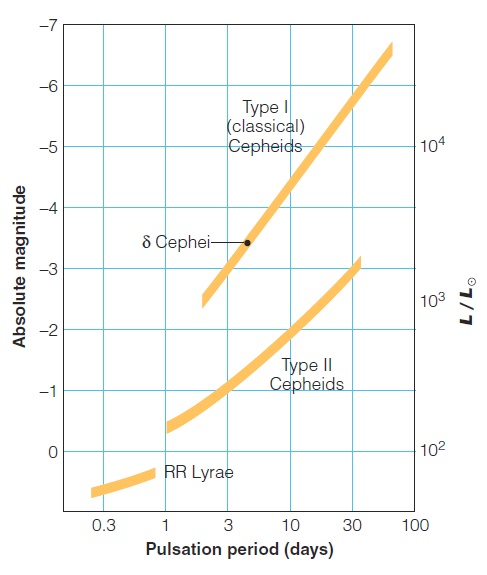 Figure 12-14(for the following questions)
The accompanying graph above clearly shows that ____.
Figure 12-14(for the following questions)
The accompanying graph above clearly shows that ____. (Multiple Choice)
4.9/5 (75)
(75) William and Caroline Herschel attempted to make a map of the Milky Way galaxy by counting the number of stars visible in different directions.
(True/False)
4.8/5 (67)
(67) 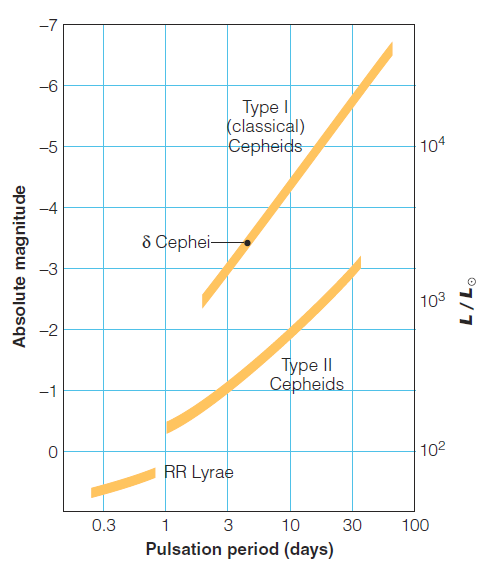 Figure 12-14(for the following questions)
Examine the accompanying graph. Harlow Shapley did not know that there are two categories of Cepheid variables; he was only familiar with those such as d Cepheii. Because of this, some of the Cepheid variables he observed ____.
Figure 12-14(for the following questions)
Examine the accompanying graph. Harlow Shapley did not know that there are two categories of Cepheid variables; he was only familiar with those such as d Cepheii. Because of this, some of the Cepheid variables he observed ____. (Multiple Choice)
4.8/5 (73)
(73) 
Filters
- Essay(0)
- Multiple Choice(0)
- Short Answer(0)
- True False(0)
- Matching(0)