



 Chat with AI
Exam 4: Origins of Modern Astronomy

Exam 1: Here and Now50 Questions
Exam 2: A Users Guide to the Sky68 Questions
Exam 3: Moon Phases and Eclipses68 Questions
Exam 4: Origins of Modern Astronomy64 Questions
Exam 5: Gravity76 Questions
Exam 6: Light and Telescopes69 Questions
Exam 7: Atoms and Spectra73 Questions
Exam 8: The Sun72 Questions
Exam 9: The Family of Stars70 Questions
Exam 10: The Interstellar Medium51 Questions
Exam 11: Formation and Structure of Stars44 Questions
Exam 12: Stellar Evolution51 Questions
Exam 13: Deaths of Stars74 Questions
Exam 14: Neutron Stars and Black Holes69 Questions
Exam 15: The Milky Way Galaxy73 Questions
Exam 16: Galaxies75 Questions
Exam 17: Supermassive Black Holes and Active Galaxies68 Questions
Exam 18: Modern Cosmology71 Questions
Exam 19: Origin of the Solar System and Extrasolar Planets69 Questions
Exam 20: Earth the Active Planet71 Questions
Exam 21: The Moon and Mercury71 Questions
Exam 22: Venus and Mars67 Questions
Exam 23: Jupiter and Saturn68 Questions
Exam 24: Uranus Neptune Pluto and the Kuiper Belt70 Questions
Exam 25: Meteorites Asteroids and Comets65 Questions
Exam 26: Astrobiology68 Questions
Select questions type


What part of the Copernican model was incorrect?

Free
(Essay)
4.9/5  (81)
(81) Correct Answer: Verified
Copernicus used uniform circular motion in his model to describe planetary motion.
Most Greek philosophers believed in a(n) _______________ Universe.
Free
(Short Answer)
4.8/5 (75)
(75) Correct Answer:Verified
Verifiedgeocentric
Spheres are an essential part of Kepler's three fundamental rules of planetary motion.
Free
(True/False)
4.9/5 (78)
(78) Correct Answer:Verified
VerifiedFalse
The most important idea in De Revolutionibus was placing the Sun at the center of the Universe.
(True/False)
4.8/5 (89)
(89) Eudoxus of Cnidus (408-355 BCE), a student of Plato's, applied the principle of heliocentric motion to produce a mathematical description of the motions of the Universe.
(True/False)
4.8/5 (82)
(82) Galileo's discovery of Saturn's moons proved that Earth, too, could move and still keep its satellite.
(True/False)
4.8/5 (72)
(72) 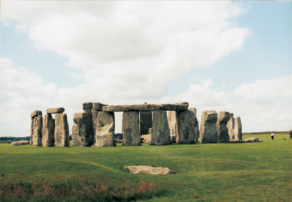 Figure 4-1 What field of science focuses most on the connections between ancient celestial observations and such structures as the one seen in the accompanying figure?
 (Multiple Choice)
4.8/5 (89)
(89) What tool did Galileo use to prove that the Moon was not perfect?
(Multiple Choice)
4.9/5 (88)
(88) A(n) _______________is something that is held to be obviously true and needs no further examination.
(Short Answer)
4.9/5 (80)
(80) Kepler's analysis of planetary motion showed that the planets move _______________ when close to the Sun and _______________ when farther away.
(Short Answer)
4.8/5 (89)
(89) Kepler's second law of planetary motion states "A line from a planet to the Sun sweeps over equal areas in equal intervals of ____."
(Multiple Choice)
4.9/5 (87)
(87) Kepler's laws of planetary motion were _____ because he could not provide an explanation for his conclusions.
(Multiple Choice)
4.8/5 (76)
(76) Ancient astronomers often saw certain planets viewed, while viewed from Earth, slowly stop and then move westward, of which they called this movement _______________.
(Short Answer)
4.9/5 (79)
(79) Explain the geometry of an ellipse, which Kepler used to describe a planet's orbits.
(Essay)
4.8/5 (78)
(78) Greek philosophers used religion and astrology to understand the mysteries of the universe.
(True/False)
4.8/5 (82)
(82) Pythagoras believed that the underlying rules to understanding the Universe were mathematical.
(True/False)
4.8/5 (90)
(90) Kepler's first law of planetary motion defied what long-held belief with ancient astronomers?
(Multiple Choice)
4.8/5 (84)
(84) According to Kepler's third law, calculate the orbital period of a planet approximately 6.0 AU away from the Sun.
(Multiple Choice)
5.0/5 (83)
(83) 
Filters
- Essay(0)
- Multiple Choice(0)
- Short Answer(0)
- True False(0)
- Matching(0)