



 Chat with AI
Exam 6: The Trigonometric Functions

Exam 1: Fundamental Concepts of Algebra150 Questions
Exam 2: Equations and Inequalities142 Questions
Exam 3: Functions and Graphs147 Questions
Exam 4: Polynomial and Rational Functions147 Questions
Exam 5: Inverse, Exponential, and Logarithmic Functions144 Questions
Exam 6: The Trigonometric Functions150 Questions
Exam 7: Analytic Trigonometry150 Questions
Exam 8: Applications of Trigonometry144 Questions
Exam 9: Systems of Equations and Inequalities147 Questions
Exam 10: Sequences, Series and Probability150 Questions
Exam 11: Topics From Analytic Geometry150 Questions
Select questions type


Express  = 2 in terms of degrees, minutes, and seconds, to the nearest second.
 (Multiple Choice)
4.8/5  (82)
(82) 
 to the nearest
 .


A ladder 26 feet long leans against the side of a building, and the angle between the ladder and the building is  .
A. Approximate the distance from the bottom of the ladder to the building. Give the answer to one decimal place.
B. If the distance from the bottom of the ladder to the building is increased by 2 feet, approximately how far does the top of the ladder move down the building? Give the answer to one decimal place.
.
A. Approximate the distance from the bottom of the ladder to the building. Give the answer to one decimal place.
B. If the distance from the bottom of the ladder to the building is increased by 2 feet, approximately how far does the top of the ladder move down the building? Give the answer to one decimal place.
(Multiple Choice)
4.7/5 (80)
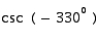
(80) 
The thickness of the ozone layer can be estimated using the formula  where I 0 is the intensity of a particular wavelength of light from the sun before it reaches the atmosphere, I is the intensity of the same wavelength after passing through a layer of ozone x centimeters thick, k is the absorption constant of ozone for that wavelength, and
 is the acute angle that the sunlight makes with the vertical. Suppose that for a wavelength of 3,055
 10 - 8 centimeter with k
 1.86, I o /I is measured as 1.72 and
 . Approximate the thickness of the ozone layer to the nearest 0.01 centimeter.
where I 0 is the intensity of a particular wavelength of light from the sun before it reaches the atmosphere, I is the intensity of the same wavelength after passing through a layer of ozone x centimeters thick, k is the absorption constant of ozone for that wavelength, and is the acute angle that the sunlight makes with the vertical. Suppose that for a wavelength of 3,055 10 - 8 centimeter with k 1.86, I o /I is measured as 1.72 and . Approximate the thickness of the ozone layer to the nearest 0.01 centimeter. (Multiple Choice)
4.8/5 (77)
(77) The amount of sunshine illuminating a wall of a building can greatly affect the energy efficiency of the building. The solar radiation striking a vertical wall that faces east is given by the formula  where R 0 is the maximum solar radiation possible,
 is the angle that the sun makes with the horizontal, and
 is the direction of the sun in the sky, with
 = 90 o when the sun is in the east and
 = 0 o when the sun is in the south. What percentage of R 0 is striking the wall when
 is equal to 30 o and the sun is in the southeast?
Round the answer to the nearest integer.
where R 0 is the maximum solar radiation possible, is the angle that the sun makes with the horizontal, and is the direction of the sun in the sky, with = 90 o when the sun is in the east and = 0 o when the sun is in the south. What percentage of R 0 is striking the wall when is equal to 30 o and the sun is in the southeast?
Round the answer to the nearest integer. (Multiple Choice)
4.9/5 (79)
(79) 
Use the graph of a trigonometric function to aid in sketching the graph of the equation without plotting points. 
(Multiple Choice)
4.9/5 (78)
(78) Refer to the graph of y = cos x to find the separate values of x in the interval  that satisfy the equation.

that satisfy the equation. (Multiple Choice)
4.7/5 (75)
(75) Use fundamental identities to find the exact values of the trigonometric functions for the given conditions. 
(Multiple Choice)
4.9/5 (79)
(79) The phases of the moon can be described using the phase angle  , determined by the sun, the moon, and the Earth, as shown in the figure. Because the moon orbits Earth,
 changes during the course of a month. The area of the region A of the moon, which appears illuminated to an observer on Earth, is given by
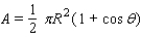 , where R = 1,080 mi is the radius of the moon. Approximate A for the following position of the moon:
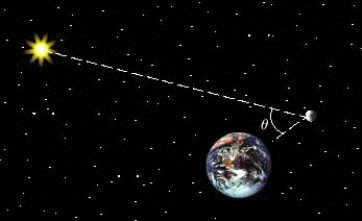

, determined by the sun, the moon, and the Earth, as shown in the figure. Because the moon orbits Earth, changes during the course of a month. The area of the region A of the moon, which appears illuminated to an observer on Earth, is given by , where R = 1,080 mi is the radius of the moon. Approximate A for the following position of the moon: (Multiple Choice)
4.8/5 (72)
(72) A CB antenna is located on the top of a garage that is 17 feet tall. From a point on level ground that is 120 feet from a point directly below the antenna, the antenna subtends an angle of  , as shown in the figure. Approximate the length of the antenna. Give the answer to one decimal place.

, as shown in the figure. Approximate the length of the antenna. Give the answer to one decimal place. (Multiple Choice)
5.0/5 (91)
(91) Points on the terminal sides of angles play an important part in the design of arms for robots. Suppose a robot has a straight arm 20 inches long that can rotate about the origin in a coordinate plane. If the robot's hand is located at (20, 0) and then rotates through an angle of 60 o , what is the new location of the hand?
(Multiple Choice)
5.0/5 (81)
(81) The graph of an equation of a sine wave is shown in the figure. Find the amplitude, period, and phase shift. 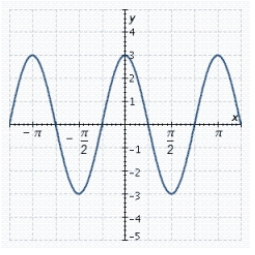
(Multiple Choice)
4.9/5 (72)
(72) Points on the terminal sides of angles play an important part in the design of arms for robots. Suppose a robot has a straight arm 20 inches long that can rotate about the origin in a coordinate plane. If the robot's hand is located at (20, 0) and then rotates through an angle of 60 o , what is the new location of the hand?
(Multiple Choice)
4.9/5 (72)
(72) 
Filters
- Essay(0)
- Multiple Choice(0)
- Short Answer(0)
- True False(0)
- Matching(0)