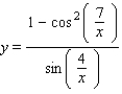
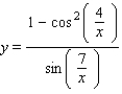
Exam 6: The Trigonometric Functions

arrow
  • Select Tags
search iconSearch Question
flashcardsStudy Flashcards
  • Select Tags

Two stars that are very close may appear to be one. The ability of a telescope to separate their images is called its resolution. The smaller the resolution, the better a telescope's ability to separate images in the sky. In a refracting telescope, resolution Two stars that are very close may appear to be one. The ability of a telescope to separate their images is called its resolution. The smaller the resolution, the better a telescope's ability to separate images in the sky. In a refracting telescope, resolution   ( see the figure ) can be improved by using a lens with a larger diameter D. The relationship between   in degrees and D in meters is given by   , where   is the wavelength of light in meters. The largest refracting telescope in the world is at the University of Chicago. At a wavelength of   meter, its resolution is   . Approximate the diameter of the lens to the nearest hundredth of a meter.  ( see the figure ) can be improved by using a lens with a larger diameter D. The relationship between Two stars that are very close may appear to be one. The ability of a telescope to separate their images is called its resolution. The smaller the resolution, the better a telescope's ability to separate images in the sky. In a refracting telescope, resolution   ( see the figure ) can be improved by using a lens with a larger diameter D. The relationship between   in degrees and D in meters is given by   , where   is the wavelength of light in meters. The largest refracting telescope in the world is at the University of Chicago. At a wavelength of   meter, its resolution is   . Approximate the diameter of the lens to the nearest hundredth of a meter.  in degrees and D in meters is given by Two stars that are very close may appear to be one. The ability of a telescope to separate their images is called its resolution. The smaller the resolution, the better a telescope's ability to separate images in the sky. In a refracting telescope, resolution   ( see the figure ) can be improved by using a lens with a larger diameter D. The relationship between   in degrees and D in meters is given by   , where   is the wavelength of light in meters. The largest refracting telescope in the world is at the University of Chicago. At a wavelength of   meter, its resolution is   . Approximate the diameter of the lens to the nearest hundredth of a meter.  , where Two stars that are very close may appear to be one. The ability of a telescope to separate their images is called its resolution. The smaller the resolution, the better a telescope's ability to separate images in the sky. In a refracting telescope, resolution   ( see the figure ) can be improved by using a lens with a larger diameter D. The relationship between   in degrees and D in meters is given by   , where   is the wavelength of light in meters. The largest refracting telescope in the world is at the University of Chicago. At a wavelength of   meter, its resolution is   . Approximate the diameter of the lens to the nearest hundredth of a meter.  is the wavelength of light in meters. The largest refracting telescope in the world is at the University of Chicago. At a wavelength of Two stars that are very close may appear to be one. The ability of a telescope to separate their images is called its resolution. The smaller the resolution, the better a telescope's ability to separate images in the sky. In a refracting telescope, resolution   ( see the figure ) can be improved by using a lens with a larger diameter D. The relationship between   in degrees and D in meters is given by   , where   is the wavelength of light in meters. The largest refracting telescope in the world is at the University of Chicago. At a wavelength of   meter, its resolution is   . Approximate the diameter of the lens to the nearest hundredth of a meter.  meter, its resolution is Two stars that are very close may appear to be one. The ability of a telescope to separate their images is called its resolution. The smaller the resolution, the better a telescope's ability to separate images in the sky. In a refracting telescope, resolution   ( see the figure ) can be improved by using a lens with a larger diameter D. The relationship between   in degrees and D in meters is given by   , where   is the wavelength of light in meters. The largest refracting telescope in the world is at the University of Chicago. At a wavelength of   meter, its resolution is   . Approximate the diameter of the lens to the nearest hundredth of a meter.  . Approximate the diameter of the lens to the nearest hundredth of a meter. Two stars that are very close may appear to be one. The ability of a telescope to separate their images is called its resolution. The smaller the resolution, the better a telescope's ability to separate images in the sky. In a refracting telescope, resolution   ( see the figure ) can be improved by using a lens with a larger diameter D. The relationship between   in degrees and D in meters is given by   , where   is the wavelength of light in meters. The largest refracting telescope in the world is at the University of Chicago. At a wavelength of   meter, its resolution is   . Approximate the diameter of the lens to the nearest hundredth of a meter.

(Multiple Choice)
4.8/5
(78)

The popular biorhythm theory uses the graphs of three simple sine functions to make predictions about an individual's physical, emotional, and intellectual potential for a particular day. The graphs are given by The popular biorhythm theory uses the graphs of three simple sine functions to make predictions about an individual's physical, emotional, and intellectual potential for a particular day. The graphs are given by   with t in days and t = 0 corresponding to birth. Find the value of b for the physical cycle, which has a period of 29 days. with t in days and t = 0 corresponding to birth. Find the value of b for the physical cycle, which has a period of 29 days.

(Multiple Choice)
4.8/5
(89)

Find the exact values of the six trigonometric functions of the angle, whenever possible. Find the exact values of the six trigonometric functions of the angle, whenever possible.

(Multiple Choice)
4.9/5
(73)

Estimate the horizontal asymptote. Estimate the horizontal asymptote.

(Multiple Choice)
4.8/5
(76)

Approximate the acute angle Approximate the acute angle   to the nearest   .  to the nearest Approximate the acute angle   to the nearest   .  . Approximate the acute angle   to the nearest   .

(Multiple Choice)
4.7/5
(81)

Refer to the graph of y = cos x to find the separate values of x in the interval Refer to the graph of y = cos x to find the separate values of x in the interval   that satisfy the equation.  that satisfy the equation. Refer to the graph of y = cos x to find the separate values of x in the interval   that satisfy the equation.

(Multiple Choice)
4.9/5
(84)

Find the quadrant containing Find the quadrant containing   if the given conditions are true.   and  if the given conditions are true. Find the quadrant containing   if the given conditions are true.   and  and Find the quadrant containing   if the given conditions are true.   and

(Multiple Choice)
4.8/5
(66)

Scientists sometimes use the formula Scientists sometimes use the formula   to simulate temperature variations during the day, with time t in hours, temperature f ( t ) in   , and t=0 corresponding to midnight. Assume that f ( t ) is decreasing at midnight. Determine values of a, b, c, and d that fit the information: the high temperature of 32   occurs at 2 P.M., and the average temperature of 23   occurs 6 hours later. to simulate temperature variations during the day, with time t in hours, temperature f ( t ) in Scientists sometimes use the formula   to simulate temperature variations during the day, with time t in hours, temperature f ( t ) in   , and t=0 corresponding to midnight. Assume that f ( t ) is decreasing at midnight. Determine values of a, b, c, and d that fit the information: the high temperature of 32   occurs at 2 P.M., and the average temperature of 23   occurs 6 hours later. , and t=0 corresponding to midnight. Assume that f ( t ) is decreasing at midnight. Determine values of a, b, c, and d that fit the information: the high temperature of 32 Scientists sometimes use the formula   to simulate temperature variations during the day, with time t in hours, temperature f ( t ) in   , and t=0 corresponding to midnight. Assume that f ( t ) is decreasing at midnight. Determine values of a, b, c, and d that fit the information: the high temperature of 32   occurs at 2 P.M., and the average temperature of 23   occurs 6 hours later. occurs at 2 P.M., and the average temperature of 23 Scientists sometimes use the formula   to simulate temperature variations during the day, with time t in hours, temperature f ( t ) in   , and t=0 corresponding to midnight. Assume that f ( t ) is decreasing at midnight. Determine values of a, b, c, and d that fit the information: the high temperature of 32   occurs at 2 P.M., and the average temperature of 23   occurs 6 hours later. occurs 6 hours later.

(Multiple Choice)
4.8/5
(91)

Find the period of the equation. Find the period of the equation.

(Multiple Choice)
4.8/5
(73)

Two stars that are very close may appear to be one. The ability of a telescope to separate their images is called its resolution. The smaller the resolution, the better a telescope's ability to separate images in the sky. In a refracting telescope, resolution Two stars that are very close may appear to be one. The ability of a telescope to separate their images is called its resolution. The smaller the resolution, the better a telescope's ability to separate images in the sky. In a refracting telescope, resolution   ( see the figure ) can be improved by using a lens with a larger diameter D. The relationship between   in degrees and D in meters is given by   , where   is the wavelength of light in meters. The largest refracting telescope in the world is at the University of Chicago. At a wavelength of   meter, its resolution is   . Approximate the diameter of the lens to the nearest hundredth of a meter.  ( see the figure ) can be improved by using a lens with a larger diameter D. The relationship between Two stars that are very close may appear to be one. The ability of a telescope to separate their images is called its resolution. The smaller the resolution, the better a telescope's ability to separate images in the sky. In a refracting telescope, resolution   ( see the figure ) can be improved by using a lens with a larger diameter D. The relationship between   in degrees and D in meters is given by   , where   is the wavelength of light in meters. The largest refracting telescope in the world is at the University of Chicago. At a wavelength of   meter, its resolution is   . Approximate the diameter of the lens to the nearest hundredth of a meter.  in degrees and D in meters is given by Two stars that are very close may appear to be one. The ability of a telescope to separate their images is called its resolution. The smaller the resolution, the better a telescope's ability to separate images in the sky. In a refracting telescope, resolution   ( see the figure ) can be improved by using a lens with a larger diameter D. The relationship between   in degrees and D in meters is given by   , where   is the wavelength of light in meters. The largest refracting telescope in the world is at the University of Chicago. At a wavelength of   meter, its resolution is   . Approximate the diameter of the lens to the nearest hundredth of a meter.  , where Two stars that are very close may appear to be one. The ability of a telescope to separate their images is called its resolution. The smaller the resolution, the better a telescope's ability to separate images in the sky. In a refracting telescope, resolution   ( see the figure ) can be improved by using a lens with a larger diameter D. The relationship between   in degrees and D in meters is given by   , where   is the wavelength of light in meters. The largest refracting telescope in the world is at the University of Chicago. At a wavelength of   meter, its resolution is   . Approximate the diameter of the lens to the nearest hundredth of a meter.  is the wavelength of light in meters. The largest refracting telescope in the world is at the University of Chicago. At a wavelength of Two stars that are very close may appear to be one. The ability of a telescope to separate their images is called its resolution. The smaller the resolution, the better a telescope's ability to separate images in the sky. In a refracting telescope, resolution   ( see the figure ) can be improved by using a lens with a larger diameter D. The relationship between   in degrees and D in meters is given by   , where   is the wavelength of light in meters. The largest refracting telescope in the world is at the University of Chicago. At a wavelength of   meter, its resolution is   . Approximate the diameter of the lens to the nearest hundredth of a meter.  meter, its resolution is Two stars that are very close may appear to be one. The ability of a telescope to separate their images is called its resolution. The smaller the resolution, the better a telescope's ability to separate images in the sky. In a refracting telescope, resolution   ( see the figure ) can be improved by using a lens with a larger diameter D. The relationship between   in degrees and D in meters is given by   , where   is the wavelength of light in meters. The largest refracting telescope in the world is at the University of Chicago. At a wavelength of   meter, its resolution is   . Approximate the diameter of the lens to the nearest hundredth of a meter.  . Approximate the diameter of the lens to the nearest hundredth of a meter. Two stars that are very close may appear to be one. The ability of a telescope to separate their images is called its resolution. The smaller the resolution, the better a telescope's ability to separate images in the sky. In a refracting telescope, resolution   ( see the figure ) can be improved by using a lens with a larger diameter D. The relationship between   in degrees and D in meters is given by   , where   is the wavelength of light in meters. The largest refracting telescope in the world is at the University of Chicago. At a wavelength of   meter, its resolution is   . Approximate the diameter of the lens to the nearest hundredth of a meter.

(Multiple Choice)
4.9/5
(83)

The thickness of the ozone layer can be estimated using the formula The thickness of the ozone layer can be estimated using the formula   where I<sub> 0 </sub> is the intensity of a particular wavelength of light from the sun before it reaches the atmosphere, I is the intensity of the same wavelength after passing through a layer of ozone x centimeters thick, k is the absorption constant of ozone for that wavelength, and   is the acute angle that the sunlight makes with the vertical. Suppose that for a wavelength of 3,055   10<sup> - 8 </sup> centimeter with k   1.93, I<sub> o </sub>/I is measured as 1.72 and   . Approximate the thickness of the ozone layer to the nearest 0.01 centimeter. where I 0 is the intensity of a particular wavelength of light from the sun before it reaches the atmosphere, I is the intensity of the same wavelength after passing through a layer of ozone x centimeters thick, k is the absorption constant of ozone for that wavelength, and The thickness of the ozone layer can be estimated using the formula   where I<sub> 0 </sub> is the intensity of a particular wavelength of light from the sun before it reaches the atmosphere, I is the intensity of the same wavelength after passing through a layer of ozone x centimeters thick, k is the absorption constant of ozone for that wavelength, and   is the acute angle that the sunlight makes with the vertical. Suppose that for a wavelength of 3,055   10<sup> - 8 </sup> centimeter with k   1.93, I<sub> o </sub>/I is measured as 1.72 and   . Approximate the thickness of the ozone layer to the nearest 0.01 centimeter. is the acute angle that the sunlight makes with the vertical. Suppose that for a wavelength of 3,055 The thickness of the ozone layer can be estimated using the formula   where I<sub> 0 </sub> is the intensity of a particular wavelength of light from the sun before it reaches the atmosphere, I is the intensity of the same wavelength after passing through a layer of ozone x centimeters thick, k is the absorption constant of ozone for that wavelength, and   is the acute angle that the sunlight makes with the vertical. Suppose that for a wavelength of 3,055   10<sup> - 8 </sup> centimeter with k   1.93, I<sub> o </sub>/I is measured as 1.72 and   . Approximate the thickness of the ozone layer to the nearest 0.01 centimeter. 10 - 8 centimeter with k The thickness of the ozone layer can be estimated using the formula   where I<sub> 0 </sub> is the intensity of a particular wavelength of light from the sun before it reaches the atmosphere, I is the intensity of the same wavelength after passing through a layer of ozone x centimeters thick, k is the absorption constant of ozone for that wavelength, and   is the acute angle that the sunlight makes with the vertical. Suppose that for a wavelength of 3,055   10<sup> - 8 </sup> centimeter with k   1.93, I<sub> o </sub>/I is measured as 1.72 and   . Approximate the thickness of the ozone layer to the nearest 0.01 centimeter. 1.93, I o /I is measured as 1.72 and The thickness of the ozone layer can be estimated using the formula   where I<sub> 0 </sub> is the intensity of a particular wavelength of light from the sun before it reaches the atmosphere, I is the intensity of the same wavelength after passing through a layer of ozone x centimeters thick, k is the absorption constant of ozone for that wavelength, and   is the acute angle that the sunlight makes with the vertical. Suppose that for a wavelength of 3,055   10<sup> - 8 </sup> centimeter with k   1.93, I<sub> o </sub>/I is measured as 1.72 and   . Approximate the thickness of the ozone layer to the nearest 0.01 centimeter. . Approximate the thickness of the ozone layer to the nearest 0.01 centimeter.

(Multiple Choice)
4.7/5
(66)

A ship leaves port at 4:00 P.M. and sails in the direction A ship leaves port at 4:00 P.M. and sails in the direction   at a rate of 24 mi/hr. Another ship leaves port at 4:30 P.M. and sails in the direction   at a rate of 22 mi/hr. Approximately how far apart are the ships at 7:00 P.M.? at a rate of 24 mi/hr. Another ship leaves port at 4:30 P.M. and sails in the direction A ship leaves port at 4:00 P.M. and sails in the direction   at a rate of 24 mi/hr. Another ship leaves port at 4:30 P.M. and sails in the direction   at a rate of 22 mi/hr. Approximately how far apart are the ships at 7:00 P.M.? at a rate of 22 mi/hr. Approximately how far apart are the ships at 7:00 P.M.?

(Multiple Choice)
4.8/5
(92)

Use fundamental identities to find the exact values of the trigonometric functions for the given conditions. Use fundamental identities to find the exact values of the trigonometric functions for the given conditions.

(Multiple Choice)
4.9/5
(86)

As As   for some real number   . Use a graph to predict   .    for some real number As   for some real number   . Use a graph to predict   .    . Use a graph to predict As   for some real number   . Use a graph to predict   .    . As   for some real number   . Use a graph to predict   .    As   for some real number   . Use a graph to predict   .

(Multiple Choice)
4.8/5
(71)

A builder wishes to construct a ramp 26 feet long that rises to a height of 6 feet above level ground. Approximate the angle that the ramp should make with the horizontal. Round the answer to the nearest degree.

(Multiple Choice)
4.8/5
(71)

Verify the identity by transforming the left-hand side into the right-hand side. Verify the identity by transforming the left-hand side into the right-hand side.

(Multiple Choice)
4.7/5
(75)

Express the angle as a decimal, to the nearest ten-thousandth of a degree. Express the angle as a decimal, to the nearest ten-thousandth of a degree.

(Multiple Choice)
5.0/5
(85)

Estimate the horizontal asymptote. Estimate the horizontal asymptote.

(Multiple Choice)
4.9/5
(88)

The amount of sunshine illuminating a wall of a building can greatly affect the energy efficiency of the building. The solar radiation striking a vertical wall that faces east is given by the formula The amount of sunshine illuminating a wall of a building can greatly affect the energy efficiency of the building. The solar radiation striking a vertical wall that faces east is given by the formula   where R<sub> 0 </sub> is the maximum solar radiation possible,   is the angle that the sun makes with the horizontal, and   is the direction of the sun in the sky, with   = 90<sup> o </sup> when the sun is in the east and   = 0 <sup> o </sup> when the sun is in the south. What percentage of R<sub> 0 </sub> is striking the wall when   is equal to 60<sup> o </sup> and the sun is in the southeast? Round the answer to the nearest integer. where R 0 is the maximum solar radiation possible, The amount of sunshine illuminating a wall of a building can greatly affect the energy efficiency of the building. The solar radiation striking a vertical wall that faces east is given by the formula   where R<sub> 0 </sub> is the maximum solar radiation possible,   is the angle that the sun makes with the horizontal, and   is the direction of the sun in the sky, with   = 90<sup> o </sup> when the sun is in the east and   = 0 <sup> o </sup> when the sun is in the south. What percentage of R<sub> 0 </sub> is striking the wall when   is equal to 60<sup> o </sup> and the sun is in the southeast? Round the answer to the nearest integer. is the angle that the sun makes with the horizontal, and The amount of sunshine illuminating a wall of a building can greatly affect the energy efficiency of the building. The solar radiation striking a vertical wall that faces east is given by the formula   where R<sub> 0 </sub> is the maximum solar radiation possible,   is the angle that the sun makes with the horizontal, and   is the direction of the sun in the sky, with   = 90<sup> o </sup> when the sun is in the east and   = 0 <sup> o </sup> when the sun is in the south. What percentage of R<sub> 0 </sub> is striking the wall when   is equal to 60<sup> o </sup> and the sun is in the southeast? Round the answer to the nearest integer. is the direction of the sun in the sky, with The amount of sunshine illuminating a wall of a building can greatly affect the energy efficiency of the building. The solar radiation striking a vertical wall that faces east is given by the formula   where R<sub> 0 </sub> is the maximum solar radiation possible,   is the angle that the sun makes with the horizontal, and   is the direction of the sun in the sky, with   = 90<sup> o </sup> when the sun is in the east and   = 0 <sup> o </sup> when the sun is in the south. What percentage of R<sub> 0 </sub> is striking the wall when   is equal to 60<sup> o </sup> and the sun is in the southeast? Round the answer to the nearest integer. = 90 o when the sun is in the east and The amount of sunshine illuminating a wall of a building can greatly affect the energy efficiency of the building. The solar radiation striking a vertical wall that faces east is given by the formula   where R<sub> 0 </sub> is the maximum solar radiation possible,   is the angle that the sun makes with the horizontal, and   is the direction of the sun in the sky, with   = 90<sup> o </sup> when the sun is in the east and   = 0 <sup> o </sup> when the sun is in the south. What percentage of R<sub> 0 </sub> is striking the wall when   is equal to 60<sup> o </sup> and the sun is in the southeast? Round the answer to the nearest integer. = 0 o when the sun is in the south. What percentage of R 0 is striking the wall when The amount of sunshine illuminating a wall of a building can greatly affect the energy efficiency of the building. The solar radiation striking a vertical wall that faces east is given by the formula   where R<sub> 0 </sub> is the maximum solar radiation possible,   is the angle that the sun makes with the horizontal, and   is the direction of the sun in the sky, with   = 90<sup> o </sup> when the sun is in the east and   = 0 <sup> o </sup> when the sun is in the south. What percentage of R<sub> 0 </sub> is striking the wall when   is equal to 60<sup> o </sup> and the sun is in the southeast? Round the answer to the nearest integer. is equal to 60 o and the sun is in the southeast? Round the answer to the nearest integer.

(Multiple Choice)
4.9/5
(74)

A CB antenna is located on the top of a garage that is 17 feet tall. From a point on level ground that is 120 feet from a point directly below the antenna, the antenna subtends an angle of A CB antenna is located on the top of a garage that is 17 feet tall. From a point on level ground that is 120 feet from a point directly below the antenna, the antenna subtends an angle of   , as shown in the figure. Approximate the length of the antenna. Give the answer to one decimal place.  , as shown in the figure. Approximate the length of the antenna. Give the answer to one decimal place. A CB antenna is located on the top of a garage that is 17 feet tall. From a point on level ground that is 120 feet from a point directly below the antenna, the antenna subtends an angle of   , as shown in the figure. Approximate the length of the antenna. Give the answer to one decimal place.

(Multiple Choice)
4.7/5
(82)
Showing 41 - 60 of 150
close modal

Filters

  • Essay(0)
  • Multiple Choice(0)
  • Short Answer(0)
  • True False(0)
  • Matching(0)