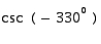
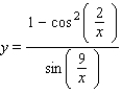
Exam 6: The Trigonometric Functions

arrow
  • Select Tags
search iconSearch Question
flashcardsStudy Flashcards
  • Select Tags

Scientists sometimes use the formula Scientists sometimes use the formula   to simulate temperature variations during the day, with time t in hours, temperature f ( t ) in   , and t=0 corresponding to midnight. Assume that f ( t ) is decreasing at midnight. Determine values of a, b, c, and d that fit the information: the high temperature is 19   , and the low temperature of -19   occurs at 4 A.M. to simulate temperature variations during the day, with time t in hours, temperature f ( t ) in Scientists sometimes use the formula   to simulate temperature variations during the day, with time t in hours, temperature f ( t ) in   , and t=0 corresponding to midnight. Assume that f ( t ) is decreasing at midnight. Determine values of a, b, c, and d that fit the information: the high temperature is 19   , and the low temperature of -19   occurs at 4 A.M. , and t=0 corresponding to midnight. Assume that f ( t ) is decreasing at midnight. Determine values of a, b, c, and d that fit the information: the high temperature is 19 Scientists sometimes use the formula   to simulate temperature variations during the day, with time t in hours, temperature f ( t ) in   , and t=0 corresponding to midnight. Assume that f ( t ) is decreasing at midnight. Determine values of a, b, c, and d that fit the information: the high temperature is 19   , and the low temperature of -19   occurs at 4 A.M. , and the low temperature of -19 Scientists sometimes use the formula   to simulate temperature variations during the day, with time t in hours, temperature f ( t ) in   , and t=0 corresponding to midnight. Assume that f ( t ) is decreasing at midnight. Determine values of a, b, c, and d that fit the information: the high temperature is 19   , and the low temperature of -19   occurs at 4 A.M. occurs at 4 A.M.

(Multiple Choice)
4.8/5
(90)

A CB antenna is located on the top of a garage that is 17 feet tall. From a point on level ground that is 120 feet from a point directly below the antenna, the antenna subtends an angle of A CB antenna is located on the top of a garage that is 17 feet tall. From a point on level ground that is 120 feet from a point directly below the antenna, the antenna subtends an angle of   , as shown in the figure. Approximate the length of the antenna. Give the answer to one decimal place.  , as shown in the figure. Approximate the length of the antenna. Give the answer to one decimal place. A CB antenna is located on the top of a garage that is 17 feet tall. From a point on level ground that is 120 feet from a point directly below the antenna, the antenna subtends an angle of   , as shown in the figure. Approximate the length of the antenna. Give the answer to one decimal place.
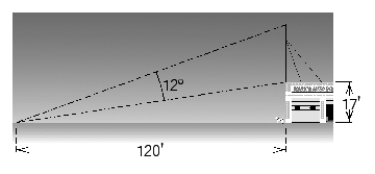
(Multiple Choice)
4.8/5
(77)

Find the exact value. Find the exact value.

(Multiple Choice)
5.0/5
(74)

An airplane flying at a speed of 300 mi/hr flies from a point A in the direction An airplane flying at a speed of 300 mi/hr flies from a point A in the direction   for 30 minutes and then flies in the direction   for 15 minutes. Approximate, to the nearest mile, the distance from the airplane to A. for 30 minutes and then flies in the direction An airplane flying at a speed of 300 mi/hr flies from a point A in the direction   for 30 minutes and then flies in the direction   for 15 minutes. Approximate, to the nearest mile, the distance from the airplane to A. for 15 minutes. Approximate, to the nearest mile, the distance from the airplane to A.

(Multiple Choice)
4.8/5
(78)

Use the graph of a trigonometric function to aid in sketching the graph of the equation without plotting points. Use the graph of a trigonometric function to aid in sketching the graph of the equation without plotting points.

(Multiple Choice)
4.8/5
(78)

Let P ( t ) be the point on the unit circle U that corresponds to t. If P ( t ) has the coordinates Let P ( t ) be the point on the unit circle U that corresponds to t. If P ( t ) has the coordinates   , find   ,   ,   ,   . , find Let P ( t ) be the point on the unit circle U that corresponds to t. If P ( t ) has the coordinates   , find   ,   ,   ,   . , Let P ( t ) be the point on the unit circle U that corresponds to t. If P ( t ) has the coordinates   , find   ,   ,   ,   . , Let P ( t ) be the point on the unit circle U that corresponds to t. If P ( t ) has the coordinates   , find   ,   ,   ,   . , Let P ( t ) be the point on the unit circle U that corresponds to t. If P ( t ) has the coordinates   , find   ,   ,   ,   . .

(Multiple Choice)
4.8/5
(84)

Find the period of the equation. Find the period of the equation.

(Multiple Choice)
5.0/5
(81)

Let P ( t ) be the point on the unit circle U that corresponds to t. If P ( t ) has the coordinates Let P ( t ) be the point on the unit circle U that corresponds to t. If P ( t ) has the coordinates   , find   ,   ,   ,   . , find Let P ( t ) be the point on the unit circle U that corresponds to t. If P ( t ) has the coordinates   , find   ,   ,   ,   . , Let P ( t ) be the point on the unit circle U that corresponds to t. If P ( t ) has the coordinates   , find   ,   ,   ,   . , Let P ( t ) be the point on the unit circle U that corresponds to t. If P ( t ) has the coordinates   , find   ,   ,   ,   . , Let P ( t ) be the point on the unit circle U that corresponds to t. If P ( t ) has the coordinates   , find   ,   ,   ,   . .

(Multiple Choice)
4.9/5
(75)

A ladder 24 feet long leans against the side of a building, and the angle between the ladder and the building is A ladder 24 feet long leans against the side of a building, and the angle between the ladder and the building is   .  A. Approximate the distance from the bottom of the ladder to the building. Give the answer to one decimal place. B. If the distance from the bottom of the ladder to the building is increased by 2 feet, approximately how far does the top of the ladder move down the building? Give the answer to one decimal place. . A. Approximate the distance from the bottom of the ladder to the building. Give the answer to one decimal place. B. If the distance from the bottom of the ladder to the building is increased by 2 feet, approximately how far does the top of the ladder move down the building? Give the answer to one decimal place.

(Multiple Choice)
4.9/5
(79)

Find the exact value. Find the exact value.

(Multiple Choice)
4.7/5
(80)

A forester, 180 feet from the base of a redwood tree, observes that the angle between the ground and the top of the tree is A forester, 180 feet from the base of a redwood tree, observes that the angle between the ground and the top of the tree is   . Estimate the height of the tree. . Estimate the height of the tree.

(Multiple Choice)
4.8/5
(73)

Find the exact values of the six trigonometric functions of the angle, whenever possible. Find the exact values of the six trigonometric functions of the angle, whenever possible.

(Multiple Choice)
4.9/5
(70)

The amount of sunshine illuminating a wall of a building can greatly affect the energy efficiency of the building. The solar radiation striking a vertical wall that faces east is given by the formula The amount of sunshine illuminating a wall of a building can greatly affect the energy efficiency of the building. The solar radiation striking a vertical wall that faces east is given by the formula   where R<sub> 0 </sub> is the maximum solar radiation possible,   is the angle that the sun makes with the horizontal, and   is the direction of the sun in the sky, with   = 90<sup> o </sup> when the sun is in the east and   = 0 <sup> o </sup> when the sun is in the south. What percentage of R<sub> 0 </sub> is striking the wall when   is equal to 60<sup> o </sup> and the sun is in the southeast? Round the answer to the nearest integer. where R 0 is the maximum solar radiation possible, The amount of sunshine illuminating a wall of a building can greatly affect the energy efficiency of the building. The solar radiation striking a vertical wall that faces east is given by the formula   where R<sub> 0 </sub> is the maximum solar radiation possible,   is the angle that the sun makes with the horizontal, and   is the direction of the sun in the sky, with   = 90<sup> o </sup> when the sun is in the east and   = 0 <sup> o </sup> when the sun is in the south. What percentage of R<sub> 0 </sub> is striking the wall when   is equal to 60<sup> o </sup> and the sun is in the southeast? Round the answer to the nearest integer. is the angle that the sun makes with the horizontal, and The amount of sunshine illuminating a wall of a building can greatly affect the energy efficiency of the building. The solar radiation striking a vertical wall that faces east is given by the formula   where R<sub> 0 </sub> is the maximum solar radiation possible,   is the angle that the sun makes with the horizontal, and   is the direction of the sun in the sky, with   = 90<sup> o </sup> when the sun is in the east and   = 0 <sup> o </sup> when the sun is in the south. What percentage of R<sub> 0 </sub> is striking the wall when   is equal to 60<sup> o </sup> and the sun is in the southeast? Round the answer to the nearest integer. is the direction of the sun in the sky, with The amount of sunshine illuminating a wall of a building can greatly affect the energy efficiency of the building. The solar radiation striking a vertical wall that faces east is given by the formula   where R<sub> 0 </sub> is the maximum solar radiation possible,   is the angle that the sun makes with the horizontal, and   is the direction of the sun in the sky, with   = 90<sup> o </sup> when the sun is in the east and   = 0 <sup> o </sup> when the sun is in the south. What percentage of R<sub> 0 </sub> is striking the wall when   is equal to 60<sup> o </sup> and the sun is in the southeast? Round the answer to the nearest integer. = 90 o when the sun is in the east and The amount of sunshine illuminating a wall of a building can greatly affect the energy efficiency of the building. The solar radiation striking a vertical wall that faces east is given by the formula   where R<sub> 0 </sub> is the maximum solar radiation possible,   is the angle that the sun makes with the horizontal, and   is the direction of the sun in the sky, with   = 90<sup> o </sup> when the sun is in the east and   = 0 <sup> o </sup> when the sun is in the south. What percentage of R<sub> 0 </sub> is striking the wall when   is equal to 60<sup> o </sup> and the sun is in the southeast? Round the answer to the nearest integer. = 0 o when the sun is in the south. What percentage of R 0 is striking the wall when The amount of sunshine illuminating a wall of a building can greatly affect the energy efficiency of the building. The solar radiation striking a vertical wall that faces east is given by the formula   where R<sub> 0 </sub> is the maximum solar radiation possible,   is the angle that the sun makes with the horizontal, and   is the direction of the sun in the sky, with   = 90<sup> o </sup> when the sun is in the east and   = 0 <sup> o </sup> when the sun is in the south. What percentage of R<sub> 0 </sub> is striking the wall when   is equal to 60<sup> o </sup> and the sun is in the southeast? Round the answer to the nearest integer. is equal to 60 o and the sun is in the southeast? Round the answer to the nearest integer.

(Multiple Choice)
4.9/5
(88)

A CB antenna is located on the top of a garage that is 17 feet tall. From a point on level ground that is 120 feet from a point directly below the antenna, the antenna subtends an angle of A CB antenna is located on the top of a garage that is 17 feet tall. From a point on level ground that is 120 feet from a point directly below the antenna, the antenna subtends an angle of   , as shown in the figure. Approximate the length of the antenna. Give the answer to one decimal place.  , as shown in the figure. Approximate the length of the antenna. Give the answer to one decimal place. A CB antenna is located on the top of a garage that is 17 feet tall. From a point on level ground that is 120 feet from a point directly below the antenna, the antenna subtends an angle of   , as shown in the figure. Approximate the length of the antenna. Give the answer to one decimal place.

(Multiple Choice)
5.0/5
(88)

Find the exact value. Find the exact value.

(Multiple Choice)
4.7/5
(77)

The thickness of the ozone layer can be estimated using the formula The thickness of the ozone layer can be estimated using the formula   where I<sub> 0 </sub> is the intensity of a particular wavelength of light from the sun before it reaches the atmosphere, I is the intensity of the same wavelength after passing through a layer of ozone x centimeters thick, k is the absorption constant of ozone for that wavelength, and   is the acute angle that the sunlight makes with the vertical. Suppose that for a wavelength of 3,055   10<sup> - 8 </sup> centimeter with k   1.93, I<sub> o </sub>/I is measured as 1.72 and   . Approximate the thickness of the ozone layer to the nearest 0.01 centimeter. where I 0 is the intensity of a particular wavelength of light from the sun before it reaches the atmosphere, I is the intensity of the same wavelength after passing through a layer of ozone x centimeters thick, k is the absorption constant of ozone for that wavelength, and The thickness of the ozone layer can be estimated using the formula   where I<sub> 0 </sub> is the intensity of a particular wavelength of light from the sun before it reaches the atmosphere, I is the intensity of the same wavelength after passing through a layer of ozone x centimeters thick, k is the absorption constant of ozone for that wavelength, and   is the acute angle that the sunlight makes with the vertical. Suppose that for a wavelength of 3,055   10<sup> - 8 </sup> centimeter with k   1.93, I<sub> o </sub>/I is measured as 1.72 and   . Approximate the thickness of the ozone layer to the nearest 0.01 centimeter. is the acute angle that the sunlight makes with the vertical. Suppose that for a wavelength of 3,055 The thickness of the ozone layer can be estimated using the formula   where I<sub> 0 </sub> is the intensity of a particular wavelength of light from the sun before it reaches the atmosphere, I is the intensity of the same wavelength after passing through a layer of ozone x centimeters thick, k is the absorption constant of ozone for that wavelength, and   is the acute angle that the sunlight makes with the vertical. Suppose that for a wavelength of 3,055   10<sup> - 8 </sup> centimeter with k   1.93, I<sub> o </sub>/I is measured as 1.72 and   . Approximate the thickness of the ozone layer to the nearest 0.01 centimeter. 10 - 8 centimeter with k The thickness of the ozone layer can be estimated using the formula   where I<sub> 0 </sub> is the intensity of a particular wavelength of light from the sun before it reaches the atmosphere, I is the intensity of the same wavelength after passing through a layer of ozone x centimeters thick, k is the absorption constant of ozone for that wavelength, and   is the acute angle that the sunlight makes with the vertical. Suppose that for a wavelength of 3,055   10<sup> - 8 </sup> centimeter with k   1.93, I<sub> o </sub>/I is measured as 1.72 and   . Approximate the thickness of the ozone layer to the nearest 0.01 centimeter. 1.93, I o /I is measured as 1.72 and The thickness of the ozone layer can be estimated using the formula   where I<sub> 0 </sub> is the intensity of a particular wavelength of light from the sun before it reaches the atmosphere, I is the intensity of the same wavelength after passing through a layer of ozone x centimeters thick, k is the absorption constant of ozone for that wavelength, and   is the acute angle that the sunlight makes with the vertical. Suppose that for a wavelength of 3,055   10<sup> - 8 </sup> centimeter with k   1.93, I<sub> o </sub>/I is measured as 1.72 and   . Approximate the thickness of the ozone layer to the nearest 0.01 centimeter. . Approximate the thickness of the ozone layer to the nearest 0.01 centimeter.

(Multiple Choice)
4.7/5
(79)

Find the exact value. Find the exact value.

(Multiple Choice)
4.7/5
(77)

A ship leaves port at 1:00 P.M. and sails in the direction A ship leaves port at 1:00 P.M. and sails in the direction   at a rate of 20 mi/hr. Another ship leaves port at 1:30 P.M. and sails in the direction   at a rate of 18 mi/hr. Approximately how far apart are the ships at 4:00 P.M.? at a rate of 20 mi/hr. Another ship leaves port at 1:30 P.M. and sails in the direction A ship leaves port at 1:00 P.M. and sails in the direction   at a rate of 20 mi/hr. Another ship leaves port at 1:30 P.M. and sails in the direction   at a rate of 18 mi/hr. Approximately how far apart are the ships at 4:00 P.M.? at a rate of 18 mi/hr. Approximately how far apart are the ships at 4:00 P.M.?

(Multiple Choice)
4.9/5
(85)

Find the period of the equation. Find the period of the equation.

(Multiple Choice)
4.7/5
(79)

Estimate the horizontal asymptote. Estimate the horizontal asymptote.

(Multiple Choice)
4.9/5
(86)
Showing 81 - 100 of 150
close modal

Filters

  • Essay(0)
  • Multiple Choice(0)
  • Short Answer(0)
  • True False(0)
  • Matching(0)