



 Chat with AI
Exam 11: Cranium, Facial Bones, and Paranasal Sinuses

Exam 1: Terminology, Positioning, and Imaging Principles198 Questions
Exam 2: Chest98 Questions
Exam 3: Abdomen90 Questions
Exam 4: Upper Limb107 Questions
Exam 5: Humerus and Shoulder Girdle75 Questions
Exam 6: Lower Limb110 Questions
Exam 7: Femur and Pelvic Girdle80 Questions
Exam 8: Cervical and Thoracic Spine84 Questions
Exam 9: Lumbar Spine, Sacrum, and Coccyx75 Questions
Exam 10: Bony Thorax-Sternum and Ribs66 Questions
Exam 11: Cranium, Facial Bones, and Paranasal Sinuses181 Questions
Exam 12: Biliary Tract and Upper Gastrointestinal System127 Questions
Exam 13: Lower Gastrointestinal System83 Questions
Exam 14: Urinary System and Venipuncture100 Questions
Exam 15: Trauma, Mobile, and Surgical Radiography108 Questions
Exam 16: Pediatric Radiography72 Questions
Exam 17: Angiography and Interventional Procedures72 Questions
Exam 18: Computed Tomography103 Questions
Exam 19: Special Radiographic Procedures69 Questions
Exam 20: Diagnostic and Therapeutic Modalities208 Questions
Select questions type


Which cranial bone is labeled vi in this figure?
 (Anatomic structures are labeled i through vi and sutures a through h.)
 (Multiple Choice)
4.9/5  (77)
(77) MATCHING
Select the imaging modality that would best demonstrate the following pathologies.
-Most sensitive modality for detecting differences between normal and abnormal brain tissues
(Multiple Choice)
4.9/5 (89)
(89) A radiograph of a PA projection of the sinuses reveals that the petrous ridges are projected over the ethmoid sinuses.Which of the following modifications will eliminate this superimposition while not compromising diagnostic quality?
(Multiple Choice)
4.7/5 (67)
(67) 
What is the classification of the joint found between the teeth and maxilla?
(Multiple Choice)
4.9/5 (86)
(86) A pediatric patient enters radiology for a paranasal sinus series.Because of her age,the child is unable to hold still for the projections even with the use of immobilization devices.The decision is to hold the child during each exposure.Which of the following individuals should be asked to hold the child?
(Multiple Choice)
4.8/5 (83)
(83) Which of the following points is NOT true about the oblique inferosuperior (tangential)projection of the zygomatic arches?
(Multiple Choice)
4.9/5 (93)
(93) A radiograph of a lateral projection of the facial bones reveals that the mandibular rami are not superimposed.What specific positioning error is present on this radiograph?
(Multiple Choice)
4.8/5 (81)
(81) The most common radiographic sign for secondary osteomyelitis of the paranasal sinuses is:
(Multiple Choice)
4.8/5 (91)
(91) A patient enters the ED with a possible fracture of the proximal ramus of the mandible.Which of the following routines would best diagnose this fracture?
(Multiple Choice)
4.8/5 (79)
(79) Which positioning line is placed perpendicular to the plane of the IR with a true lateral nasal bone projection?
(Multiple Choice)
4.8/5 (90)
(90) What CR angle is required for the Schuller method projection of the TMJs?
(Multiple Choice)
4.7/5 (79)
(79) MATCHING
Select the imaging modality that would best demonstrate the following pathologies.
-Recent bleeding within the brain
(Multiple Choice)
5.0/5 (80)
(80) A radiograph of a parieto-orbital oblique projection for the optic foramen reveals that the optic foramen is projected into the inferior,outer orbital rim.Which of the following modifications is necessary to produce a more diagnostic image?
(Multiple Choice)
4.9/5 (71)
(71) 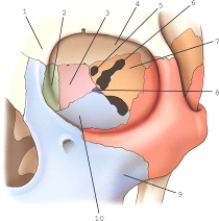
Which plane or perspective is most often produced for a CT scan of the sinuses?
(Multiple Choice)
4.9/5 (79)
(79) Match each of the following radiographic appearances with the corresponding pathologic indication.(Use each selection only once.)
-Radiolucent areas within the bony cranium
(Multiple Choice)
4.8/5 (93)
(93) 
Filters
- Essay(0)
- Multiple Choice(0)
- Short Answer(0)
- True False(0)
- Matching(0)