



 Chat with AI
Exam 2: Chest

Exam 1: Terminology, Positioning, and Imaging Principles198 Questions
Exam 2: Chest98 Questions
Exam 3: Abdomen90 Questions
Exam 4: Upper Limb107 Questions
Exam 5: Humerus and Shoulder Girdle75 Questions
Exam 6: Lower Limb110 Questions
Exam 7: Femur and Pelvic Girdle80 Questions
Exam 8: Cervical and Thoracic Spine84 Questions
Exam 9: Lumbar Spine, Sacrum, and Coccyx75 Questions
Exam 10: Bony Thorax-Sternum and Ribs66 Questions
Exam 11: Cranium, Facial Bones, and Paranasal Sinuses181 Questions
Exam 12: Biliary Tract and Upper Gastrointestinal System127 Questions
Exam 13: Lower Gastrointestinal System83 Questions
Exam 14: Urinary System and Venipuncture100 Questions
Exam 15: Trauma, Mobile, and Surgical Radiography108 Questions
Exam 16: Pediatric Radiography72 Questions
Exam 17: Angiography and Interventional Procedures72 Questions
Exam 18: Computed Tomography103 Questions
Exam 19: Special Radiographic Procedures69 Questions
Exam 20: Diagnostic and Therapeutic Modalities208 Questions
Select questions type


Contrary to common belief,the vertical dimension of an average PA chest is greater than the horizontal dimension.

Free
(True/False)
5.0/5  (87)
(87) Correct Answer: Verified
False
Which of the following objects does NOT have to be removed or moved before a chest radiography?
Free
(Multiple Choice)
4.9/5 (74)
(74) Correct Answer:Verified
VerifiedD
A PA chest radiograph reveals that only seven ribs are seen above the diaphragm on a healthy adult.Which of the following suggestions would improve the inspiration of lungs?
Free
(Multiple Choice)
4.7/5 (79)
(79) Correct Answer:Verified
VerifiedC
Which chest oblique position will best demonstrate the air-filled trachea,heart,and great vessels?
(Multiple Choice)
4.8/5 (73)
(73) MATCHING
Select the exposure factor adjustments needed for the pathologic indication(s) using manual exposure settings (no AEC).Increases or decreases in manual exposure factors are compared with the ideal exposure factors that would be used on a normal, healthy individual.
-Large pleural effusion
(Multiple Choice)
4.8/5 (73)
(73) Why must the technologist slightly angle the CR caudad for most AP projections of the chest?
(Multiple Choice)
4.8/5 (75)
(75) The inner layer of the pleura that encloses the lungs and heart is called the:
(Multiple Choice)
4.9/5 (70)
(70) MATCHING
Select the exposure factor adjustments needed for the pathologic indication(s) using manual exposure settings (no AEC).Increases or decreases in manual exposure factors are compared with the ideal exposure factors that would be used on a normal, healthy individual.
-Silicosis (severe)
(Multiple Choice)
4.9/5 (86)
(86) Match the correct disease or condition with the descriptions of radiographic appearance.(Use each choice only once.)
-A contagious disease caused by airborne bacteria
(Multiple Choice)
4.9/5 (73)
(73) Match the correct disease or condition with the descriptions of radiographic appearance.(Use each choice only once.)
-Coughing up blood
(Multiple Choice)
4.7/5 (71)
(71) A small pneumothorax may be detected by performing inspiration and expiration PA projections.
(True/False)
4.9/5 (88)
(88) For an average size female patient,where is the CR placed for a PA projection of the chest?
(Multiple Choice)
4.9/5 (76)
(76) MATCHING
Select the exposure factor adjustments needed for the pathologic indication(s) using manual exposure settings (no AEC).Increases or decreases in manual exposure factors are compared with the ideal exposure factors that would be used on a normal, healthy individual.
-Epiglottitis
(Multiple Choice)
4.9/5 (81)
(81) MATCHING
Select the exposure factor adjustments needed for the pathologic indication(s) using manual exposure settings (no AEC).Increases or decreases in manual exposure factors are compared with the ideal exposure factors that would be used on a normal, healthy individual.
-Advanced respiratory distress syndrome (RDS)
(Multiple Choice)
5.0/5 (68)
(68) Of the following positioning actions,which one will remove the majority of the scapulae from the lung fields?
(Multiple Choice)
4.8/5 (76)
(76) The asthenic body type makes up approximately ____% of the population.
(Multiple Choice)
4.8/5 (78)
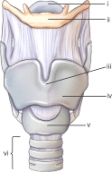
(78) 
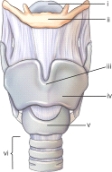
A patient comes to radiology with a possible mass beneath the right clavicle.The PA and left lateral projections are inconclusive.Which additional projection can be taken to demonstrate this possible mass?
(Multiple Choice)
4.9/5 (80)
(80) Match the correct disease or condition with the descriptions of radiographic appearance.(Use each choice only once.)
-Collapse of all or part of lung
(Multiple Choice)
4.8/5 (71)
(71) 
Filters
- Essay(0)
- Multiple Choice(0)
- Short Answer(0)
- True False(0)
- Matching(0)