



 Chat with AI
Exam 2: Chest

Exam 1: Terminology, Positioning, and Imaging Principles198 Questions
Exam 2: Chest98 Questions
Exam 3: Abdomen90 Questions
Exam 4: Upper Limb107 Questions
Exam 5: Humerus and Shoulder Girdle75 Questions
Exam 6: Lower Limb110 Questions
Exam 7: Femur and Pelvic Girdle80 Questions
Exam 8: Cervical and Thoracic Spine84 Questions
Exam 9: Lumbar Spine, Sacrum, and Coccyx75 Questions
Exam 10: Bony Thorax-Sternum and Ribs66 Questions
Exam 11: Cranium, Facial Bones, and Paranasal Sinuses181 Questions
Exam 12: Biliary Tract and Upper Gastrointestinal System127 Questions
Exam 13: Lower Gastrointestinal System83 Questions
Exam 14: Urinary System and Venipuncture100 Questions
Exam 15: Trauma, Mobile, and Surgical Radiography108 Questions
Exam 16: Pediatric Radiography72 Questions
Exam 17: Angiography and Interventional Procedures72 Questions
Exam 18: Computed Tomography103 Questions
Exam 19: Special Radiographic Procedures69 Questions
Exam 20: Diagnostic and Therapeutic Modalities208 Questions
Select questions type


MATCHING
Select the exposure factor adjustments needed for the pathologic indication(s) using manual exposure settings (no AEC).Increases or decreases in manual exposure factors are compared with the ideal exposure factors that would be used on a normal, healthy individual.
-Tuberculosis (primary or secondary)
(Multiple Choice)
4.9/5  (84)
(84) A condition characterized as an irreversible dilation or widening of bronchi or bronchioles that may result from repeated pulmonary infection or obstruction is termed:
(Multiple Choice)
4.9/5 (69)
(69) Geriatric patients generally require higher central ray (CR)centering than younger patients.
(True/False)
4.8/5 (85)
(85) For anterior oblique radiographs of the chest,the elongated (widened)aspect of the thorax is generally farthest from the image receptor.
(True/False)
4.8/5 (63)
(63) A patient enters the ED with a possible hemothorax in the right lung.With help,the patient can sit erect on a cart.Which of the following routines would best demonstrate this condition?
(Multiple Choice)
4.8/5 (78)
(78) The two most common landmarks for chest positioning are the:
(Multiple Choice)
4.8/5 (60)
(60) MATCHING
Select the exposure factor adjustments needed for the pathologic indication(s) using manual exposure settings (no AEC).Increases or decreases in manual exposure factors are compared with the ideal exposure factors that would be used on a normal, healthy individual.
-Severe pulmonary edema
(Multiple Choice)
4.9/5 (82)
(82) Which one of the following clinical indications often requires the inspiration/expiration chest series to be taken?
(Multiple Choice)
4.8/5 (69)
(69) An electrocardiography and echocardiography are the same procedure.
(True/False)
4.7/5 (92)
(92) MATCHING
Select the exposure factor adjustments needed for the pathologic indication(s) using manual exposure settings (no AEC).Increases or decreases in manual exposure factors are compared with the ideal exposure factors that would be used on a normal, healthy individual.
-Advanced bronchiectasis
(Multiple Choice)
4.9/5 (70)
(70) MATCHING
Select the exposure factor adjustments needed for the pathologic indication(s) using manual exposure settings (no AEC).Increases or decreases in manual exposure factors are compared with the ideal exposure factors that would be used on a normal, healthy individual.
-Aspiration in upper airway (mechanical obstruction)
(Multiple Choice)
4.9/5 (90)
(90) A patient enters the emergency department (ED)to be treated for severe trauma.The physician orders an AP supine chest to evaluate the lungs.What can the technologist do to reduce the magnification of the heart?
(Multiple Choice)
4.8/5 (89)
(89) As a general rule,the use of high kV (110 k)requires the use of a grid during chest radiography.
(True/False)
4.8/5 (82)
(82) MATCHING
Select the exposure factor adjustments needed for the pathologic indication(s) using manual exposure settings (no AEC).Increases or decreases in manual exposure factors are compared with the ideal exposure factors that would be used on a normal, healthy individual.
-Pneumothorax
(Multiple Choice)
4.8/5 (78)
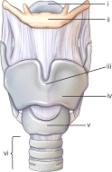
(78) 
MATCHING
Select the exposure factor adjustments needed for the pathologic indication(s) using manual exposure settings (no AEC).Increases or decreases in manual exposure factors are compared with the ideal exposure factors that would be used on a normal, healthy individual.
-Severe emphysema
(Multiple Choice)
4.8/5 (79)
(79) Match the correct disease or condition with the descriptions of radiographic appearance.(Use each choice only once.)
-Increased diffuse radiodensity in hilar regions and air-fluid levels
(Multiple Choice)
4.8/5 (82)
(82) MATCHING
Select the exposure factor adjustments needed for the pathologic indication(s) using manual exposure settings (no AEC).Increases or decreases in manual exposure factors are compared with the ideal exposure factors that would be used on a normal, healthy individual.
-Pleurisy
(Multiple Choice)
4.8/5 (72)
(72) 
Filters
- Essay(0)
- Multiple Choice(0)
- Short Answer(0)
- True False(0)
- Matching(0)