



 Chat with AI
Exam 2: Chest

Exam 1: Terminology, Positioning, and Imaging Principles198 Questions
Exam 2: Chest98 Questions
Exam 3: Abdomen90 Questions
Exam 4: Upper Limb107 Questions
Exam 5: Humerus and Shoulder Girdle75 Questions
Exam 6: Lower Limb110 Questions
Exam 7: Femur and Pelvic Girdle80 Questions
Exam 8: Cervical and Thoracic Spine84 Questions
Exam 9: Lumbar Spine, Sacrum, and Coccyx75 Questions
Exam 10: Bony Thorax-Sternum and Ribs66 Questions
Exam 11: Cranium, Facial Bones, and Paranasal Sinuses181 Questions
Exam 12: Biliary Tract and Upper Gastrointestinal System127 Questions
Exam 13: Lower Gastrointestinal System83 Questions
Exam 14: Urinary System and Venipuncture100 Questions
Exam 15: Trauma, Mobile, and Surgical Radiography108 Questions
Exam 16: Pediatric Radiography72 Questions
Exam 17: Angiography and Interventional Procedures72 Questions
Exam 18: Computed Tomography103 Questions
Exam 19: Special Radiographic Procedures69 Questions
Exam 20: Diagnostic and Therapeutic Modalities208 Questions
Select questions type


Which of the following structures is considered to be most posterior?
(Multiple Choice)
5.0/5  (77)
(77) MATCHING
Select the exposure factor adjustments needed for the pathologic indication(s) using manual exposure settings (no AEC).Increases or decreases in manual exposure factors are compared with the ideal exposure factors that would be used on a normal, healthy individual.
-Cystic fibrosis (severe)
(Multiple Choice)
4.8/5 (77)
(77) Match the correct disease or condition with the descriptions of radiographic appearance.(Use each choice only once.)
-Increased lung dimensions (barrel-chested)
(Multiple Choice)
4.9/5 (98)
(98) A patient is in the intensive care unit with multiple injuries.The attending physician is concerned about a pleural effusion in the left lung.The patient had surgery recently and cannot stand.Which position/projection would be best to rule out the pleural effusion?
(Multiple Choice)
4.8/5 (76)
(76) Which positioning line must be placed perpendicular to the plane of the IR for an AP projection of the upper airway?
(Multiple Choice)
4.8/5 (86)
(86) 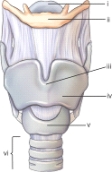
A PA chest radiograph reveals that the left sternoclavicular joint is closer to the spine than the right joint.What specific positioning error has been committed?
(Multiple Choice)
4.9/5 (85)
(85) 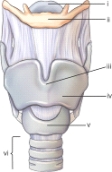
Match the correct disease or condition with the descriptions of radiographic appearance.(Use each choice only once.)
-Severe cases appear as emphysema
(Multiple Choice)
4.8/5 (81)
(81) What is a common radiographic sign seen on a chest radiograph for a patient with respiratory distress syndrome (RDS)?
(Multiple Choice)
4.8/5 (76)
(76) 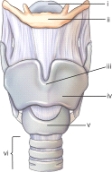
A well-inspired average adult chest PA projection will have a minimum of ____ posterior ribs seen above the diaphragm.
(Multiple Choice)
5.0/5 (83)
(83) The central ray (CR)for an anteroposterior (AP)supine,adult chest projection,should be centered:
(Multiple Choice)
4.9/5 (85)
(85) The CR is centered to midsternum for the AP apical lordotic projection with a 14- *17-inch (35 *43 cm)image receptor (IR).
(True/False)
4.9/5 (76)
(76) Air or gas that escapes into the pleural cavity results in a condition known as:
(Multiple Choice)
4.8/5 (77)
(77) A general rule states that radiographic grids must be used in chest radiography for:
(Multiple Choice)
4.8/5 (71)
(71) MATCHING
Select the exposure factor adjustments needed for the pathologic indication(s) using manual exposure settings (no AEC).Increases or decreases in manual exposure factors are compared with the ideal exposure factors that would be used on a normal, healthy individual.
-Mild chronic obstructive pulmonary disease (COPD)
(Multiple Choice)
4.8/5 (85)
(85) What is the primary disadvantage of performing an AP projection of the chest rather than a PA?
(Multiple Choice)
4.9/5 (84)
(84) 
Filters
- Essay(0)
- Multiple Choice(0)
- Short Answer(0)
- True False(0)
- Matching(0)