



 Chat with AI
Exam 11: Cranium, Facial Bones, and Paranasal Sinuses

Exam 1: Terminology, Positioning, and Imaging Principles198 Questions
Exam 2: Chest98 Questions
Exam 3: Abdomen90 Questions
Exam 4: Upper Limb107 Questions
Exam 5: Humerus and Shoulder Girdle75 Questions
Exam 6: Lower Limb110 Questions
Exam 7: Femur and Pelvic Girdle80 Questions
Exam 8: Cervical and Thoracic Spine84 Questions
Exam 9: Lumbar Spine, Sacrum, and Coccyx75 Questions
Exam 10: Bony Thorax-Sternum and Ribs66 Questions
Exam 11: Cranium, Facial Bones, and Paranasal Sinuses181 Questions
Exam 12: Biliary Tract and Upper Gastrointestinal System127 Questions
Exam 13: Lower Gastrointestinal System83 Questions
Exam 14: Urinary System and Venipuncture100 Questions
Exam 15: Trauma, Mobile, and Surgical Radiography108 Questions
Exam 16: Pediatric Radiography72 Questions
Exam 17: Angiography and Interventional Procedures72 Questions
Exam 18: Computed Tomography103 Questions
Exam 19: Special Radiographic Procedures69 Questions
Exam 20: Diagnostic and Therapeutic Modalities208 Questions
Select questions type


A patient enters the ED with a possible nasal bone fracture.The physician is concerned about a possible bony nasal septum deviation and fractured nasal bones.Which of the following routines would best diagnose these injuries?
(Multiple Choice)
5.0/5  (84)
(84) Which positioning line is placed perpendicular to the IR for the parieto-orbital oblique projection of the optic foramina?
(Multiple Choice)
4.8/5 (83)
(83) 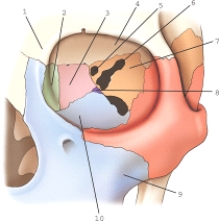
How much skull tilt and rotation are required for the oblique inferosuperior (tangential)projection for zygomatic arches?
(Multiple Choice)
4.8/5 (82)
(82) What is the angle between the OML and the plane of the IR for the parietoacanthial (Waters)projection?
(Multiple Choice)
4.9/5 (83)
(83) Match each radiographic appearance with the corresponding pathologic indication.(Use each selection only once.)
-Bone destruction with widened internal auditory canal
(Multiple Choice)
4.9/5 (87)
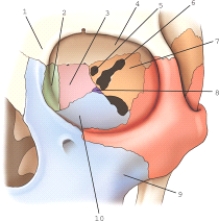
(87) 
Both CT (computed tomography)and MRI (magnetic resonance imaging)can provide reconstructed images in three planes: axial,sagittal,and coronal.
(True/False)
4.8/5 (69)
(69) Which positioning line is perpendicular to the IR for a PA projection of the mandible?
(Multiple Choice)
4.8/5 (89)
(89) What primary type of joint movement occurs with the temporomandibular joint?
(Multiple Choice)
5.0/5 (78)
(78) A fracture involving the facial bones where a blow to one side causes a fracture to the opposite side is termed a ____ fracture.
(Multiple Choice)
4.9/5 (78)
(78) 
Optic foramen studies are routinely taken as bilateral projections.
(True/False)
4.7/5 (65)
(65) What is the difference,in degrees,between the infraorbitomeatal and orbitomeatal lines?
(Multiple Choice)
4.8/5 (73)
(73) Which of the following landmarks corresponds with the level of the petrous ridge?
(Multiple Choice)
4.8/5 (69)
(69) Which of the following technical factors do NOT apply to lateral nasal bone projections?
(Multiple Choice)
4.9/5 (89)
(89) Which of the following cranial bones does not articulate with the parietal bone?
(Multiple Choice)
4.9/5 (74)
(74) 
Filters
- Essay(0)
- Multiple Choice(0)
- Short Answer(0)
- True False(0)
- Matching(0)