



 Chat with AI
Exam 4: The Market Forces of Supply and Demand

Exam 1: Ten Principles of Economics455 Questions
Exam 2: Thinking Like an Economist645 Questions
Exam 3: Interdependence and the Gains From Trade550 Questions
Exam 4: The Market Forces of Supply and Demand693 Questions
Exam 5: Elasticity and Its Application625 Questions
Exam 6: Supply, Demand, and Government Policies671 Questions
Exam 7: Consumers, Producers, and the Efficiency of Markets547 Questions
Exam 8: Application: The Costs of Taxation507 Questions
Exam 9: Application: International Trade521 Questions
Exam 10: Externalities543 Questions
Exam 11: Public Goods and Common Resources453 Questions
Exam 12: The Design of the Tax System563 Questions
Exam 13: The Costs of Production649 Questions
Exam 14: Firms in Competitive Markets608 Questions
Exam 15: Monopoly662 Questions
Exam 16: Monopolistic Competition649 Questions
Exam 17: Oligopoly522 Questions
Exam 18: The Markets for the Factors of Production592 Questions
Exam 19: Earnings and Discrimination511 Questions
Exam 20: Income Inequality and Poverty478 Questions
Exam 21: The Theory of Consumer Choice568 Questions
Exam 22: Frontiers in Microeconomics461 Questions
Select questions type


Suppose scientists provide evidence that people who drink energy drinks are more likely to have a heart attack than people who do not drink energy drinks. We would expect to see
(Multiple Choice)
4.7/5  (82)
(82) Table 4-14
The table below shows the quantities demanded of milk per month by four families at various prices. 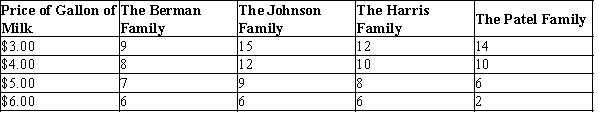 -Refer to Table 4-14. If the four families listed are the only demanders in this market and the price of a gallon of milk is $4.00, what is the market quantity demanded?
 (Short Answer)
4.8/5 (80)
(80) Which of the following is not a characteristic of a perfectly competitive market?
(Multiple Choice)
4.8/5 (74)
(74) Suppose the number of buyers in a market decreases and a technological advancement occurs also. What would we expect to happen in the market?
(Multiple Choice)
4.8/5 (76)
(76) Figure 4-4
Yasmine
Mercedes 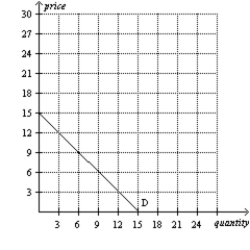
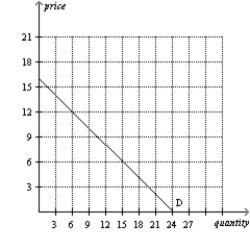 -Refer to Figure 4-4. Which of the following statements is correct?
 (Multiple Choice)
4.8/5 (78)
(78) What would happen to the equilibrium price and quantity of lattés if the cost to produce steamed milk, which is used to make lattés, increased, and scientists discovered that lattés cause heart attacks?
(Multiple Choice)
4.9/5 (67)
(67) In competitive markets, which of the following is not correct?
(Multiple Choice)
5.0/5 (85)
(85) In a market economy, prices are the signals that guide the allocation of scarce resources.
(True/False)
4.8/5 (74)
(74) Which of the following events would unambiguously cause an increase in the equilibrium price of cotton shirts?
(Multiple Choice)
4.8/5 (86)
(86) When the market price is below the equilibrium price, the quantity of the good demanded exceeds the quantity supplied.
(True/False)
4.9/5 (84)
(84) Sellers as a group determine the demand for a product, and buyers as a group determine the supply of a product.
(True/False)
4.9/5 (82)
(82) Figure 4-28
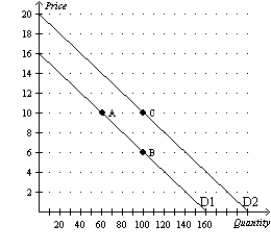 -Refer to Figure 4-28. Using the points on the figure, describe the change that would occur if the price of this good increases.
 (Short Answer)
4.9/5 (86)
(86) An increase in the price of ink will shift the supply curve for pens to the left.
(True/False)
4.9/5 (79)
(79) Opponents of cigarette taxes often argue that tobacco and marijuana are substitutes so that high cigarette prices
(Multiple Choice)
4.8/5 (77)
(77) The quantity demanded of a good is the amount that buyers are
(Multiple Choice)
4.9/5 (88)
(88) Table 4-1 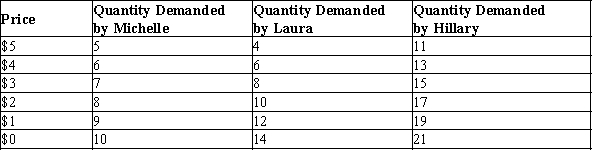 -Refer to Table 4-1. If the market consists of Michelle and Hillary only and the price falls by $1, the quantity demanded in the market increases by
 (Multiple Choice)
4.7/5 (75)
(75) 
Filters
- Essay(0)
- Multiple Choice(0)
- Short Answer(0)
- True False(0)
- Matching(0)