



 Chat with AI
Exam 21: Continuity and Change in East Asia, 1400-1800

Exam 1: The Earliest Human Societies, to 2500 Bce82 Questions
Exam 2: Complex Societies in Southwest Asia and the Nile Valley, 3800-500 Bce75 Questions
Exam 3: The Foundation of Indian Society, to 300 Ce81 Questions
Exam 4: Chinas Classical Age, to 221 Bce80 Questions
Exam 5: The Greek Experience, 3500-30 Bce75 Questions
Exam 6: The World of Rome, Ca 1000 Bce-400 Ce75 Questions
Exam 7: East Asia and the Spread of Buddhism, 221 Bce-845 Ce77 Questions
Exam 8: Continuity and Change in Europe and Western Asia, 250-85078 Questions
Exam 9: The Islamic World, 600-140065 Questions
Exam 10: African Societies and Kingdoms, 1000 Bce-1500 Ce77 Questions
Exam 11: The Americas, 3200 Bce-1500 Ce77 Questions
Exam 12: Cultural Exchange in Central and Southern Asia, 300-140076 Questions
Exam 13: States and Cultures in East Asia, 800-140079 Questions
Exam 14: Europe and Western Asia in the Middle Ages, 800-145079 Questions
Exam 15: Europe in the Renaissance and Reformation, 1350-160079 Questions
Exam 16: The Acceleration of Global Contact, 1450-160078 Questions
Exam 17: The Islamic World Powers, 1300-180077 Questions
Exam 18: European Power and Expansion, 1500-175078 Questions
Exam 19: New Worldviews and Ways of Life, 1540-179081 Questions
Exam 20: Africa and the World, 1400-180076 Questions
Exam 21: Continuity and Change in East Asia, 1400-180073 Questions
Exam 22: Revolutions in the Atlantic World, 1775-182581 Questions
Exam 23: The Revolution in Energy and Industry, 1760-185079 Questions
Exam 24: Ideologies of Change in Europe, 1815-191482 Questions
Exam 25: Africa, the Ottoman Empire, and the New Imperialism, 1800-191479 Questions
Exam 26: Asia and the Pacific in the Era of Imperialism, 1800-191479 Questions
Exam 27: The Americas in the Age of Liberalism, 1810-191776 Questions
Exam 28: World War and Revolution, 1914-192981 Questions
Exam 29: Nationalism in Asia, 1914-193976 Questions
Exam 30: The Great Depression and World War Ii, 1929-194580 Questions
Exam 31: Review82 Questions
Exam 32: Liberalization, 1968-2000s75 Questions
Exam 33: The Contemporary World in Historical Perspective73 Questions
Exam 34: 20th Century Global Issues and Developments20 Questions
Select questions type


What ideology spread to the Mongols in 1577?

Free
(Multiple Choice)
4.9/5  (85)
(85) Correct Answer: Verified
A
In Ming China, social status was based on which of the following?
Free
(Multiple Choice)
4.7/5 (89)
(89) Correct Answer:Verified
VerifiedB
What evidence is there in Map 21.1, "The Qing Empire, ca. 1800," of the lasting influence of the Qing Dynasty? 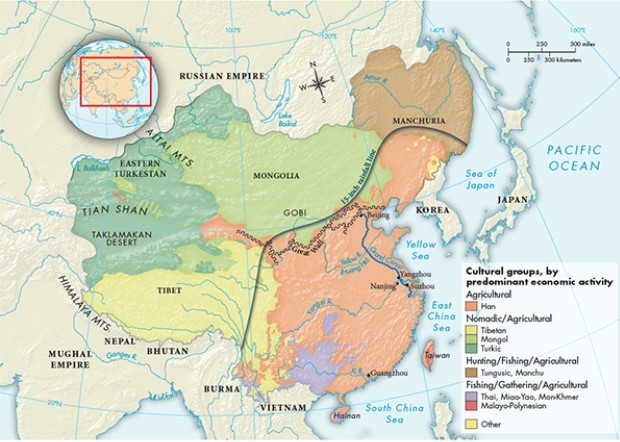
Free
(Multiple Choice)
4.9/5 (75)
(75) Correct Answer:Verified
VerifiedA
In 1557, where did the Chinese allow the Portuguese to set up a trading base?
(Multiple Choice)
4.8/5 (79)
(79) What was the staple food source of the majority of central and southern China?
(Multiple Choice)
4.9/5 (75)
(75) How does this illustration reflect common perceptions of clothing during the Edo period? 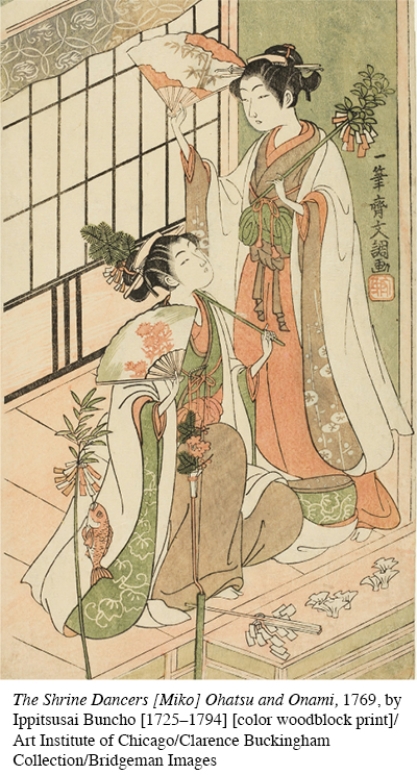
(Multiple Choice)
4.9/5 (93)
(93) Which of the following describes the early life of Zhu Yuanzhang, the founder of the Ming Dynasty?
(Multiple Choice)
4.8/5 (84)
(84) How were almost all of the Ming government officials chosen?
(Multiple Choice)
4.8/5 (73)
(73) What did Hideyoshi have in common with the Ming founder Zhu Yuanzhang?
(Multiple Choice)
4.9/5 (81)
(81) One of the major agricultural innovations was the introduction of what into rice paddies?
(Multiple Choice)
4.8/5 (71)
(71) Use the following to answer questions :
-Tokugawa Shogunate
(Multiple Choice)
4.8/5 (82)
(82) According to Map 21.3, "East Asia, ca. 1600," what likely attracted the so-called Japanese pirates to the east coast of Asia? 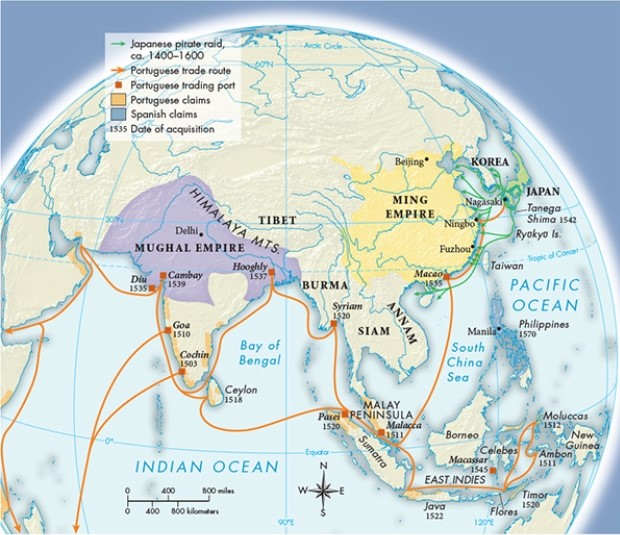
(Multiple Choice)
4.9/5 (72)
(72) In the fifteenth century, the eunuch establishment had become so large that it rivaled what other group?
(Multiple Choice)
4.8/5 (69)
(69) In 1380, Taizu became convinced that who was plotting to assassinate him?
(Multiple Choice)
4.7/5 (89)
(89) 
Filters
- Essay(0)
- Multiple Choice(0)
- Short Answer(0)
- True False(0)
- Matching(0)