



 Chat with AI
Exam 14: Mass Spectrometry

Exam 1: Covalent Bonding and Shapes of Molecules118 Questions
Exam 2: Alkanes and Cycloalkanes101 Questions
Exam 3: Stereoisomerism and Chirality95 Questions
Exam 4: Acids and Bases94 Questions
Exam 5: Alkenes: Bonding, Nomenclature, and Properties88 Questions
Exam 6: Reactions of Alkenes97 Questions
Exam 7: Alkynes100 Questions
Exam 8: Haloalkanes, Halogenation, and Radical Reactions75 Questions
Exam 9: Nucleophilic Substitution and Beta-Elimination104 Questions
Exam 10: Alcohols102 Questions
Exam 11: Ethers, Epoxides, and Sulfides102 Questions
Exam 12: Infrared Spectroscopy74 Questions
Exam 13: Nuclear Magnetic Resonance Spectroscopy99 Questions
Exam 14: Mass Spectrometry75 Questions
Exam 15: An Introduction to Organometallic Compounds73 Questions
Exam 16: Aldehydes and Ketones122 Questions
Exam 17: Carboxylic Acids76 Questions
Exam 18: Functional Derivatives of Carboxylic Acids117 Questions
Exam 19: Enolate Anions and Enamines96 Questions
Exam 20: Dienes, Conjugated Systems, and Pericyclic Reactions75 Questions
Exam 21: Benzene and the Concept of Aromaticity77 Questions
Exam 22: Reactions of Benzene and Its Derivatives109 Questions
Exam 23: Amines92 Questions
Exam 24: Catalytic Carbon-Carbon Bond Formation84 Questions
Exam 25: Carbohydrates69 Questions
Exam 26: Lipids65 Questions
Exam 27: Amino Acids and Proteins77 Questions
Exam 28: Nucleic Acids58 Questions
Exam 29: Organic Polymer Chemistry68 Questions
Select questions type


Which of the following is most consistent with a molecule having a molecular ion with m/e of 77?
(Multiple Choice)
4.8/5  (90)
(90) Refer to the mass spectrum of 2-methylbutane shown below to answer the following question(s).  Spectrum obtained from: SDBSWeb: http://www.aist.go.jp/RIODB/SDBS/
-The peak at a m/z of _____ represents M+.
Spectrum obtained from: SDBSWeb: http://www.aist.go.jp/RIODB/SDBS/
-The peak at a m/z of _____ represents M+. (Short Answer)
4.8/5 (92)
(92) Which of the following sets of molecular ions does a dibromoalkane possess?
(Multiple Choice)
4.8/5 (84)
(84) Which of the following gives rise to a prominent M − 18 peak in the mass spectrum?
(Multiple Choice)
4.9/5 (88)
(88) What is the principle that allows us to use mass spectrometry to determine the molecular weight of a compound?
(Multiple Choice)
4.8/5 (83)
(83) Mass spectrometry is an analytical technique used to determine the molecular masses, the molecular formulae, and the _____ of compounds.
(Multiple Choice)
4.9/5 (80)
(80) Which of the following corresponds to the molecular ion in EI mass spectrometry?
(Multiple Choice)
4.9/5 (76)
(76) Refer to the mass spectrum of 2-methylbutane shown below to answer the following question(s). Spectrum obtained from: SDBSWeb: http://www.aist.go.jp/RIODB/SDBS/
-The peak at a m/z of _____ represents the base peak.
Spectrum obtained from: SDBSWeb: http://www.aist.go.jp/RIODB/SDBS/
-The peak at a m/z of _____ represents the base peak. (Short Answer)
4.8/5 (78)
(78) Which of the following gives rise to a prominent peak in the mass spectrum with m/z of 41?
(Multiple Choice)
4.8/5 (67)
(67) The mass of the larger charged fragment produced by the dehydration of the following compound occurs at a m/z of _______.
| |
|
(Short Answer)
4.9/5 (65)
(65) Loratidine is the active ingredient in the antihistamine Claritin®. Mass spectral analysis of loratidine shows M+ at m/z = 382 and M+ at m/z = 384 in an approximate ratio of 3:1 in intensity. This data indicates that loratidine contains fluorine.
(True/False)
4.9/5 (90)
(90) Which of the following gives rise to a prominent peak in the mass spectrum with m/z of 43?
(Multiple Choice)
4.8/5 (73)
(73) In mass spectrometry, which of the following phrases is shortened to the acronym "EI"?
(Multiple Choice)
4.7/5 (82)
(82) Which of the following alcohols does not give a prominent M − 15 ion?
(Multiple Choice)
4.9/5 (82)
(82) How many carbon atoms are present in a molecule which gives an M+1 peak that is 11.48% of the intensity of the molecular ion?
(Multiple Choice)
4.8/5 (76)
(76) Alpha cleavage of the following compound would produce fragments at m/z = 43 and m/z = 119. 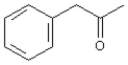
(True/False)
4.9/5 (91)
(91) Provide the mass of the three most prominent fragment peaks that are observed in the EI mass spectrum of 2-hexanone, CH3CH2CH2CH2COCH3 (molecular ion m/z = 100) and describe the processes that lead to each of these fragments.
(Essay)
4.9/5 (77)
(77) Alpha cleavage of the following compound will produce a peak at a m/z of _______. 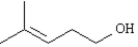
(Short Answer)
4.8/5 (91)
(91) Which of the following gives rise to a prominent M − 18 peak in the mass spectrum?
(Multiple Choice)
5.0/5 (90)
(90) 
Filters
- Essay(0)
- Multiple Choice(0)
- Short Answer(0)
- True False(0)
- Matching(0)