



 Chat with AI
Exam 8: Cell Signaling Systems

Exam 1: Principles of Biochemistry100 Questions
Exam 2: Physical Biochemistry: Energy Conversion, Water, and Membranes100 Questions
Exam 3: Nucleic Acid Structure and Function100 Questions
Exam 4: Protein Structure100 Questions
Exam 5: Methods in Protein Biochemistry100 Questions
Exam 6: Protein Function114 Questions
Exam 7: Enzyme Mechanisms106 Questions
Exam 8: Cell Signaling Systems102 Questions
Exam 9: Glycolysis: a Paradigm of Metabolic Regulation100 Questions
Exam 10: The Citrate Cycle100 Questions
Exam 11: Oxidative Phosphorylation99 Questions
Exam 12: Photosynthesis100 Questions
Exam 13: Carbohydrate Structure and Function100 Questions
Exam 14: Carbohydrate Metabolism100 Questions
Exam 15: Lipid Structure and Function100 Questions
Exam 16: Lipid Metabolism100 Questions
Exam 17: Amino Acid Metabolism100 Questions
Exam 18: Nucleotide Metabolism99 Questions
Exam 19: Metabolic Integration101 Questions
Exam 20: DNA Replication, Repair, and Recombination99 Questions
Exam 21: RNA Synthesis, Processing, and Gene Silencing100 Questions
Exam 22: Protein Synthesis, Posttranslational Modification, and Transport100 Questions
Exam 23: Gene Regulation100 Questions
Select questions type


Levels of diacylglycerol increase in a cell on binding of a ligand to a taste receptor. Which trimeric G protein subunit is most likely to be bound to GTP?
(Multiple Choice)
4.9/5  (80)
(80) Which of the following is an example of a first or second messenger?
(Multiple Choice)
4.9/5 (83)
(83) If there were a technique that allowed one to isolate EGFR1 and EGFR2 at discrete steps along their activation pathway, which of the following would be isolated?
(Multiple Choice)
4.8/5 (82)
(82) Oncogenic Ras protein chronically stimulates the MAP kinase pathway. Why is Ras not inactivated in this situation?
(Short Answer)
4.9/5 (79)
(79) Glycogen metabolism is regulated when glucagon binds to 2-adrenergic receptors on liver cells. Describe the type of covalent modification that leads to this regulation and distinguish how the modification effects the rate of glycogen synthesis and glycogen degradation.
(Essay)
4.8/5 (72)
(72) The ligands for metabolite receptors are often derived from dietary nutrients, including all EXCEPT which of the following?
(Multiple Choice)
4.9/5 (91)
(91) Differentiate between the caspase in the apoptotic pathway that is activated by autocleavage and the caspase that is activated by another enzyme. Clearly name each caspase.
(Essay)
5.0/5 (87)
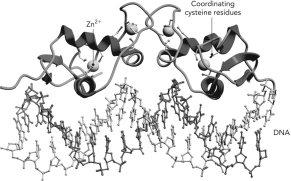
(87) 
On binding of an insulin molecule to the insulin receptor, a conformational change occurs that
(Multiple Choice)
4.9/5 (80)
(80) A culture of insulin-responsive cells are analyzed after stimulation with insulin. The insulin receptors are then isolated (assume that during the isolation protocol the insulin is removed from the receptor). Half of the sample is analyzed by SDS-PAGE followed by Coomassie blue staining. The other half of the sample is analyzed via SDS-PAGE followed by a Western blot. The primary antibody used in the blot recognizes phosphorylated tyrosine residues. Predict how many bands will be seen on the SDS-PAGE compared with the Western blot and explain your answer.
(Essay)
4.9/5 (65)
(65) The __________ domain functions as a protein-protein interaction module and is located in the cytoplasmic tail of TNF receptors.
(Multiple Choice)
4.8/5 (66)
(66) Construct a functional pathway out of the following steps. A: Phosphorylation of subunits of the insulin receptor occurs. B: Insulin binds to subunits of the insulin receptor.
C: PI-3K is activated.
D: IRS is phosphorylated.
(Multiple Choice)
5.0/5 (85)
(85) Construct the order of signaling termination through the -adrenergic receptor that includes the following steps:
A. Internalization of the receptor into endosomes
B. Dissociation of heterotrimeric G protein complex from the receptor
C. Phosphorylation of the receptor
D. Recruitment of ARK to the receptor
E. -arrestin association with GPCR
(Short Answer)
4.8/5 (85)
(85) Which of the following DNA sequences is MOST likely to be bound by a steroid receptor?
(Multiple Choice)
4.9/5 (77)
(77) Both the silence of death domain and TNF receptor-associated death domain proteins
(Multiple Choice)
4.8/5 (82)
(82) Below is a schematic representation of a dimerized receptor tyrosine kinase. Where is the kinase function located? 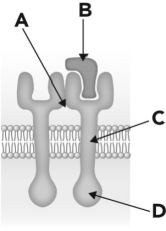
(Multiple Choice)
4.9/5 (84)
(84) 
Filters
- Essay(0)
- Multiple Choice(0)
- Short Answer(0)
- True False(0)
- Matching(0)