



 Chat with AI
Exam 24: Touring Our Solar System

Exam 1: An Introduction to Geology66 Questions
Exam 2: Plate Tectonics: a Scientific Revolution Unfolds77 Questions
Exam 3: Matter and Minerals74 Questions
Exam 4: Magma, Igneous Rocks, and Intrusive Activity76 Questions
Exam 5: Volcanoes and Volcanic Hazards81 Questions
Exam 6: Weathering and Soil67 Questions
Exam 7: Sedimentary Rocks72 Questions
Exam 8: Metamorphism and Metamorphic Rocks76 Questions
Exam 9: Geologic Time70 Questions
Exam 10: Crustal Deformation66 Questions
Exam 11: Earthquakes67 Questions
Exam 12: Earths Interior74 Questions
Exam 13: Divergent Boundaries83 Questions
Exam 14: Convergent Boundaries79 Questions
Exam 15: Mass Wasting83 Questions
Exam 16: Running Water75 Questions
Exam 17: Groundwater81 Questions
Exam 18: Glaciers and Glaciation84 Questions
Exam 19: Deserts and Winds72 Questions
Exam 20: Shorelines69 Questions
Exam 21: Global Climate Change82 Questions
Exam 22: Earths Evolution Through Geologic Time74 Questions
Exam 23: Energy and Mineral Resources80 Questions
Exam 24: Touring Our Solar System76 Questions
Select questions type


Compared to Earth's atmosphere, the Martian atmosphere has surface pressures that are ________.

Free
(Multiple Choice)
4.7/5  (75)
(75) Correct Answer: Verified
D
Because the period of rotation on its axis equals its period of revolution around Earth, the same side of the moon always faces Earth.
Free
(True/False)
4.7/5 (60)
(60) Correct Answer:Verified
VerifiedTrue
Meteorite bombardment of the rocky planets occurred after their formation as protoplanets.
Free
(True/False)
4.8/5 (70)
(70) Correct Answer:Verified
VerifiedTrue
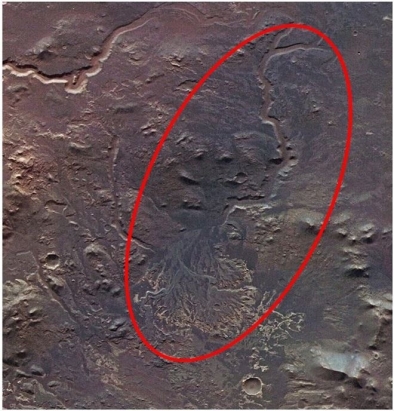 Note the impact craters in other areas of this image.Which body in the solar system (other than Earth)could have had erosion like this in the past?
 (Multiple Choice)
4.7/5 (79)
(79) Which two satellites are the only ones in the solar system known to have substantial atmosphere?
(Multiple Choice)
4.9/5 (76)
(76) Using the nebular theory, explain the formation of our solar system from the formation of the solar nebula through the present day.
(Essay)
4.9/5 (79)
(79) The planet Mercury absorbs most of the sunlight that strikes its surface.Why is so little reflected back to outer space?
(Multiple Choice)
4.9/5 (73)
(73) Which scientist first observed the rings of Saturn in 1610?
(Multiple Choice)
4.7/5 (78)
(78) Compare the composition of planetesimals that would have resulted in the terrestrial planets and the Jovian planets.
(Essay)
4.9/5 (65)
(65) The inner planets are the smaller rocky planets that are close in proximity to the sun.
(True/False)
4.8/5 (77)
(77) Because of an extreme ________, surface temperatures on Venus average more than 450°C.
(Multiple Choice)
4.7/5 (78)
(78) Flying by Pluto in July 2015, NASA's New Horizons spacecraft transmitted images of a complex landscape called Sputnik Planum.Which of the following best describes Sputnik Planum?
(Multiple Choice)
4.9/5 (81)
(81) Which of the following physical features are found on both Mars and Earth?
(Multiple Choice)
4.7/5 (76)
(76) The largest shield volcano in the solar system is ________ and is located on ________.
(Multiple Choice)
4.9/5 (64)
(64) The major bombardment period that shaped much of the surface of the moon ended ________.
(Multiple Choice)
4.7/5 (72)
(72) 
Filters
- Essay(0)
- Multiple Choice(0)
- Short Answer(0)
- True False(0)
- Matching(0)