



 Chat with AI
Exam 22: Earths Evolution Through Geologic Time

Exam 1: An Introduction to Geology66 Questions
Exam 2: Plate Tectonics: a Scientific Revolution Unfolds77 Questions
Exam 3: Matter and Minerals74 Questions
Exam 4: Magma, Igneous Rocks, and Intrusive Activity76 Questions
Exam 5: Volcanoes and Volcanic Hazards81 Questions
Exam 6: Weathering and Soil67 Questions
Exam 7: Sedimentary Rocks72 Questions
Exam 8: Metamorphism and Metamorphic Rocks76 Questions
Exam 9: Geologic Time70 Questions
Exam 10: Crustal Deformation66 Questions
Exam 11: Earthquakes67 Questions
Exam 12: Earths Interior74 Questions
Exam 13: Divergent Boundaries83 Questions
Exam 14: Convergent Boundaries79 Questions
Exam 15: Mass Wasting83 Questions
Exam 16: Running Water75 Questions
Exam 17: Groundwater81 Questions
Exam 18: Glaciers and Glaciation84 Questions
Exam 19: Deserts and Winds72 Questions
Exam 20: Shorelines69 Questions
Exam 21: Global Climate Change82 Questions
Exam 22: Earths Evolution Through Geologic Time74 Questions
Exam 23: Energy and Mineral Resources80 Questions
Exam 24: Touring Our Solar System76 Questions
Select questions type


A(n)________ is a period when a supercontinent rifts into fragments, spreads apart, and the fragments reassemble into a new supercontinent.

Free
(Multiple Choice)
4.8/5  (85)
(85) Correct Answer: Verified
B
When did the first terrestrial plants appear on the land surface?
Free
(Multiple Choice)
4.9/5 (92)
(92) Correct Answer:Verified
VerifiedA
What was the name of the supercontinent that formed approximately 1.1 billion years ago?
Free
(Multiple Choice)
4.9/5 (79)
(79) Correct Answer:Verified
VerifiedA
How old are the oldest fossils of more advanced organisms, the eukaryotes?
(Multiple Choice)
4.7/5 (86)
(86) Subduction of the ________ Plate beneath the North American Plate at approximately 60 million years ago resulted in the ________ Orogeny that created the Rocky Mountains.
(Multiple Choice)
4.9/5 (85)
(85) Which of the following does not characterize the early development and specialization of mammals?
(Multiple Choice)
4.9/5 (85)
(85) Which of the following gases was present in Earth's early atmosphere?
(Multiple Choice)
4.9/5 (77)
(77) The ________ Period was called the golden age of trilobites, resulting in more than 600 genera of these organisms.
(Multiple Choice)
4.9/5 (71)
(71) One hypothesis for the formation of life suggests that amino acids were carried ready-made to Earth by ________.
(Multiple Choice)
4.8/5 (73)
(73) Why is the molten metallic core of Earth necessary for life to exist?
(Essay)
4.8/5 (68)
(68) Stromatolites went extinct at the end of the Permian Period along with 95 percent of all marine species on Earth.
(True/False)
4.9/5 (82)
(82) The first primitive organisms on Earth came into existence approximately ________ years ago.
(Multiple Choice)
4.8/5 (81)
(81) Because of the original molten state of Earth, it is likely that the first crust was ________ in composition.
(Multiple Choice)
4.8/5 (87)
(87) 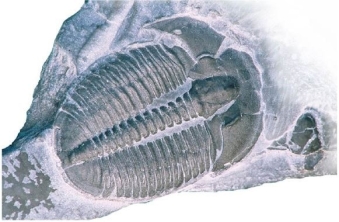 What organism is visible in this image?
Mammals did not evolve until the beginning of the Cenozoic and then did so to fill an evolutionary niche left behind by the dinosaurs.
(True/False)
4.8/5 (79)
(79) ________ are organisms that reproduce sexually and have cells that contain nuclei.
(Multiple Choice)
4.9/5 (88)
(88) How does the formation, break-up, and subsequent formation of supercontinents explain the origin of cratons?
(Essay)
4.9/5 (82)
(82) 
Filters
- Essay(0)
- Multiple Choice(0)
- Short Answer(0)
- True False(0)
- Matching(0)