



 Chat with AI
Exam 3: Matter and Minerals

Exam 1: An Introduction to Geology66 Questions
Exam 2: Plate Tectonics: a Scientific Revolution Unfolds77 Questions
Exam 3: Matter and Minerals74 Questions
Exam 4: Magma, Igneous Rocks, and Intrusive Activity76 Questions
Exam 5: Volcanoes and Volcanic Hazards81 Questions
Exam 6: Weathering and Soil67 Questions
Exam 7: Sedimentary Rocks72 Questions
Exam 8: Metamorphism and Metamorphic Rocks76 Questions
Exam 9: Geologic Time70 Questions
Exam 10: Crustal Deformation66 Questions
Exam 11: Earthquakes67 Questions
Exam 12: Earths Interior74 Questions
Exam 13: Divergent Boundaries83 Questions
Exam 14: Convergent Boundaries79 Questions
Exam 15: Mass Wasting83 Questions
Exam 16: Running Water75 Questions
Exam 17: Groundwater81 Questions
Exam 18: Glaciers and Glaciation84 Questions
Exam 19: Deserts and Winds72 Questions
Exam 20: Shorelines69 Questions
Exam 21: Global Climate Change82 Questions
Exam 22: Earths Evolution Through Geologic Time74 Questions
Exam 23: Energy and Mineral Resources80 Questions
Exam 24: Touring Our Solar System76 Questions
Select questions type


Which of the following is the hardest known natural substance?

Free
(Multiple Choice)
4.9/5  (79)
(79) Correct Answer: Verified
B
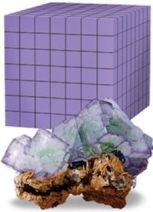 Assuming well-formed crystals, how many cleavage surfaces are present on the sample in this image? (Note: Cleavage surfaces are not cleavage planes.)
Free
(Essay)
5.0/5 (86)
(86) Correct Answer:Verified
Verified6
Which intermediary helps to break down minerals into a form digestible by humans?
Free
(Multiple Choice)
4.8/5 (88)
(88) Correct Answer:Verified
VerifiedC
Which of the following minerals has good cleavage in two directions, which creates a rectangular-shaped crystal?
(Multiple Choice)
4.8/5 (86)
(86) Conchoidal fractures are indicative of the mineral ________.
(Multiple Choice)
4.8/5 (71)
(71) ________ refers to a mineral's intensity and quality of reflected light.
(Multiple Choice)
4.9/5 (72)
(72) According to the octet rule, atoms tend to gain, lose, or share electrons until they are surrounded by ________ valence electrons.
(Multiple Choice)
4.8/5 (74)
(74) There can be no variation of mineral composition in order for the substance to remain the same mineral.
(True/False)
4.9/5 (69)
(69) 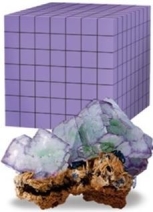 Using the samples in this image, indicate the number of cleavage directions this crystal displays.(Please note that cleavage surfaces do not equate to cleavage directions.)
 (Essay)
4.8/5 (84)
(84) In an aqueous solution that has not reached the saturation point, why won't the ions bond to create mineral crystals?
(Multiple Choice)
4.9/5 (75)
(75) Only eight elements make up the vast majority of rock-forming minerals.Which of the following elements is not one of the eight?
(Multiple Choice)
5.0/5 (85)
(85) What is the significance of valence electrons in connection to mineral formation?
(Essay)
4.7/5 (82)
(82) Which of the following mineral identification techniques would most easily identify calcite?
(Multiple Choice)
4.9/5 (77)
(77) Crystallization of molten rock will produce ________ rocks.
(Multiple Choice)
4.8/5 (86)
(86) ________ are groups of the same kinds of atoms that cannot be broken down into other substances by ordinary chemical means.
(Multiple Choice)
4.9/5 (78)
(78) Two unknown minerals are placed before you for identification.You decide to test each mineral's hardness.Mineral A will scratch a piece of glass.Mineral B will not.Which mineral is harder? How do they compare to the specific hardness of the glass?
(Essay)
4.8/5 (90)
(90) 
Filters
- Essay(0)
- Multiple Choice(0)
- Short Answer(0)
- True False(0)
- Matching(0)