



 Chat with AI
Exam 7: Sedimentary Rocks

Exam 1: An Introduction to Geology66 Questions
Exam 2: Plate Tectonics: a Scientific Revolution Unfolds77 Questions
Exam 3: Matter and Minerals74 Questions
Exam 4: Magma, Igneous Rocks, and Intrusive Activity76 Questions
Exam 5: Volcanoes and Volcanic Hazards81 Questions
Exam 6: Weathering and Soil67 Questions
Exam 7: Sedimentary Rocks72 Questions
Exam 8: Metamorphism and Metamorphic Rocks76 Questions
Exam 9: Geologic Time70 Questions
Exam 10: Crustal Deformation66 Questions
Exam 11: Earthquakes67 Questions
Exam 12: Earths Interior74 Questions
Exam 13: Divergent Boundaries83 Questions
Exam 14: Convergent Boundaries79 Questions
Exam 15: Mass Wasting83 Questions
Exam 16: Running Water75 Questions
Exam 17: Groundwater81 Questions
Exam 18: Glaciers and Glaciation84 Questions
Exam 19: Deserts and Winds72 Questions
Exam 20: Shorelines69 Questions
Exam 21: Global Climate Change82 Questions
Exam 22: Earths Evolution Through Geologic Time74 Questions
Exam 23: Energy and Mineral Resources80 Questions
Exam 24: Touring Our Solar System76 Questions
Select questions type


Which of the following methods of transportation will result in the least sorted deposit?
(Multiple Choice)
4.7/5  (84)
(84) 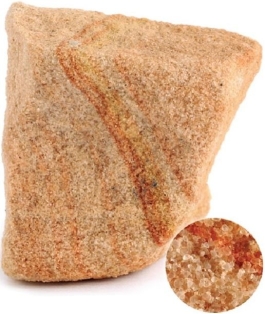 What level of sorting is visible in the above image?
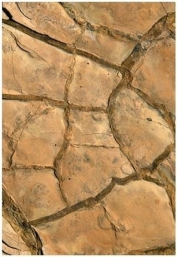 What does the presence of mudcracks indicate about the paleoenvironment?
 (Multiple Choice)
4.9/5 (82)
(82) The primary basis for classifying detrital rocks is ________, whereas the primary basis for classifying chemical rocks is ________.
(Multiple Choice)
4.9/5 (68)
(68) The famous Permian ________ reefs in the Guadalupe Mountains National Park are a rich source of organic material.
(Multiple Choice)
4.8/5 (73)
(73) When studying sedimentary rocks, it is important to understand their environment of deposition.What is the environment of deposition and how can it contribute information about the geologic history of the rock?
(Essay)
4.8/5 (81)
(81) Which of the following processes will release CO2 into the atmosphere?
(Multiple Choice)
4.9/5 (68)
(68) Folding and deformation of organic material will produce ________ coal.
(Multiple Choice)
4.9/5 (86)
(86) 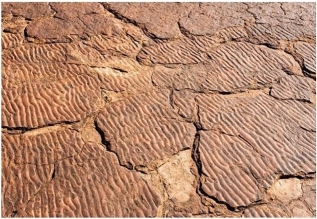 What sedimentary structure(s)can you identify in the above image?
 (Multiple Choice)
4.7/5 (81)
(81) 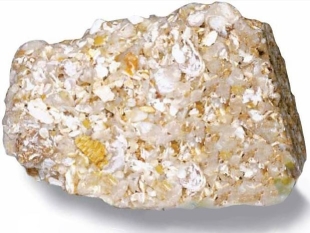 What is the name of the rock in the above image?
Which of these aquatic organisms can form chemical sediments?
(Multiple Choice)
4.8/5 (85)
(85) 
Filters
- Essay(0)
- Multiple Choice(0)
- Short Answer(0)
- True False(0)
- Matching(0)