



 Chat with AI
Exam 2: The Molecules of Cells

Exam 1: The Study of Life58 Questions
Exam 2: The Molecules of Cells79 Questions
Exam 3: Cell Structure and Function75 Questions
Exam 4: Membrane Structure and Function75 Questions
Exam 5: Cell Division74 Questions
Exam 6: Metabolism: Energy and Enzymes74 Questions
Exam 7: Cellular Respiration67 Questions
Exam 8: Photosynthesis79 Questions
Exam 9: Plant Organization and Function89 Questions
Exam 10: Plant Reproduction and Responses73 Questions
Exam 11: Human Organization78 Questions
Exam 12: Cardiovascular System84 Questions
Exam 13: Lymphatic and Immune Systems79 Questions
Exam 14: Digestive System and Nutrition90 Questions
Exam 15: Respiratory System69 Questions
Exam 16: Urinary System and Excretion80 Questions
Exam 17: Nervous System92 Questions
Exam 18: Senses87 Questions
Exam 19: Musculoskeletal System76 Questions
Exam 20: Endocrine System81 Questions
Exam 21: Reproductive System93 Questions
Exam 22: Development and Aging67 Questions
Exam 23: Patterns of Gene Inheritance73 Questions
Exam 24: Chromosomal Basis of Inheritance53 Questions
Exam 25: Dna Structure and Gene Expression82 Questions
Exam 26: Biotechnology and Genomics58 Questions
Exam 27: Evolution of Life79 Questions
Exam 28: Microbiology74 Questions
Exam 29: Protists and Fungi56 Questions
Exam 30: Plants75 Questions
Exam 31: Animals: the Invertebrates93 Questions
Exam 32: Animals: Chordates and Vertebrates61 Questions
Exam 33: Behavioral Ecology54 Questions
Exam 34: Population and Community Ecology77 Questions
Exam 35: Nature of Ecosystems70 Questions
Exam 36: Major Ecosystems of the Biosphere74 Questions
Exam 37: Conservation Biology57 Questions
Select questions type


What type of bond will connect the amino acids in a protein?
(Multiple Choice)
4.9/5  (78)
(78) Which of the following sequences correctly lists the bonds in order of strongest to weakest?
(Multiple Choice)
4.7/5 (82)
(82) Which of the following statements about hydrogen bonding is correct?
(Multiple Choice)
4.8/5 (84)
(84) Hemoglobin is a protein composed of two pairs of polypeptide chains. What is the highest level of protein structure represented by hemoglobin?
(Multiple Choice)
4.9/5 (88)
(88) Which of the following functional groups is present in amino acids?
(Multiple Choice)
4.9/5 (82)
(82) Potassium, a metal with one electron in the outermost shell, will react with how many chlorine atoms? (Chlorine is a nonmetal with seven electrons in the outermost shell.)
(Multiple Choice)
4.9/5 (82)
(82) One carbon atom can form covalent bonds with up to ________ other atoms to form an organic molecule.
(Multiple Choice)
4.9/5 (86)
(86) Two molecules of glucose combine to form a disaccharide molecule during a(n) ________ reaction.
(Multiple Choice)
4.8/5 (85)
(85) Which of the following types of lipids is the most abundant constituent of cell membranes?
(Multiple Choice)
5.0/5 (89)
(89) Which functional group(s) is/are associated with a dehydration reaction?
(Multiple Choice)
5.0/5 (79)
(79) To measure the activity of the human brain during certain thought processes, a short-lived radioactive sugar is injected in the carotid artery and is utilized by those cells that are most active. This shows up on a PET scan and demonstrates the detection of
(Multiple Choice)
4.7/5 (95)
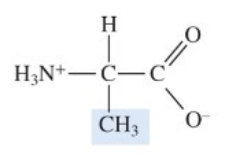
(95) 
In water, a weak hydrogen bond occurs between a hydrogen in one molecule and
(Multiple Choice)
4.8/5 (85)
(85) The proposed cause of CJD and kuru in humans, mad cow disease, and scrapie in sheep is a change in a brain protein. Disease victims appear to have a protein that should normally contain alpha helices but instead they have changed into a protein made of beta pleated sheets. The disease appears to spread when the abnormal protein comes into contact with the normal protein, causing it to become deformed. Which level of protein structure is associated with these diseases?
(Multiple Choice)
4.9/5 (77)
(77) 
Filters
- Essay(0)
- Multiple Choice(0)
- Short Answer(0)
- True False(0)
- Matching(0)