



 Chat with AI
Exam 9: Nuclear Magnetic Resonance and Mass Spectrometry

Exam 1: The Basics158 Questions
Exam 2: Families of Carbon151 Questions
Exam 3: Acids and Bases149 Questions
Exam 4: Nomenclature and Conformations of Alkanes and Cycloalkanes163 Questions
Exam 5: Stereochemistry179 Questions
Exam 6: Nucleophilic Reactions91 Questions
Exam 7: Alkenes and Alkynes I220 Questions
Exam 8: Alkenes and Alkynes II163 Questions
Exam 9: Nuclear Magnetic Resonance and Mass Spectrometry158 Questions
Exam 10: Radical Reactions148 Questions
Exam 11: Alcohols and Ethers256 Questions
Exam 12: Alcohols From Carbonyl Compounds210 Questions
Exam 13: Conjugated Unsaturated Systems201 Questions
Exam 14: Aromatic Compounds186 Questions
Exam 15: Reactions of Aromatic Compounds207 Questions
Exam 16: Aldehydes and Ketones189 Questions
Exam 17: Carboxylic Acids and Their Derivatives213 Questions
Exam 18: Reactions at the Α Carbon of Carbonyl Compounds190 Questions
Exam 19: Condensation and Conjugate Addition Reactions of Carbonyl Compounds182 Questions
Exam 20: Amines207 Questions
Exam 21: Transition Metal Complexes86 Questions
Exam 22: Carbohydrates124 Questions
Exam 23: Lipids127 Questions
Exam 24: Amino Acids and Proteins135 Questions
Exam 25: Nucleic Acids and Protein Synthesis126 Questions
Select questions type


How many signals would you expect to find in the 1H NMR spectrum of CH3OCH2CH2OCH3?
(Multiple Choice)
4.7/5  (87)
(87) A compound C5H10O gave the following spectral data: 1H NMR spectrum IR spectrum
Doublet, 1.10 strong peak
Singlet, 2.10 near 1720 cm-1
Septet, 2.50
Which is a reasonable structure for the compound? 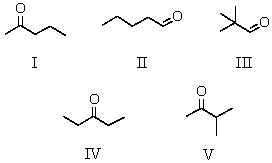
(Multiple Choice)
4.8/5 (76)
(76) Briefly explain how you might distinguish between the following substances by comparing their 1H-NMR spectra: 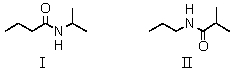
(Essay)
5.0/5 (79)
(79) Briefly explain how you might distinguish between the following substances by comparing their 1H-NMR spectra: 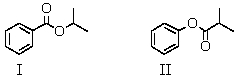
(Essay)
4.8/5 (81)
(81) An unknown compound,U,has the formula C6H4Cl2O.Elucidate the structure of U by scrutinizing its IR,1H NMR and 13C NMR spectra,shown below. 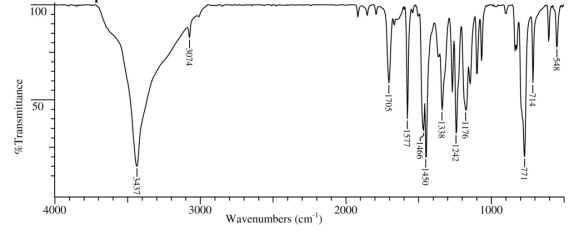
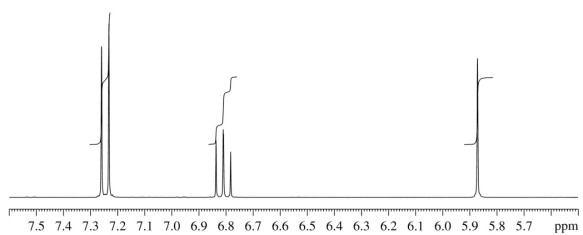
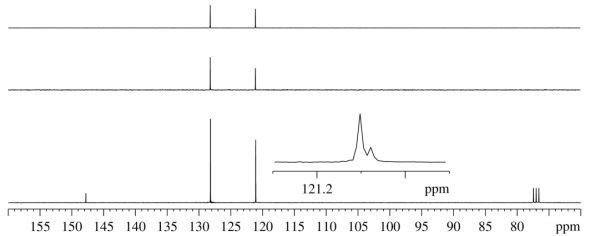
(Essay)
4.9/5 (65)
(65) The data below from the molecular ion region of the mass spectrum of a halogen-containing compound are consistent with the presence of what halogen(s)in the original compound? intensity
M+ 51.0
M+ +2 100.0
M+ +4 49.0
(Multiple Choice)
4.9/5 (77)
(77) What is the structure of the compound in the following 1H-NMR spectrum with the molecular formula C4H7Br? Relative integration is shown. 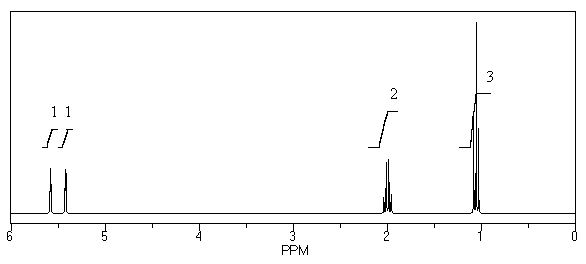
(Multiple Choice)
4.9/5 (89)
(89) For the compound adamantine,how many different signals would you see in the 13C NMR? (Assume that you can see them all.) 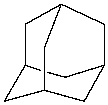
(Multiple Choice)
4.9/5 (70)
(70) 
Consider the expected 1H NMR spectrum of 1,1,3,3-tetramethylcyclopentane.Which of the following is likely to be observed? 
(Multiple Choice)
4.7/5 (75)
(75) A compound with the molecular formula C8H9BrO gave the following 1H NMR spectrum: triplet, 1.4
Quartet, 3.9
Multiplet, 7.0 (4H)
There was no evidence of an -OH band in the IR spectrum.A possible structure for the compound is: 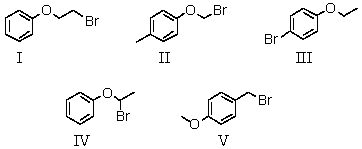
(Multiple Choice)
4.7/5 (81)
(81) How many chemically distinct 1H NMR signals are there in the following compound? 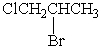
(Multiple Choice)
4.8/5 (86)
(86) Predict the 1H NMR spectrum of cis-1,4-cyclohexanediol if we perform the experiment in CD3OD.
(Essay)
4.9/5 (74)
(74) Which one of the following best represents the predicted approximate chemical shift and coupling for the hydrogen(s)indicated with the arrow? 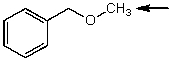
(Multiple Choice)
4.9/5 (80)
(80) Which one of the following best represents the predicted approximate chemical shift and coupling for the hydrogen(s)indicated with the arrow? 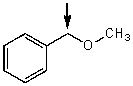
(Multiple Choice)
4.8/5 (79)
(79) For the following compound how many different signals would you see in the proton NMR? (Assume that you can see them all.) 
(Multiple Choice)
4.8/5 (77)
(77) Which one of the following best represents the predicted approximate chemical shift and coupling for the hydrogen(s)indicated with the arrow? 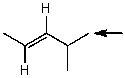
(Multiple Choice)
4.8/5 (72)
(72) Which one of the following best represents the predicted approximate chemical shift and coupling for the hydrogen(s)indicated with the arrow? 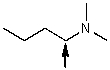
(Multiple Choice)
4.8/5 (77)
(77) What is the theoretical multiplicity of the C-2 proton signal in the 1H NMR spectrum of 2-hydroxymethyl-1,3-propanediol,shown below? 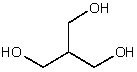
(Multiple Choice)
4.9/5 (92)
(92) Which of the following compounds would not be represented by a lone singlet in the proton NMR?
(Multiple Choice)
4.9/5 (82)
(82) 
Filters
- Essay(0)
- Multiple Choice(0)
- Short Answer(0)
- True False(0)
- Matching(0)