



 Chat with AI
Exam 25: Amino Acids, Peptides, and Proteins

Exam 1: A Review of General Chemistry: Electrons, Bonds, and Molecular Properties191 Questions
Exam 2: Molecular Representations168 Questions
Exam 3: Acids and Bases127 Questions
Exam 4: Alkanes and Cycloalkanes116 Questions
Exam 5: Stereoisomerism141 Questions
Exam 6: Chemical Reactivity and Mechanisms96 Questions
Exam 7: Alkyl Halides: Nucleophilic Substitution and Elimination Reactions224 Questions
Exam 8: Addition Reactions of Alkenes153 Questions
Exam 9: Alkynes177 Questions
Exam 10: Radical Reactions102 Questions
Exam 11: Synthesis106 Questions
Exam 12: Alcohols and Phenols147 Questions
Exam 13: Ethers and Epoxides; Thiols and Sulfides139 Questions
Exam 14: Infrared Spectroscopy and Mass Spectrometry135 Questions
Exam 15: Nuclear Magnetic Resonance Spectroscopy140 Questions
Exam 16: Conjugated Pi Systems and Pericyclic Reactions140 Questions
Exam 17: Aromatic Compounds118 Questions
Exam 18: Aromatic Substitution Reactions122 Questions
Exam 19: Aldehydes and Ketones169 Questions
Exam 20: Carboxylic Acids and Their Derivatives144 Questions
Exam 21: Alpha Carbon Chemistry: Enols and Enolates147 Questions
Exam 22: Amines112 Questions
Exam 23: Introduction to Organometallic Compounds118 Questions
Exam 24: Carbohydrates144 Questions
Exam 25: Amino Acids, Peptides, and Proteins133 Questions
Exam 26: Lipids123 Questions
Exam 27: Synthetic Polymers119 Questions
Select questions type


Which of the following is the correct sequence for the pentapeptide that is formed by the following reaction sequence? 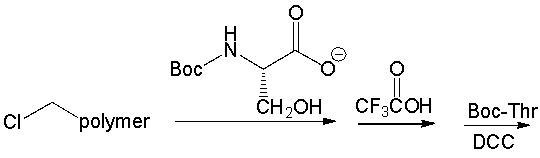
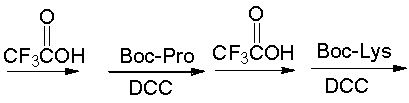
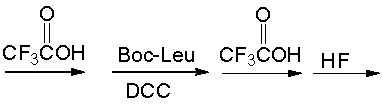
(Multiple Choice)
4.9/5  (75)
(75) Which of the following amino acids have an acidic side chain? 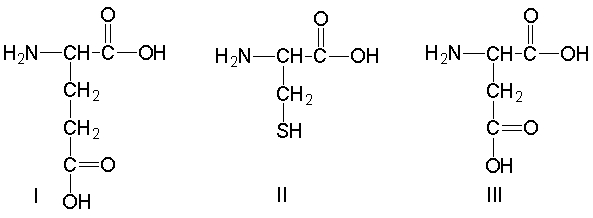
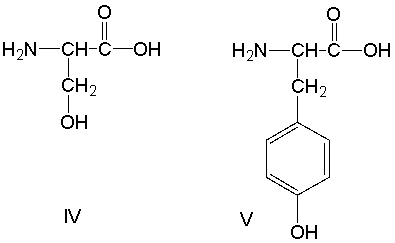
(Multiple Choice)
4.8/5 (75)
(75) Which of the following is a correct bond-line structure for the tripeptide Val-Asp-Ala? 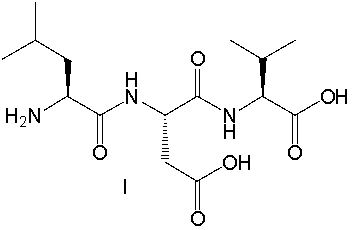
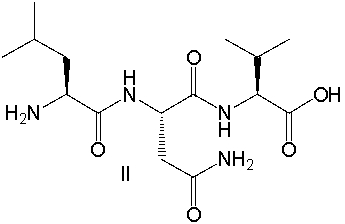
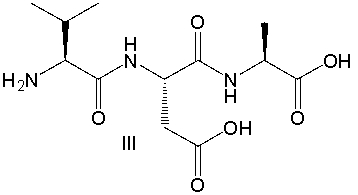
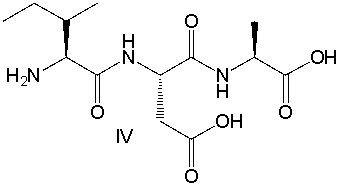
(Multiple Choice)
4.8/5 (80)
(80) Which of the following tripeptides is formed when alanine is treated with (BoC)2O and proline is treated with benzyl alcohol/acid first and the resulting intermediates are reacted in the presence of DCC followed by treatment with aqueous NaOH. The dipeptide is then reacted with the benzyl ester of leucine in the presence of DCC followed by treatment with trifluoroacetic acid and then aqueous NaOH?
(Multiple Choice)
4.8/5 (82)
(82) Which of the following tripeptides is formed when serine is treated with (BoC)2O and threonine is treated with benzyl alcohol/acid first and the resulting intermediates are reacted in the presence of DCC followed by treatment with aqueous NaOH. The dipeptide is then reacted with the benzyl ester of isoleucine in the presence of DCC followed by treatment with trifluoroacetic acid and then aqueous NaOH?
(Multiple Choice)
4.8/5 (81)
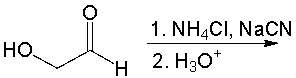
(81) 
Which one of the following amino acids contain an amide side chain?
(Multiple Choice)
4.9/5 (87)
(87) Which of the following is the predominant form of arginine at pH 2? 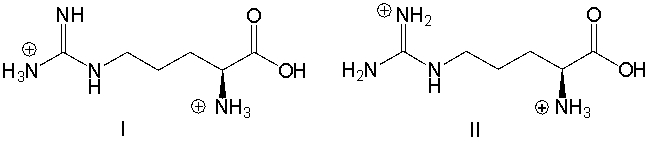
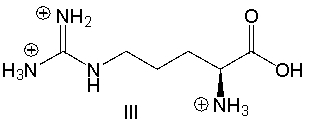
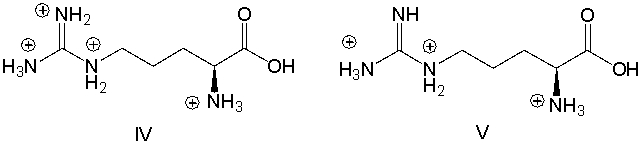
(Multiple Choice)
4.8/5 (81)
(81) Which of the following dipeptides is formed when tyrosine is treated with (BoC)2O and proline is treated with benzyl alcohol/acid first and the resulting intermediates are reacted in the presence of DCC followed by treatment with trifluoroacetic acid and then aqueous NaOH?
(Multiple Choice)
4.8/5 (80)
(80) Provide the reagents necessary to synthesize the following amino acid via the amidomalonate synthesis. 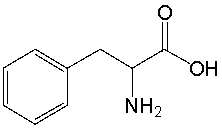
(Essay)
4.9/5 (80)
(80) An amino acid can exist as a ________, which is a dipolar ion that carries both positive and negative charge.
(Multiple Choice)
4.9/5 (76)
(76) Heating of proteins results in loss of activity and the process is referred to as _______.
(Multiple Choice)
4.8/5 (84)
(84) Which of the following statements is true about -amino acids?
(Multiple Choice)
4.8/5 (90)
(90) Chymotrypsin, a digestive enzyme, catalyzes the hydrolysis of the peptide bond at the carboxyl end of which of the following amino acids? 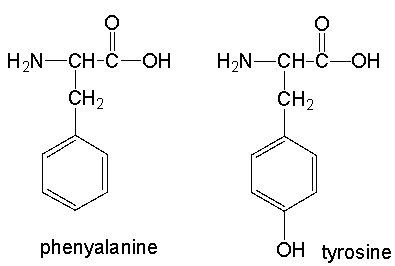
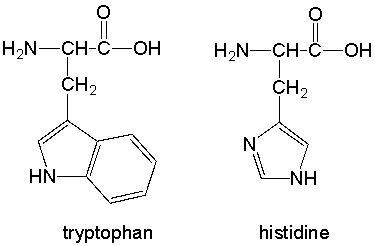
(Multiple Choice)
4.8/5 (80)
(80) Provide the reagents necessary to prepare cysteine using a Strecker synthesis.
(Essay)
4.9/5 (79)
(79) Which of the following side chain interactions results in the tertiary structure of a protein?
(Multiple Choice)
4.8/5 (87)
(87) Provide the structure of the amino acid produced from the following reaction sequence. 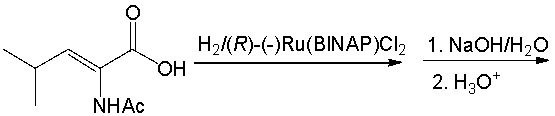
(Essay)
4.9/5 (86)
(86) Which of the following fragments are formed when the following peptide is cleaved using trypsin? Gly-Lys-Cys-Phe-Ile-Val-Tyr-Ala-Ser
(Multiple Choice)
5.0/5 (70)
(70) Which of the following amino acids will migrate towards the cathode at pH 7?
Glycine: pI = 6.0
Lysine: pI = 9.7
(Short Answer)
4.9/5 (86)
(86) 
Filters
- Essay(0)
- Multiple Choice(0)
- Short Answer(0)
- True False(0)
- Matching(0)