



 Chat with AI
Exam 25: Amino Acids, Peptides, and Proteins

Exam 1: A Review of General Chemistry: Electrons, Bonds, and Molecular Properties191 Questions
Exam 2: Molecular Representations168 Questions
Exam 3: Acids and Bases127 Questions
Exam 4: Alkanes and Cycloalkanes116 Questions
Exam 5: Stereoisomerism141 Questions
Exam 6: Chemical Reactivity and Mechanisms96 Questions
Exam 7: Alkyl Halides: Nucleophilic Substitution and Elimination Reactions224 Questions
Exam 8: Addition Reactions of Alkenes153 Questions
Exam 9: Alkynes177 Questions
Exam 10: Radical Reactions102 Questions
Exam 11: Synthesis106 Questions
Exam 12: Alcohols and Phenols147 Questions
Exam 13: Ethers and Epoxides; Thiols and Sulfides139 Questions
Exam 14: Infrared Spectroscopy and Mass Spectrometry135 Questions
Exam 15: Nuclear Magnetic Resonance Spectroscopy140 Questions
Exam 16: Conjugated Pi Systems and Pericyclic Reactions140 Questions
Exam 17: Aromatic Compounds118 Questions
Exam 18: Aromatic Substitution Reactions122 Questions
Exam 19: Aldehydes and Ketones169 Questions
Exam 20: Carboxylic Acids and Their Derivatives144 Questions
Exam 21: Alpha Carbon Chemistry: Enols and Enolates147 Questions
Exam 22: Amines112 Questions
Exam 23: Introduction to Organometallic Compounds118 Questions
Exam 24: Carbohydrates144 Questions
Exam 25: Amino Acids, Peptides, and Proteins133 Questions
Exam 26: Lipids123 Questions
Exam 27: Synthetic Polymers119 Questions
Select questions type


How many different amino acids are abundantly found in proteins?
(Multiple Choice)
4.7/5  (69)
(69) How will you prepare glycine staring with ethanol and using a Hell-Volhard-Zelinski reaction?
(Essay)
4.8/5 (84)
(84) When four amino acids are connected to each other, they form ____________.
(Multiple Choice)
4.9/5 (80)
(80) 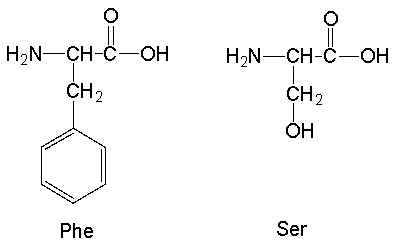
When two amino acids are connected to each other, they form ____________.
(Multiple Choice)
4.8/5 (81)
(81) Provide the structure of the predominant form of the following amino acids at pH 6 and predict the migration towards anode or cathode during electrophoresis. 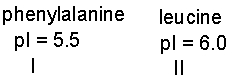
(Essay)
4.8/5 (88)
(88) Which of the following dipeptides is formed when leucine is treated with (BoC)2O and glycine is treated with benzyl alcohol/acid first and the resulting intermediates are reacted in the presence of DCC followed by treatment with trifluoroacetic acid and then aqueous NaOH?
(Multiple Choice)
4.8/5 (71)
(71) Cooking an egg is an example of ________________, and is irreversible.
(Short Answer)
4.9/5 (69)
(69) Hydrogen bonding between the carbonyl group of an amino acid on one strand with the amino group of the neighboring strand leads to ______.
(Multiple Choice)
4.9/5 (83)
(83) Which of the following tetrapeptides is not cleaved by trypsin?
(Multiple Choice)
5.0/5 (77)
(77) Which amino acid is produced from the following reaction sequence? 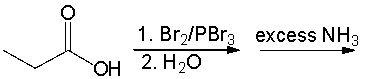
(Multiple Choice)
5.0/5 (81)
(81) Which amino acid is produced from the following reaction sequence? 
(Multiple Choice)
4.9/5 (84)
(84) 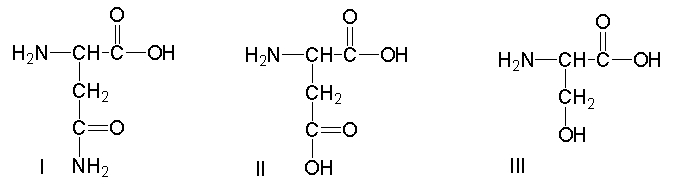
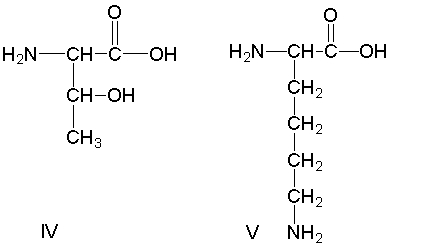
Provide the structure of the amino acid produced from the following reaction. 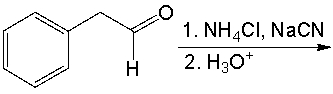
(Essay)
4.9/5 (72)
(72) Identify the compound that reacts with amino acids to form a fluorescent purple product.
(Multiple Choice)
4.8/5 (79)
(79) Which of the following reagent(s) is(are) used to remove the N-terminus amino acid residue using Edman degradation? 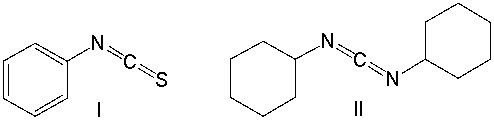

(Multiple Choice)
4.8/5 (87)
(87) Edman degradation removes one amino acid residue at a time from the _______ of the peptide.
(Multiple Choice)
4.9/5 (80)
(80) 
Filters
- Essay(0)
- Multiple Choice(0)
- Short Answer(0)
- True False(0)
- Matching(0)