



 Chat with AI
Exam 10: Radical Reactions

Exam 1: A Review of General Chemistry: Electrons, Bonds, and Molecular Properties191 Questions
Exam 2: Molecular Representations168 Questions
Exam 3: Acids and Bases127 Questions
Exam 4: Alkanes and Cycloalkanes116 Questions
Exam 5: Stereoisomerism141 Questions
Exam 6: Chemical Reactivity and Mechanisms96 Questions
Exam 7: Alkyl Halides: Nucleophilic Substitution and Elimination Reactions224 Questions
Exam 8: Addition Reactions of Alkenes153 Questions
Exam 9: Alkynes177 Questions
Exam 10: Radical Reactions102 Questions
Exam 11: Synthesis106 Questions
Exam 12: Alcohols and Phenols147 Questions
Exam 13: Ethers and Epoxides; Thiols and Sulfides139 Questions
Exam 14: Infrared Spectroscopy and Mass Spectrometry135 Questions
Exam 15: Nuclear Magnetic Resonance Spectroscopy140 Questions
Exam 16: Conjugated Pi Systems and Pericyclic Reactions140 Questions
Exam 17: Aromatic Compounds118 Questions
Exam 18: Aromatic Substitution Reactions122 Questions
Exam 19: Aldehydes and Ketones169 Questions
Exam 20: Carboxylic Acids and Their Derivatives144 Questions
Exam 21: Alpha Carbon Chemistry: Enols and Enolates147 Questions
Exam 22: Amines112 Questions
Exam 23: Introduction to Organometallic Compounds118 Questions
Exam 24: Carbohydrates144 Questions
Exam 25: Amino Acids, Peptides, and Proteins133 Questions
Exam 26: Lipids123 Questions
Exam 27: Synthetic Polymers119 Questions
Select questions type


Compound A has molecular formula C6H12. Upon treatment with NBS and irradiation with UV light, exactly two compounds (including stereoisomers), are formed. Suggest a possible structure for compoundA.
(Essay)
4.8/5  (73)
(73) Propylene (propene) undergoes free radical polymerization with benzoyl peroxide, but does not produce very long chains. Provide a reasonable explanation for this result.
(Essay)
4.7/5 (69)
(69) Thermal cracking of butane can produce ethyl radicals via homolytic cleavage. Give the arrows to show this process.
(Essay)
4.9/5 (73)
(73) In the molecule shown below, determine which of the highlighted C-H bonds (from a to e) is expected to have the lowest bond dissociation energy. 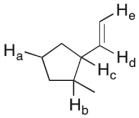
(Multiple Choice)
4.9/5 (85)
(85) 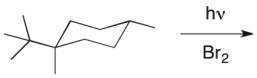
How many constitutional isomers are possible if propane is dichlorinated? Draw them.
(Essay)
4.9/5 (78)
(78) 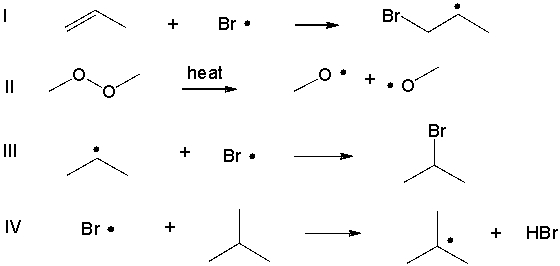
A bromine radical can add to the π bond of 2-methylpropene. Give the arrows to show this process and the expected result.
(Essay)
5.0/5 (78)
(78) Upon treatment of 1-methylcyclopentene with NBS and irradiation with UV light, exactly nine compounds (including stereoisomers) are formed. Draw all nine products.
(Essay)
4.8/5 (72)
(72) Identify the likely major product(s) of the reaction shown. 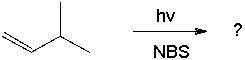

(Multiple Choice)
4.9/5 (73)
(73) Propose a synthesis of 3,4-dimethyl-2-pentanol using 2-methyl-2-butene and ethanol as your sources of carbon.
(Essay)
4.8/5 (79)
(79) Give the arrows to show the mechanism of the following radical process. 
(Essay)
4.8/5 (67)
(67) Which term most accurately describes the process shown below? 
(Multiple Choice)
4.9/5 (87)
(87) What reagents would best accomplish the following synthesis? 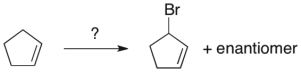
(Multiple Choice)
5.0/5 (86)
(86) Of the four choices shown, which is likely to be a major product of the reaction below? 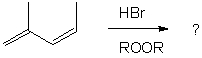
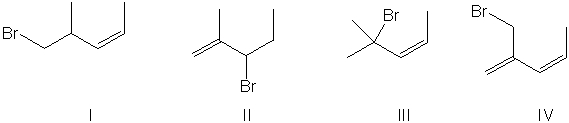
(Multiple Choice)
4.8/5 (87)
(87) Which of the following steps is thermodynamically unfavorable at all temperatures? 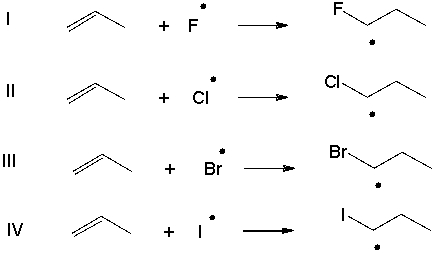
(Multiple Choice)
4.7/5 (81)
(81) Which term most accurately describes the process shown below? 
(Multiple Choice)
4.9/5 (83)
(83) Which of the following is the correct name for the major product of the following reaction? 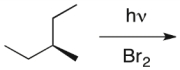
(Multiple Choice)
4.9/5 (79)
(79) 
Filters
- Essay(0)
- Multiple Choice(0)
- Short Answer(0)
- True False(0)
- Matching(0)