



 Chat with AI
Exam 6: Chemical Reactivity and Mechanisms

Exam 1: A Review of General Chemistry: Electrons, Bonds, and Molecular Properties191 Questions
Exam 2: Molecular Representations168 Questions
Exam 3: Acids and Bases127 Questions
Exam 4: Alkanes and Cycloalkanes116 Questions
Exam 5: Stereoisomerism141 Questions
Exam 6: Chemical Reactivity and Mechanisms96 Questions
Exam 7: Alkyl Halides: Nucleophilic Substitution and Elimination Reactions224 Questions
Exam 8: Addition Reactions of Alkenes153 Questions
Exam 9: Alkynes177 Questions
Exam 10: Radical Reactions102 Questions
Exam 11: Synthesis106 Questions
Exam 12: Alcohols and Phenols147 Questions
Exam 13: Ethers and Epoxides; Thiols and Sulfides139 Questions
Exam 14: Infrared Spectroscopy and Mass Spectrometry135 Questions
Exam 15: Nuclear Magnetic Resonance Spectroscopy140 Questions
Exam 16: Conjugated Pi Systems and Pericyclic Reactions140 Questions
Exam 17: Aromatic Compounds118 Questions
Exam 18: Aromatic Substitution Reactions122 Questions
Exam 19: Aldehydes and Ketones169 Questions
Exam 20: Carboxylic Acids and Their Derivatives144 Questions
Exam 21: Alpha Carbon Chemistry: Enols and Enolates147 Questions
Exam 22: Amines112 Questions
Exam 23: Introduction to Organometallic Compounds118 Questions
Exam 24: Carbohydrates144 Questions
Exam 25: Amino Acids, Peptides, and Proteins133 Questions
Exam 26: Lipids123 Questions
Exam 27: Synthetic Polymers119 Questions
Select questions type




For the following reaction step, indicate which pattern of arrow pushing it represents. 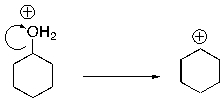
(Multiple Choice)
4.7/5  (79)
(79) Predict the sign of ∆G for an endothermic reaction with a decrease in entropy.
(Multiple Choice)
4.7/5 (77)
(77) 
Does a reaction with a ∆H of 14 kJ/mol and a ∆S of 150 J/mol·K at 298 K favor reactants or products?
(Short Answer)
4.9/5 (79)
(79) For the following reaction step, indicate which pattern of arrow pushing it represents. 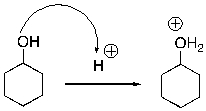
(Multiple Choice)
4.7/5 (79)
(79) Given the following rate law, what is the order of the reaction with respect to MeI? 
(Short Answer)
4.8/5 (91)
(91) Using Table 6.1, estimate the enthalpy change of the following reaction under standard conditions. 
(Short Answer)
4.8/5 (79)
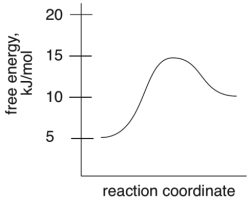
(79) Which of the following is an energy diagram for a two-step reaction?
(Multiple Choice)
4.7/5 (80)
(80) 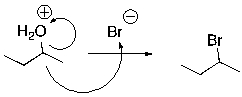
What pattern of curved arrow pushing is the fourth step of this reaction? 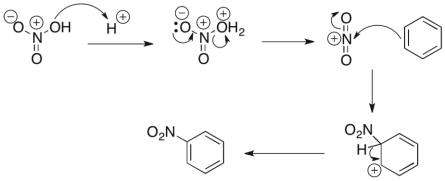
(Multiple Choice)
4.9/5 (87)
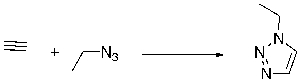
(87) 

Identify the sequence of curved arrows (electron movement) in the steps of the following reaction. 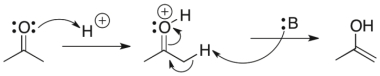
(Multiple Choice)
4.7/5 (79)
(79) You are working in a research laboratory and have developed a new reagent that cleaves C-H bonds homolytically. Unfortunately, this reagent can achieve only one of the transformations shown below. In light of bond dissociation energies, which transformation is most likely to be achieved?
(Multiple Choice)
4.8/5 (70)
(70) Using Table 6.1, which of the following is the enthalpy change of the following reaction under standard conditions? 
(Multiple Choice)
4.9/5 (90)
(90) Predict the sign of ∆G for an endothermic reaction with an increase in entropy.
(Multiple Choice)
4.8/5 (82)
(82) What type of bond cleavage does the following reaction involve? 
(Multiple Choice)
4.8/5 (92)
(92) 

Filters
- Essay(0)
- Multiple Choice(0)
- Short Answer(0)
- True False(0)
- Matching(0)