



 Chat with AI
Exam 4: Infectious Diseases

Exam 1: Introduction to Preliminary Diagnosis of Oral Lesions50 Questions
Exam 2: Inflammation and Repair59 Questions
Exam 3: Immunity and Immunologic Oral Lesions60 Questions
Exam 4: Infectious Diseases64 Questions
Exam 5: Developmental Disorders60 Questions
Exam 6: Genetics87 Questions
Exam 7: Neoplasia99 Questions
Exam 8: Nonneoplastic Diseases of Bone28 Questions
Exam 9: Oral Manifestations of Systemic Diseases72 Questions
Exam 10: Diseases Affecting the Temporomandibular Joint38 Questions
Select questions type


MATCHING
For each clinical appearance listed below, select the most closely linked disorder from the list provided.
-Vesicles or bullae, more often on skin of face and extremities
(Multiple Choice)
4.8/5  (76)
(76) The patient is HIV seropositive. The most common intraoral locations for this type of lesion are the gingiva and palate. When diagnosed, this vascular lesion meets the criteria for the diagnosis of acquired immune deficiency syndrome (AIDS). 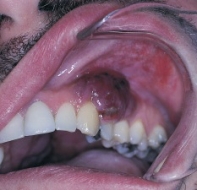 What is the name of the vascular lesion that is seen in this image?
 (Multiple Choice)
4.8/5 (91)
(91) For each disorder listed below, select the most closely linked clinical appearance from the list provided.
-Irregular corrugated white lesion most commonly occurring on the lateral border of the tongue
(Multiple Choice)
5.0/5 (74)
(74) The most common site(s) for oral lesions in tuberculosis is(are) the:
(Multiple Choice)
4.8/5 (71)
(71) The type of cell of the immune system that HIV infects that is important in cell-mediated immunity and in regulating the immune response is which of the following?
(Multiple Choice)
4.8/5 (86)
(86) For each disorder listed below, select the most closely linked clinical appearance from the list provided.
-Hyperplastic lymphoid tissue of the soft palate or tonsillar pillars appears as yellowish or dark pink nodules
(Multiple Choice)
4.9/5 (74)
(74) Tonsillitis and pharyngitis have a significant relationship with scarlet fever and rheumatic fever when caused by certain bacteria. What is the name of these bacteria?
(Multiple Choice)
4.9/5 (90)
(90) The vesicle cluster visible on the corner of this patient's vermilion border is also referred to as a cold sore or fever blister. 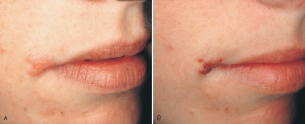 This is called:
 (Multiple Choice)
4.9/5 (72)
(72) The most reliable method of diagnosis for this condition of the tongue is the isolation of the Epstein-Barr virus. 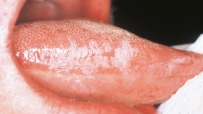 This condition is:
 (Multiple Choice)
5.0/5 (69)
(69) Which of the following viruses is associated with infectious mononucleosis?
(Multiple Choice)
4.9/5 (86)
(86) Focal epithelial hyperplasia, characterized by the presence of multiple whitish-to-pale pink nodules distributed throughout the oral mucosa, is also called:
(Multiple Choice)
4.8/5 (86)
(86) Each of the following benign lesions is caused by the human papillomavirus except one. Which one is the exception?
(Multiple Choice)
4.7/5 (82)
(82) Verruca vulgaris closely resembles a papillary benign tumor of squamous epithelium called:
(Multiple Choice)
4.8/5 (74)
(74) For each disorder listed below, select the most closely linked clinical appearance from the list provided.
-Vesicles on the soft palate along with fever, malaise, sore throat, dysphagia, and erythematous pharyngitis
(Multiple Choice)
4.9/5 (81)
(81) In testing for HIV infection, which of the following antibody tests is performed initially before the confirmatory Western blot test?
(Multiple Choice)
4.8/5 (74)
(74) Which of the following types of medication is used for the treatment of herpes zoster?
(Multiple Choice)
4.8/5 (73)
(73) MATCHING
For each clinical appearance listed below, select the most closely linked disorder from the list provided.
-Primary (chancre), secondary (mucous patch), tertiary (gumma)
(Multiple Choice)
4.9/5 (79)
(79) 
Filters
- Essay(0)
- Multiple Choice(0)
- Short Answer(0)
- True False(0)
- Matching(0)