



 Chat with AI
Exam 7: Neoplasia

Exam 1: Introduction to Preliminary Diagnosis of Oral Lesions50 Questions
Exam 2: Inflammation and Repair59 Questions
Exam 3: Immunity and Immunologic Oral Lesions60 Questions
Exam 4: Infectious Diseases64 Questions
Exam 5: Developmental Disorders60 Questions
Exam 6: Genetics87 Questions
Exam 7: Neoplasia99 Questions
Exam 8: Nonneoplastic Diseases of Bone28 Questions
Exam 9: Oral Manifestations of Systemic Diseases72 Questions
Exam 10: Diseases Affecting the Temporomandibular Joint38 Questions
Select questions type


The name of this benign tumor that is slow growing but locally aggressive and derived in association with an impacted tooth and dentigerous cyst is: 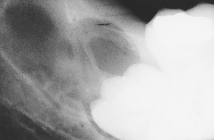

Free
(Multiple Choice)
5.0/5  (83)
(83) Correct Answer: Verified
D
A benign tumor of bone is called a(n):
Free
(Multiple Choice)
4.9/5 (71)
(71) Correct Answer:Verified
VerifiedA
Squamous cell carcinoma of the oral epithelium usually metastasizes first to the:
(Multiple Choice)
4.9/5 (70)
(70) The benign oral pathologic lesion that occurs frequently in the head and neck area and is classified as capillary or cavernous is referred to as a(n):
(Multiple Choice)
4.8/5 (67)
(67) All of the following are common warning signs of malignant neoplasms except one. Which one is the exception?
(Multiple Choice)
4.8/5 (66)
(66) For each vocabulary word below, select the corresponding definition from the list provided.
-Aberrant
(Multiple Choice)
4.7/5 (72)
(72) Acute leukemia is characterized by a proliferation of _____ cells.
(Multiple Choice)
4.8/5 (75)
(75) Which of the following statements about erythroplakia is true?
(Multiple Choice)
5.0/5 (68)
(68) For each vocabulary word below, select the corresponding definition from the list provided.
-In situ
(Multiple Choice)
4.9/5 (89)
(89) The majority of adenomatoid odontogenic tumors occur in _____ years of age.
(Multiple Choice)
5.0/5 (68)
(68) The peripheral ossifying fibroma is most likely derived from:
(Multiple Choice)
4.9/5 (74)
(74) Squamous cell carcinomas on the vermilion border of the lips and skin of the face are:
(Multiple Choice)
4.7/5 (80)
(80) A _____ both invades and destroys surrounding tissue and has the ability to spread throughout the body.
(Multiple Choice)
4.8/5 (75)
(75) Intraoral minor salivary gland tumors are most commonly located:
(Multiple Choice)
4.7/5 (70)
(70) 
Filters
- Essay(0)
- Multiple Choice(0)
- Short Answer(0)
- True False(0)
- Matching(0)